Startups

ChatGPT Image Apr 29, 2026, 02_55_31 PM

Security Features in Recharge Software | Secure Fintech Guide

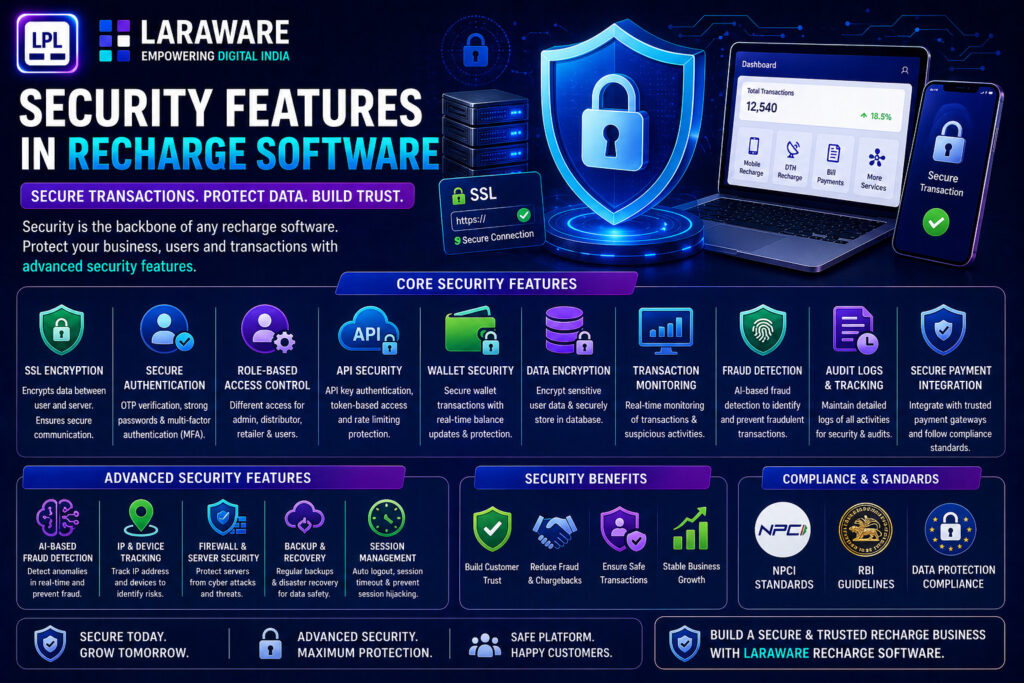
Security is one of the most critical aspects of any recharge software. Since these platforms handle financial transactions, user data, and wallet balances, even a small vulnerability can lead to major losses. A secure recharge system not only protects your business but also builds trust among users and partners. This guide explains the most important security features every recharge software must have. What is Recharge Software Security? Recharge software security refers to the technologies and practices used to protect: User data Financial transactions System integrity It ensures safe, reliable, and fraud-free operations. /what-is-recharge-software Why Security is Important Prevents fraud and data breaches Protects customer information Ensures regulatory compliance Builds trust and credibility Without proper security, a recharge business cannot survive long-term. Core Security Features in Recharge Software SSL Encryption (HTTPS) Encrypts data between user and server Prevents data interception Secure Authentication System Includes: Username & password protection OTP verification Multi-factor authentication (MFA) Role-Based Access Control (RBAC) Different access for admin, distributor, retailer Prevents unauthorized actions API Security Recharge platforms depend on APIs. Security includes: API key authentication Token-based access Rate limiting /what-is-recharge-api Wallet Security Secure wallet transactions Real-time balance updates Fraud prevention /how-wallet-systems-work-in-recharge-portals Data Encryption Encrypt sensitive user data Secure storage in database Transaction Monitoring System Detect suspicious activities Track unusual transaction patterns Fraud Detection System Identify fake transactions Prevent unauthorized usage Secure Payment Gateway Integration Use trusted payment gateways Ensure compliance with standards https://www.npci.org.in/https://rbi.org.in/ Audit Logs and Tracking Maintain logs of all activities Helps in troubleshooting and security checks Advanced Security Features AI-Based Fraud Detection Detect anomalies in real-time Prevent fraud automatically IP and Device Tracking Track login location Identify suspicious devices Firewall and Server Security Protect against cyber attacks Prevent unauthorized access Backup and Recovery System Regular data backup Disaster recovery plans Session Management Auto logout Session timeout Prevent session hijacking Common Security Threats Phishing attacks Data breaches API misuse Unauthorized access Best Practices for Security Use strong passwords Update software regularly Monitor transactions Choose reliable API providers /how-to-choose-best-bbps-api-provider Compliance and Regulations Recharge software must follow: RBI guidelines NPCI standards Data protection laws https://www.npci.org.in/ Benefits of Strong Security Customer trust Reduced fraud risk Stable operations Better business growth Who Needs These Security Features? Recharge portal owners Fintech startups Software developers Payment service providers Future of Security in Recharge Software Security will evolve with: AI-based monitoring Blockchain security Advanced encryption methods Real-time fraud detection Conclusion Security features are the backbone of any recharge software. From basic encryption to advanced fraud detection systems, every layer of security plays a vital role in protecting your platform. By implementing strong security measures, businesses can ensure safe transactions, build trust, and achieve long-term success.
Read more
ChatGPT Image Apr 28, 2026, 04_59_58 PM

Recharge Portal Development Process | Complete Guide India

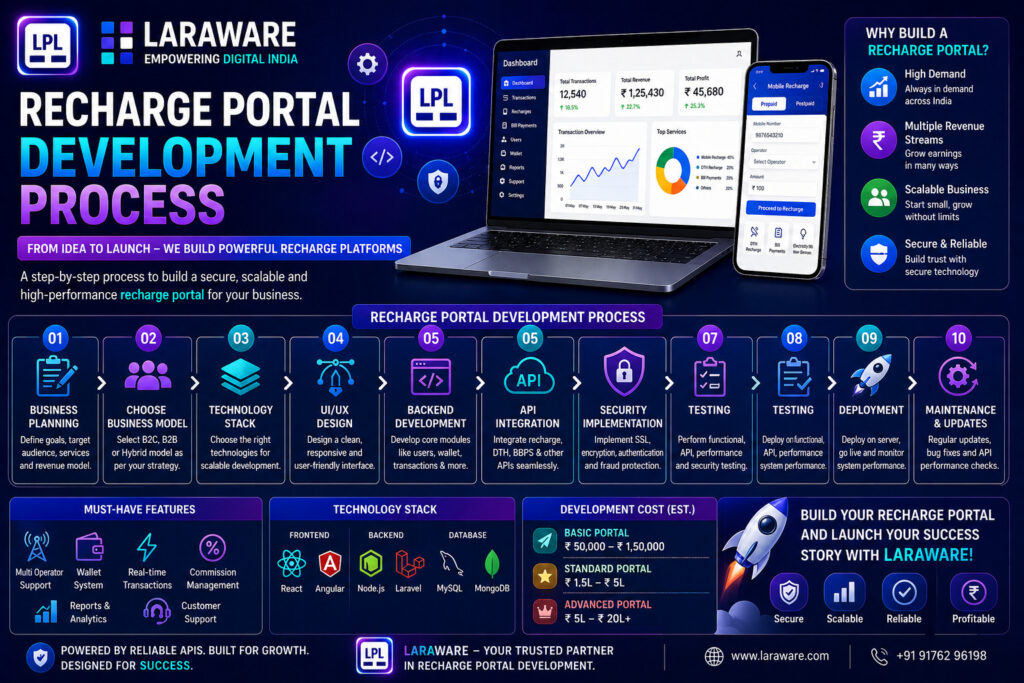
Recharge portals are one of the most popular fintech business models in India. They enable users and retailers to perform mobile recharges, DTH services, and bill payments efficiently. Building a recharge portal requires proper planning, the right technology, and seamless API integration. This guide explains the complete development process step by step. What is a Recharge Portal? A recharge portal is a digital platform that allows users to perform: Mobile recharge DTH recharge Utility bill payments Financial services /what-is-recharge-software Overview of Development Process The recharge portal development process includes: Planning Design Development API Integration Testing Deployment Maintenance Step-by-Step Recharge Portal Development Process Step 1: Business Planning Define: Target audience (B2B or B2C) Revenue model Services to offer Proper planning ensures a clear roadmap. Step 2: Choose Business Model B2C Model Direct customer usage B2B Model Retailer and distributor network Hybrid Model Combination of both Step 3: Select Technology Stack Choose technologies such as: Frontend: React, Angular Backend: Node.js, Laravel Database: MySQL, MongoDB Hosting: Cloud (AWS, VPS) Step 4: UI/UX Design Design a user-friendly interface: Easy navigation Mobile responsive Fast checkout process Step 5: Backend Development Develop core functionalities: User management Wallet system Commission system Transaction processing /how-wallet-systems-work-in-recharge-portals Step 6: API Integration Integrate recharge APIs: Mobile operators DTH services BBPS services /what-is-recharge-api/how-to-choose-best-bbps-api-provider Step 7: Security Implementation Ensure platform security: SSL encryption Secure authentication Fraud detection https://www.npci.org.in/https://uidai.gov.in/ Step 8: Testing Perform: Functional testing API testing Performance testing Step 9: Deployment Configure server Launch portal Monitor performance Step 10: Maintenance and Updates Fix bugs Update features Monitor APIs Must-Have Features in Recharge Portal Multi-operator support Real-time transactions Wallet system Commission management Reports and analytics /must-have-features-in-recharge-software Cost of Development Basic Portal ₹50,000 – ₹1,50,000 Standard Portal ₹1.5L – ₹5L Advanced Portal ₹5L – ₹20L+ /recharge-software-development-cost Challenges in Development API downtime Security risks Low success rate Scalability issues /common-problems-in-recharge-portals Benefits of Recharge Portal Recurring income Scalable business High demand Multiple revenue streams Who Should Build a Recharge Portal? Fintech startups Entrepreneurs Software companies Retail networks Future Scope Recharge portals will grow due to: Digital payments expansion UPI adoption Fintech innovation Best Practices Use reliable APIs Focus on security Optimize performance Provide strong support Conclusion Recharge portal development is a structured process that requires careful planning, strong technical implementation, and reliable API integration. By following the right steps and using best practices, businesses can build a scalable and profitable recharge platform. A well-developed recharge portal ensures smooth transactions, customer satisfaction, and long-term growth.

Read more
ChatGPT Image Apr 28, 2026, 04_52_21 PM

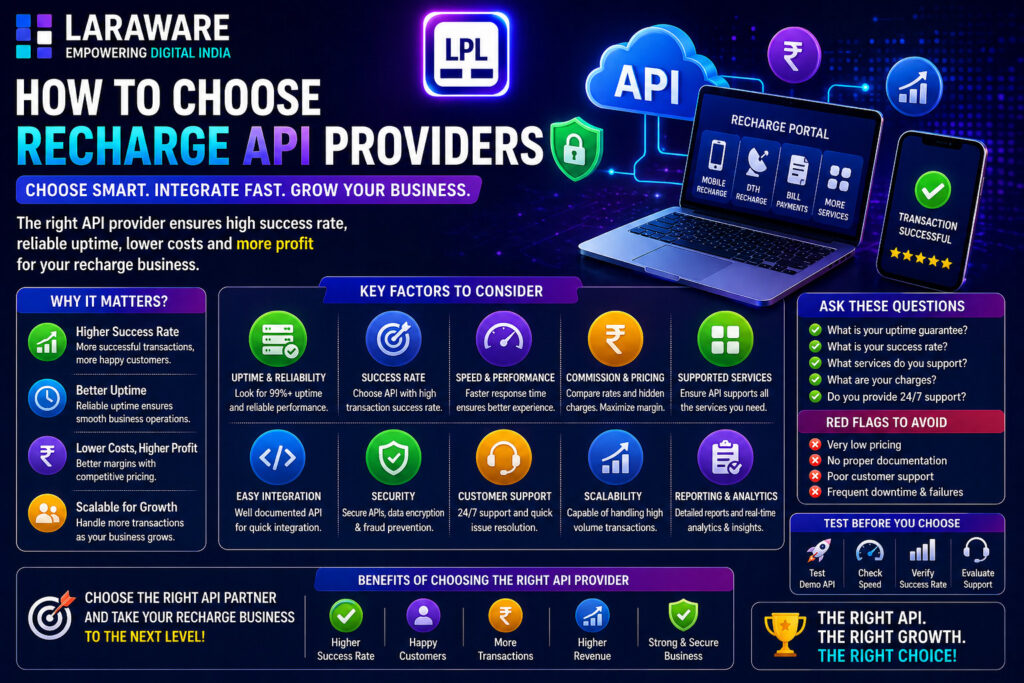
How to Choose Recharge API Providers | Best API Selection Guide

Choosing the right recharge API provider is one of the most important decisions for your recharge business. A good API ensures fast transactions, high success rates, and better customer experience. With many providers in the market, selecting the right one requires careful evaluation of performance, reliability, and cost. This guide explains how to choose the best recharge API provider step by step. What is a Recharge API Provider? A recharge API provider offers a system that connects your software with telecom operators and service providers to process: Mobile recharge DTH recharge Bill payments Other digital services /what-is-recharge-api Why Choosing the Right API Provider Matters A good provider ensures: High transaction success rate Fast processing speed Secure transactions Reliable uptime A poor provider can cause: Frequent failures Customer dissatisfaction Revenue loss Key Factors to Consider API Uptime and Reliability Look for 99%+ uptime Check downtime history High uptime ensures smooth operations. Transaction Success Rate Higher success rate = more revenue Avoid providers with frequent failures Speed and Performance Fast API response time (<500ms preferred) Real-time processing Commission and Pricing Compare commission rates Check hidden charges Higher margins improve profitability. Supported Services Choose APIs that support: Mobile recharge DTH recharge Bill payments FASTag and utilities /services-available-in-a-bbps-portal API Integration Ease Simple documentation Developer-friendly APIs Quick integration Security Features Ensure provider offers: Secure APIs (HTTPS) Encryption Fraud detection https://www.npci.org.in/https://uidai.gov.in/ Customer Support 24/7 technical support Quick issue resolution Scalability Can handle high traffic Suitable for growing business Reporting and Analytics Transaction reports Commission tracking Performance insights Questions to Ask API Providers What is your uptime guarantee? What is your success rate? What services do you support? What are your charges? Do you provide 24/7 support? Red Flags to Avoid Very low pricing No documentation Poor support Frequent downtime Types of Recharge API Providers Basic API Providers Limited services Low cost Multi-Service API Providers Recharge + BBPS + DMT Better for scaling Enterprise API Providers High reliability Advanced features Higher cost How to Test an API Provider Use demo or sandbox Check success rate Test speed Evaluate support Best Strategy for Selection Shortlist 3–5 providers Compare features and pricing Test demo APIs Choose best performance /best-apis-for-recharge-portals Benefits of Choosing the Right Provider Higher success rate More transactions Better customer experience Increased revenue Who Should Follow This Guide? Recharge portal owners Fintech startups Software developers Retail networks Future Considerations Choose providers that support: New fintech services AI-based systems Scalable infrastructure Conclusion Choosing the right recharge API provider is essential for building a successful and profitable recharge business. By focusing on uptime, success rate, pricing, and support, you can select a provider that ensures smooth operations and long-term growth. Always test before finalizing and choose a provider that aligns with your business goals.

Read more
ChatGPT Image Apr 28, 2026, 04_44_56 PM

Common Problems in Recharge Portals | Issues & Solutions

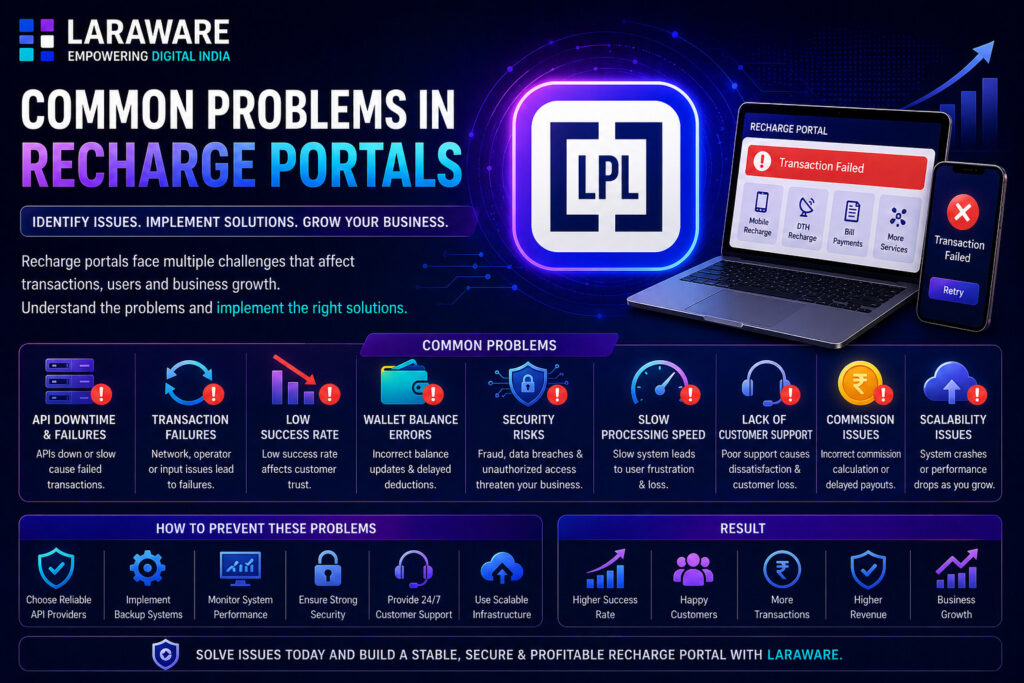
Recharge portals are essential for digital payment businesses, but like any technology platform, they face several challenges. These issues can affect transaction success rates, user experience, and overall profitability. Understanding common problems in recharge portals helps businesses identify risks early and implement effective solutions. What is a Recharge Portal? A recharge portal is a platform that allows users to perform: Mobile recharge DTH recharge Bill payments Digital financial services /what-is-recharge-software Common Problems in Recharge Portals API Downtime and Failures One of the most frequent issues is API downtime. Problems: Failed transactions Delayed processing Poor user experience Solution: Use reliable API providers Implement backup APIs /how-to-choose-best-bbps-api-provider Transaction Failures Transactions may fail due to: Network issues Operator problems Invalid input Solution: Add retry mechanism Implement proper validation Low Success Rate Low success rate affects customer trust. Solution: Choose high-quality APIs Monitor performance regularly Wallet Balance Errors Issues include: Incorrect balance updates Delayed wallet deductions Solution: Use real-time wallet system Maintain transaction logs /how-wallet-systems-work-in-recharge-portals Security Risks Recharge portals are vulnerable to: Data breaches Fraudulent transactions Unauthorized access Solution: Use SSL encryption Enable OTP verification Implement fraud detection https://www.npci.org.in/https://uidai.gov.in/ Poor User Interface A complicated UI can: Confuse users Reduce transactions Solution: Use simple and responsive design Optimize user experience Slow Processing Speed Slow systems lead to: User frustration Drop in transactions Solution: Optimize backend Use high-performance servers Lack of Customer Support Poor support results in: Customer dissatisfaction Loss of trust Solution: Provide 24/7 support Quick issue resolution Commission Issues Problems include: Incorrect commission calculation Delayed payouts Solution: Use automated commission system Regularly audit transactions Scalability Issues As business grows: System may crash Performance may drop Solution: Use scalable infrastructure Cloud-based hosting /how-to-build-a-recharge-portal Additional Challenges High Competition Many players in market Low Profit Margins Small earnings per transaction Regulatory Compliance Must follow RBI and NPCI rules https://rbi.org.in/ How to Prevent These Problems Choose reliable API providers Use secure and scalable software Monitor system performance Maintain regular updates Provide strong customer support Best Practices Implement real-time monitoring Maintain backup systems Use secure payment gateways Optimize UI/UX Keep system updated Who Should Be Aware of These Problems? Recharge portal owners Fintech startups Software developers Retailers and distributors Impact of These Problems If not handled properly, these issues can lead to: Loss of customers Reduced revenue Poor business growth Future Solutions Future recharge systems will use: AI for error detection Automated monitoring tools Advanced security systems Conclusion Recharge portals face multiple technical and operational challenges, but most of them can be resolved with the right strategies and tools. By focusing on reliability, security, and user experience, businesses can minimize issues and ensure smooth operations. A well-managed recharge portal leads to higher customer satisfaction and long-term profitability.

Read more
ChatGPT Image Apr 27, 2026, 04_35_21 PM

How Recharge Software Makes Money | Revenue Model Explained

Recharge software is not just a service platform—it is a powerful revenue-generating system. Many entrepreneurs and fintech startups use recharge software to build scalable and profitable businesses. But how exactly does recharge software make money? This guide explains all the revenue streams, earning models, and profit strategies used in recharge platforms. What is Recharge Software? Recharge software is a platform that allows users to perform: Mobile recharge DTH recharge Bill payments Digital financial services It connects with service providers using APIs to process transactions. /what-is-recharge-software Main Revenue Sources of Recharge Software Commission on Transactions This is the primary income source. Earn commission on every recharge Commission varies by operator and service Example: ₹100 recharge → ₹3–₹5 commission Service Charges Some platforms charge users extra: Convenience fee Processing charges This directly increases profit margin. Distributor and Retailer Commission In B2B models: Retailers perform transactions Distributors earn a share Admin earns from entire network /how-to-build-a-recharge-portal API Margin Recharge API providers offer discounted rates. Buy at lower rate Sell at slightly higher rate Earn margin difference /best-apis-for-recharge-portals Wallet Float Income Money stored in wallets generates: Interest benefits (indirect) Cash flow advantage Subscription Fees Some platforms charge: Monthly subscription Setup fees Renewal charges Advertising Revenue Promote third-party services Show ads inside platform Cross-Selling Fintech Services Recharge software expands into: AEPS services Money transfer Insurance Bill payments /services-available-in-a-bbps-portal Revenue Model Breakdown B2C Model Direct customer recharge Earn per transaction B2B Model Retailer + distributor network Multi-level earning system Hybrid Model Combine B2C + B2B Maximum revenue potential Example of Earnings Small Business 100 transactions/day × ₹3 Monthly = ₹9,000 Medium Business 300 transactions/day × ₹4 Monthly = ₹36,000 Large Network 1000+ transactions/day Monthly = ₹1,00,000+ Factors Affecting Revenue Transaction Volume More transactions = more income Commission Rates Higher commission = higher profit Services Offered More services = multiple income streams Customer Base Larger base = stable earnings API Provider Quality Better API = higher success rate /how-to-choose-best-bbps-api-provider Hidden Revenue Opportunities Cashback partnerships Bulk recharge clients Business tie-ups Premium services Cost vs Revenue Analysis Category Cost Revenue Impact API Charges Medium Reduces margin Hosting Low Minimal impact Marketing Optional Increases growth Maintenance Low Stable Overall, recharge software offers high scalability with controlled costs. How to Increase Revenue Add more services Build distributor network Increase daily transactions Choose high-margin APIs Offer premium services Challenges in Earning Low margins per transaction High competition API downtime Customer price sensitivity Who Can Earn More? B2B platform owners Distributor networks Fintech startups High-volume retailers Future Revenue Opportunities Recharge software will earn more through: AI-based services Embedded finance Digital banking integration Subscription models https://www.npci.org.in/https://rbi.org.in/ Conclusion Recharge software makes money through multiple revenue streams, including commissions, service charges, API margins, and network earnings. While individual transaction margins are small, the business becomes highly profitable with scale. By expanding services, increasing transaction volume, and building a strong network, recharge software can generate consistent and growing income.

Read more
ChatGPT Image Apr 27, 2026, 04_25_44 PM

Marketing Strategy for Recharge Business | Growth Guide India

The recharge business is highly competitive, especially with the growth of digital payment platforms. To succeed, having a strong marketing strategy is essential. A well-planned marketing approach helps you attract more customers, increase daily transactions, and build a long-term profitable business. This guide explains the most effective marketing strategies for recharge businesses in India. Why Marketing is Important for Recharge Business Marketing helps you: Increase customer base Improve brand visibility Boost transaction volume Stay ahead of competitors Without marketing, even a good recharge service may struggle to grow. Types of Marketing for Recharge Business Offline Marketing Posters and banners Shop branding Local advertising Best for rural and semi-urban areas Online Marketing Social media promotion Google ads SEO and content marketing Best for urban and digital audience Referral Marketing Offer rewards for referrals Encourage word-of-mouth promotion Best Marketing Strategies Local Area Domination Focus on becoming the go-to recharge point in your area. How: Visible shop location Attractive banners Fast service Offer Discounts and Cashback Small cashback offers Festival discounts Loyalty rewards These attract repeat customers. Build Customer Relationships Friendly service Quick issue resolution Personalized offers Use WhatsApp Marketing Send recharge reminders Promote offers Share updates Social Media Promotion Platforms to use: Facebook Instagram YouTube Post: Offers Tips Business updates Google My Business Listing Add your shop to Google Get reviews Improve local visibility SEO and Blogging Create blogs to attract traffic. /what-is-recharge-software/how-to-start-a-recharge-business Partner with Local Businesses Kirana stores Cyber cafes Retail shops Build Distributor Network Add retailers Expand reach /how-to-build-a-recharge-portal Digital Marketing Techniques Paid Ads Google Ads Facebook Ads Content Marketing Blog posts Guides Tutorials Video Marketing Short reels Educational videos Budget-Friendly Marketing Tips Focus on local marketing Use free platforms Leverage referrals Avoid high-cost ads initially Common Marketing Mistakes Ignoring online presence Poor customer service No branding Irregular promotion How to Measure Marketing Success Track: Daily transactions Customer growth Revenue increase ROI on ads Benefits of Good Marketing Strategy Higher income Strong brand presence Customer loyalty Business growth Who Should Use These Strategies? Recharge shop owners Fintech startups Distributors Entrepreneurs Future of Marketing in Recharge Business Marketing will evolve with: AI-driven ads Personalized offers Digital-first strategies Automation tools https://www.npci.org.in/https://rbi.org.in/ Conclusion A strong marketing strategy is essential for the success of any recharge business. By combining offline and online marketing techniques, offering great service, and building customer trust, you can grow your business effectively. Consistency and innovation in marketing will help you stay ahead in the competitive recharge market.

Read more
ChatGPT Image Apr 27, 2026, 04_17_36 PM

Legal Rules for Recharge Portal India | Compliance Guide

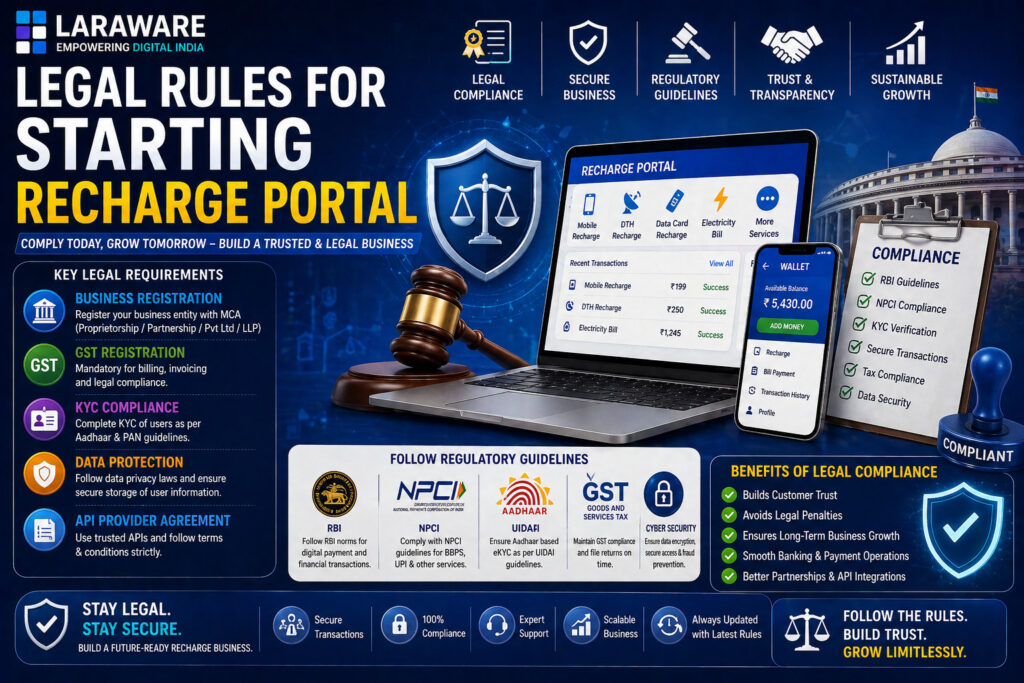
Starting a recharge portal in India is a profitable opportunity, but it also comes with important legal and regulatory responsibilities. Since recharge platforms deal with financial transactions, they must comply with guidelines set by government and financial authorities. Understanding legal rules ensures that your business operates smoothly, avoids penalties, and builds customer trust. Is Recharge Portal Legal in India? Yes, running a recharge portal is legal in India, provided you comply with applicable laws and regulations. You must follow: Financial regulations Data protection rules KYC requirements API provider agreements Business Registration Requirements Register Your Business Entity You must register your business as: Sole Proprietorship Partnership Firm Private Limited Company LLP Having a registered entity builds trust and ensures compliance. GST Registration Required if turnover exceeds threshold Needed for billing and invoicing https://www.gst.gov.in/ KYC and Customer Verification Recharge portals must follow KYC norms, especially if offering wallet or fintech services. Requirements include: Aadhaar verification PAN verification Address proof KYC helps prevent fraud and ensures compliance. https://uidai.gov.in/https://www.incometax.gov.in/ RBI Guidelines The Reserve Bank of India regulates digital payment systems. You must ensure: Secure transaction processing Compliance with payment norms No unauthorized financial services https://rbi.org.in/ NPCI Compliance If your portal includes bill payment or UPI services, you must comply with NPCI guidelines. NPCI regulates: BBPS system UPI payments Transaction standards https://www.npci.org.in/ API Provider Agreement You must sign a legal agreement with your API provider. Important points include: Commission structure Service terms Liability clauses Data handling rules /how-to-choose-best-bbps-api-provider Data Protection and Privacy Laws Recharge portals must protect user data. Follow: Data encryption Secure storage Privacy policies India is moving towards stricter data protection laws, so compliance is important. Payment Gateway Compliance If using payment gateways: Follow RBI payment guidelines Use authorized gateways Ensure secure transactions Wallet System Regulations If your portal includes wallet features: Follow prepaid instrument (PPI) rules Avoid unauthorized wallet operations /how-wallet-systems-work-in-recharge-portals Terms and Conditions Policy Your website must include: Terms of service Refund policy Privacy policy Disclaimer These protect your business legally. Cybersecurity Requirements Recharge portals must ensure: SSL encryption Secure login systems Fraud detection Failure to secure data can lead to legal penalties. Tax Compliance You must: File GST returns Maintain transaction records Pay applicable taxes Prohibited Activities Avoid: Fake recharge services Unauthorized wallet operations Misleading offers Data misuse Penalties for Non-Compliance Non-compliance can result in: Financial penalties Business shutdown Legal action Best Practices for Legal Compliance Work with legal advisors Use trusted API providers Maintain transparency Keep updated with regulations Who Needs to Follow These Rules? Recharge portal owners Fintech startups Software companies Digital service providers Conclusion Starting a recharge portal in India is legal and profitable, but only when proper legal rules and compliance are followed. From business registration to KYC, RBI guidelines, and data security, every aspect must be handled carefully. By ensuring compliance, you not only avoid legal issues but also build a trustworthy and scalable business.

Read more
ChatGPT Image Apr 25, 2026, 02_46_26 PM

Best APIs for Recharge Portals | Top Recharge API Providers India

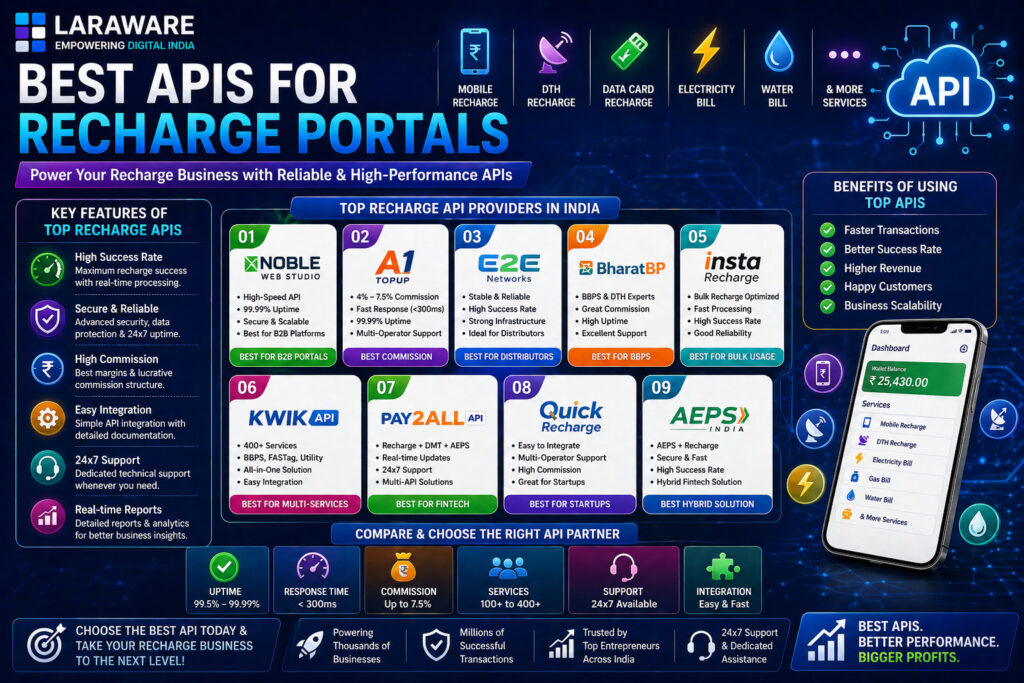
Recharge APIs are the backbone of any recharge portal. They enable real-time transactions, multi-operator support, and seamless integration with telecom and utility service providers. Choosing the right API is critical for ensuring high success rates, fast transactions, and better profitability. This guide lists the best APIs for recharge portals in India. What is a Recharge API? A recharge API allows your platform to connect with telecom operators and service providers to perform: Mobile recharge DTH recharge Data card recharge Utility bill payments /what-is-recharge-api Top Recharge APIs for Recharge Portals in India Noble Web Studio API High-speed transactions Multi-operator support Strong security and uptime Suitable for B2B & white-label platforms Widely recognized as a reliable provider with secure and scalable API solutions. A1Topup API High commission (4%–7.5%) Fast response time (<300ms) 99.99% uptime Best for high-volume recharge businesses. E2E Networks API Reliable for distributors Stable performance Strong infrastructure Ideal for network-based recharge businesses. BharatBP API Best for bill payments and DTH Good commission structure High uptime Useful for portals focusing on BBPS services. InstaRecharge API Optimized for bulk transactions Fast processing Good success rate Best for large-scale recharge platforms. KwikAPI 400+ services supported Includes BBPS, FASTag, utilities All-in-one API solution Great for expanding into multiple fintech services. PAY2ALL API Multi-service API (Recharge + DMT + AEPS) Real-time updates 24×7 support Suitable for full fintech platforms. QuickRecharge API Easy integration Multi-operator support High commission and reliability Good option for startups and small businesses. AEPS India API Integrated recharge + AEPS services High success rate Secure transactions Best for combined fintech services. Comparison of Best Recharge APIs API Provider Uptime Best For Features Noble Web Studio High B2B Platforms Secure, scalable A1Topup 99.99% High volume High commission E2E Networks High Distributors Stable network BharatBP High BBPS & DTH Bill payments InstaRecharge High Bulk usage Fast processing KwikAPI High Multi-service 400+ services PAY2ALL High Fintech apps Multi-API QuickRecharge High Startups Easy integration AEPS India High Hybrid fintech AEPS + recharge Key Features of Best Recharge APIs Real-time recharge processing Multi-operator support High success rate Secure transactions Fast response time Detailed reporting /features-of-bbps-software How to Choose the Best API Check uptime and reliability Compare commission structure Evaluate API documentation Test support quality Ensure scalability /how-to-choose-best-bbps-api-provider Benefits of Using Top Recharge APIs Faster transactions Reduced failure rate Better customer experience Increased revenue Easy business scaling Who Should Use Recharge APIs? Recharge portal owners Fintech startups Retailers and distributors Software developers Conclusion Choosing the best API for your recharge portal is essential for long-term success. Providers like Noble Web Studio, A1Topup, KwikAPI, and BharatBP stand out due to their reliability, scalability, and feature-rich platforms. A good recharge API not only improves performance but also increases profitability and customer satisfaction.

Read more
ChatGPT Image Apr 25, 2026, 02_22_07 PM

Future of Recharge Software in India | Trends & Growth 2026

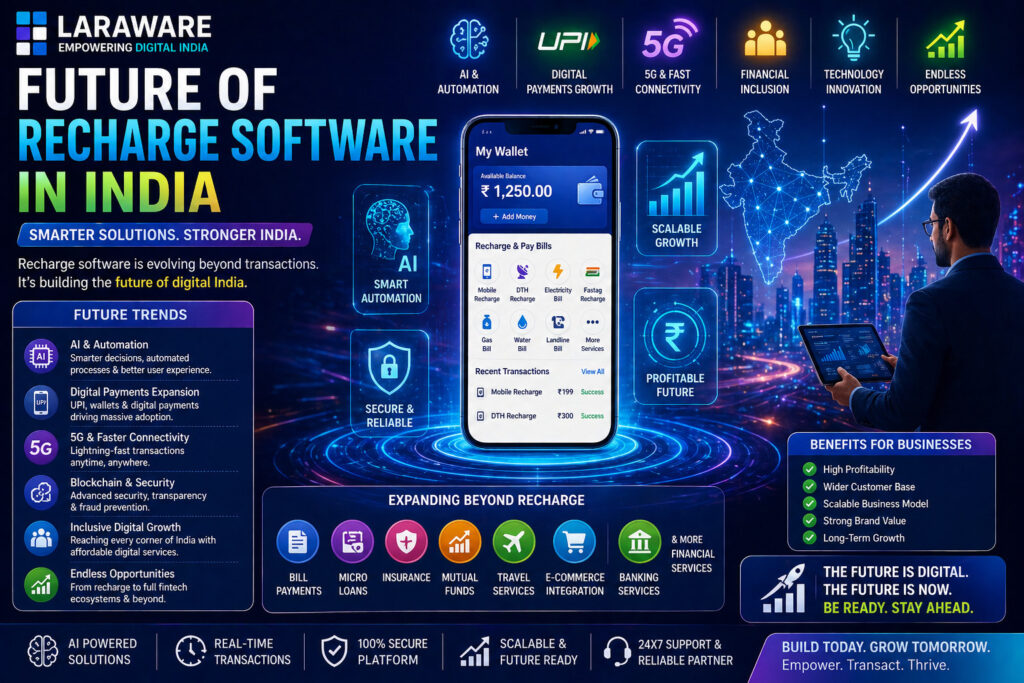
Recharge software in India is evolving rapidly as part of the larger fintech revolution. With the rise of digital payments, UPI adoption, and increasing smartphone penetration, recharge platforms are no longer limited to mobile top-ups. The future of recharge software lies in automation, integration with financial services, and advanced technologies that enhance user experience and business scalability. Current Growth of Recharge Software in India India’s fintech ecosystem is growing at an extraordinary pace: Fintech industry expected to reach massive scale by 2025 Digital payments driven by UPI and mobile adoption Expansion into Tier 2, Tier 3, and rural markets Recharge software plays a key role in this ecosystem by acting as an entry point for digital financial services. Key Trends Shaping the Future AI and Automation Artificial Intelligence is transforming recharge software by: Automating transactions Providing smart recommendations Detecting fraud in real-time AI-driven systems are becoming more advanced, enabling autonomous financial actions and improving efficiency Expansion Beyond Recharge Recharge platforms are evolving into full fintech ecosystems: Bill payments (BBPS) Microloans Insurance services Digital banking features This diversification increases revenue opportunities and customer retention Voice and Smart Recharge Future systems may include: Voice-based recharge AI assistants Smart auto-recharge based on usage These features will simplify the user experience significantly. Blockchain and Security Advancements Blockchain technology is being explored for: Secure transactions Transparent ledger systems Fraud prevention This will increase trust and reliability in recharge platforms 5G and Faster Transactions With 5G rollout: Faster recharge processing Improved app performance Better real-time services This will enhance user experience and reduce transaction delays. Offline and Edge Computing Solutions Future recharge systems will support: Offline transactions in rural areas Syncing data when internet is available This ensures uninterrupted service even in low connectivity zones Embedded Finance Integration Recharge software will become part of larger ecosystems: Integration with e-commerce Banking services Lending platforms Embedded finance is expected to redefine how digital services are delivered Digital Currency and CBDC Integration India is exploring Central Bank Digital Currency (e-rupee): Recharge platforms may support digital currency payments Faster and more secure transactions This could redefine digital payments in the coming years Role of Government and Regulation Government initiatives are supporting growth: Digital India mission UPI expansion RBI fintech regulations Recently, fintech companies are gaining deeper integration into core financial systems, showing strong future potential Future Business Opportunities Recharge software will create new opportunities such as: Rural fintech services B2B recharge networks Digital service centers White-label fintech platforms Challenges in the Future Increasing competition Regulatory compliance Security threats Margin pressure Businesses must innovate continuously to stay competitive. How Businesses Should Prepare Adopt AI and automation Offer multiple services Focus on security Build scalable platforms Expand into rural markets /what-is-recharge-software/how-to-build-a-recharge-portal/recharge-api-integration-explained Who Will Benefit the Most? Fintech startups Recharge portal owners Retail networks Software companies Future Scope (2026–2030) Recharge software is expected to: Become a full fintech ecosystem Support multiple financial services Integrate with global payment systems Enable smarter, faster, and secure transactions India’s digital payments journey is moving toward a data-driven, customer-centric ecosystem Conclusion The future of recharge software in India is extremely promising. With rapid advancements in AI, blockchain, digital payments, and financial inclusion, recharge platforms are evolving into powerful fintech ecosystems. Businesses that adapt to these changes and embrace new technologies will have a strong competitive advantage in the coming years.

Read more
ChatGPT Image Apr 25, 2026, 02_05_27 PM

Wallet System in Recharge Portal | How It Works Explained

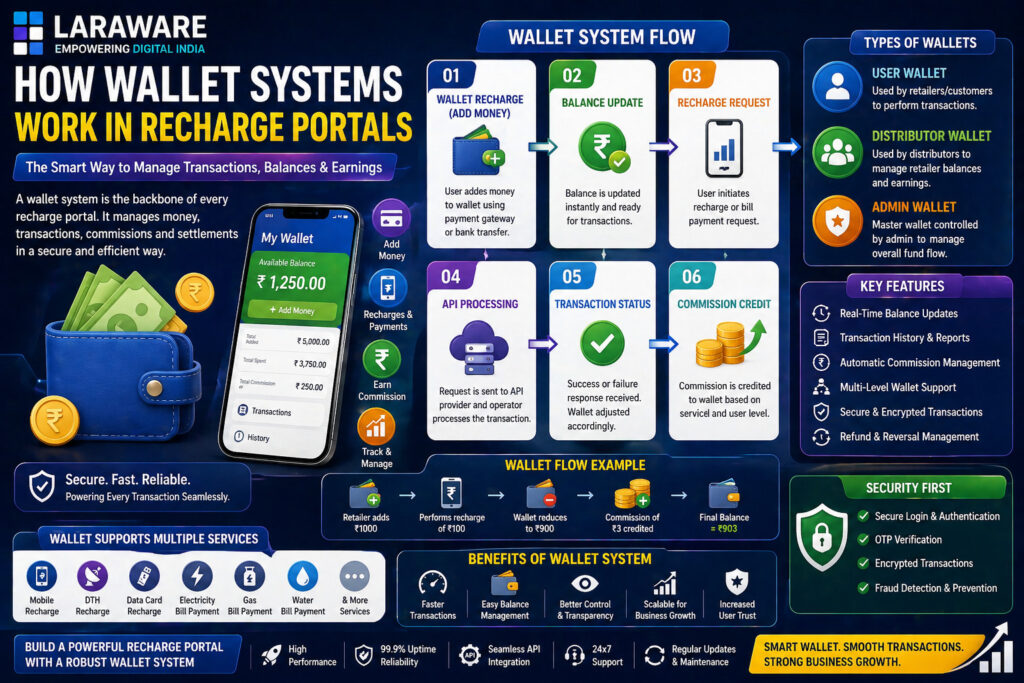
The wallet system is one of the most critical components of any recharge portal. It acts as the financial backbone that manages transactions, balances, commissions, and settlements. Without a properly designed wallet system, a recharge platform cannot function efficiently. This guide explains how wallet systems work in recharge portals and why they are essential. What is a Wallet System in Recharge Portal? A wallet system is a digital balance management system that allows users to: Add money Perform transactions Track spending Receive commissions It is widely used in B2B recharge portals where retailers and distributors operate using prepaid balances. /what-is-recharge-software Types of Wallets in Recharge Portals User Wallet Used by customers or retailers Stores balance for transactions Distributor Wallet Used by distributors Manages retailer balances Admin Wallet Central wallet controlled by admin Handles overall fund flow How Wallet System Works (Step-by-Step) 1: Wallet Recharge (Add Money) User adds money to wallet Payment via bank transfer or gateway 2: Balance Update Wallet balance updated in real-time Ready for transactions 3: Recharge Request User initiates recharge Amount deducted from wallet /what-is-recharge-api 4: API Processing Request sent to API provider Operator processes recharge 5: Transaction Status Success or failure response received Wallet adjusted accordingly 6: Commission Credit Commission added to wallet Based on service and user level Wallet Flow Example Retailer adds ₹1000 Performs recharge of ₹100 Wallet reduces to ₹900 Commission of ₹3 credited Final balance = ₹903 Key Features of Wallet System Real-Time Balance Update Instant reflection of transactions Transaction History Track all wallet activities Commission Management Automatic earnings calculation Multi-Level Wallet Support Admin → Distributor → Retailer Secure Transactions Encrypted wallet operations https://www.npci.org.in/https://uidai.gov.in/ Wallet System Architecture A typical wallet system includes: Database for balance storage Transaction engine API integration layer Security module /how-to-build-a-recharge-portal Types of Wallet Transactions Debit Transaction Recharge or bill payment Credit Transaction Commission or refund Reversal Transaction Failed recharge refund Security in Wallet System Wallet systems must ensure: Secure login OTP verification Encrypted transactions Fraud detection Common Wallet Issues Incorrect balance updates Failed transaction handling API delay Duplicate transactions Best Practices for Wallet System Maintain transaction logs Use real-time updates Implement retry mechanism Regular audits Use secure APIs Benefits of Wallet System Fast transactions Easy balance management Scalable business model Transparent accounting Who Uses Wallet Systems? Recharge portal owners Retailers and distributors Fintech companies Future of Wallet Systems Wallet systems will evolve with: UPI integration AI fraud detection Real-time settlements Advanced analytics Conclusion Wallet systems are the backbone of recharge portals, enabling smooth financial operations and efficient transaction management. A well-designed wallet system ensures accuracy, security, and scalability. By implementing a robust wallet system, businesses can build a reliable and profitable recharge platform.

Read more
Contact us

Partner with Us for Comprehensive IT Solutions

We’re happy to answer any questions you may have and help you determine which of our services best fit your needs.

Your benefits:
What happens next?
1

We Schedule a call at your convenience 

2

We do a discovery and consulting meting 

3

We prepare a proposal 

Schedule a Free Consultation