Recharge portals are one of the most popular fintech business models in India. They enable users and retailers to perform mobile recharges, DTH services, and bill payments efficiently.
Building a recharge portal requires proper planning, the right technology, and seamless API integration. This guide explains the complete development process step by step.
What is a Recharge Portal?
A recharge portal is a digital platform that allows users to perform:
- Mobile recharge
- DTH recharge
- Utility bill payments
- Financial services
Overview of Development Process
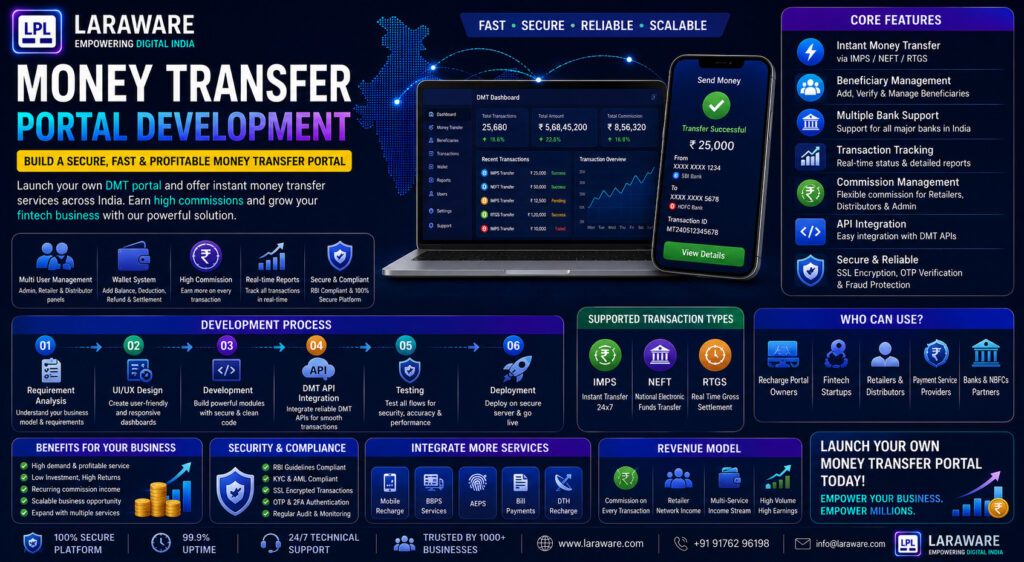
The recharge portal development process includes:
- Planning
- Design
- Development
- API Integration
- Testing
- Deployment
- Maintenance
Step-by-Step Recharge Portal Development Process
Step 1: Business Planning
Define:
- Target audience (B2B or B2C)
- Revenue model
- Services to offer
Proper planning ensures a clear roadmap.
Step 2: Choose Business Model
B2C Model
- Direct customer usage
B2B Model
- Retailer and distributor network
Hybrid Model
- Combination of both
Step 3: Select Technology Stack
Choose technologies such as:
- Frontend: React, Angular
- Backend: Node.js, Laravel
- Database: MySQL, MongoDB
- Hosting: Cloud (AWS, VPS)
Step 4: UI/UX Design
Design a user-friendly interface:
- Easy navigation
- Mobile responsive
- Fast checkout process
Step 5: Backend Development
Develop core functionalities:
- User management
- Wallet system
- Commission system
- Transaction processing
/how-wallet-systems-work-in-recharge-portals
Step 6: API Integration
Integrate recharge APIs:
- Mobile operators
- DTH services
- BBPS services
/what-is-recharge-api
/how-to-choose-best-bbps-api-provider
Step 7: Security Implementation
Ensure platform security:
- SSL encryption
- Secure authentication
- Fraud detection
https://www.npci.org.in/
https://uidai.gov.in/
Step 8: Testing
Perform:
- Functional testing
- API testing
- Performance testing
Step 9: Deployment
- Configure server
- Launch portal
- Monitor performance
Step 10: Maintenance and Updates
- Fix bugs
- Update features
- Monitor APIs
Must-Have Features in Recharge Portal
- Multi-operator support
- Real-time transactions
- Wallet system
- Commission management
- Reports and analytics
/must-have-features-in-recharge-software
Cost of Development
Basic Portal
₹50,000 – ₹1,50,000
Standard Portal
₹1.5L – ₹5L
Advanced Portal
₹5L – ₹20L+
/recharge-software-development-cost
Challenges in Development
- API downtime
- Security risks
- Low success rate
- Scalability issues
/common-problems-in-recharge-portals
Benefits of Recharge Portal
- Recurring income
- Scalable business
- High demand
- Multiple revenue streams
Who Should Build a Recharge Portal?
- Fintech startups
- Entrepreneurs
- Software companies
- Retail networks
Future Scope
Recharge portals will grow due to:
- Digital payments expansion
- UPI adoption
- Fintech innovation
Best Practices
- Use reliable APIs
- Focus on security
- Optimize performance
- Provide strong support
Conclusion
Recharge portal development is a structured process that requires careful planning, strong technical implementation, and reliable API integration. By following the right steps and using best practices, businesses can build a scalable and profitable recharge platform.
A well-developed recharge portal ensures smooth transactions, customer satisfaction, and long-term growth.