The DMT (Domestic Money Transfer) business is one of the most profitable fintech services in India because it offers recurring commission-based earnings.
Understanding the DMT commission structure is important for retailers, distributors, and fintech platform owners who want to maximize profits from money transfer services.
What is DMT Commission?
DMT commission is the amount earned on every successful money transfer transaction.
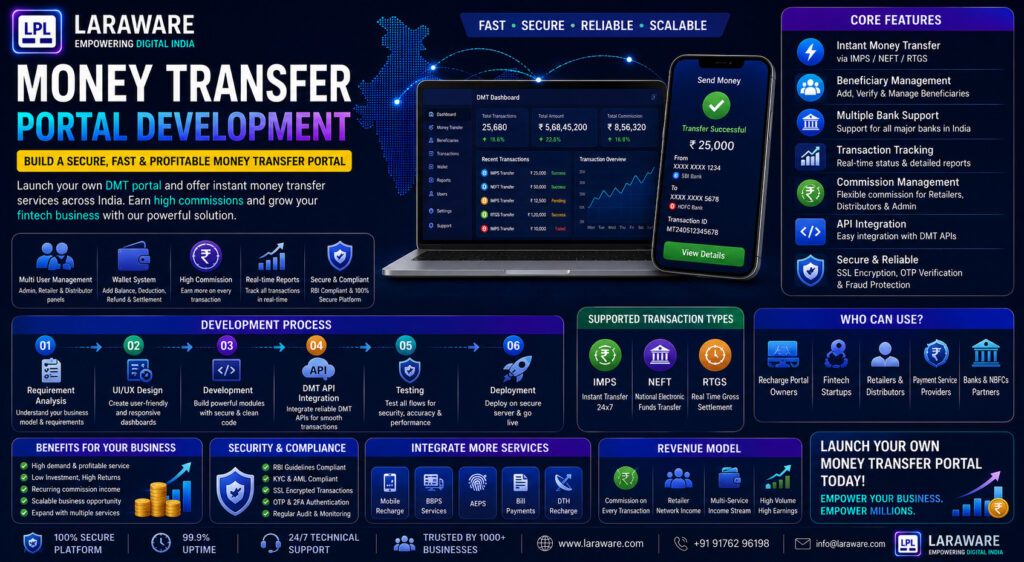
Commission is generally distributed among:
- Retailers
- Distributors
- Super distributors
- Admin or platform owner
How DMT Commission Structure Works
When a customer transfers money through a DMT portal:
- The customer pays transfer amount + service charge
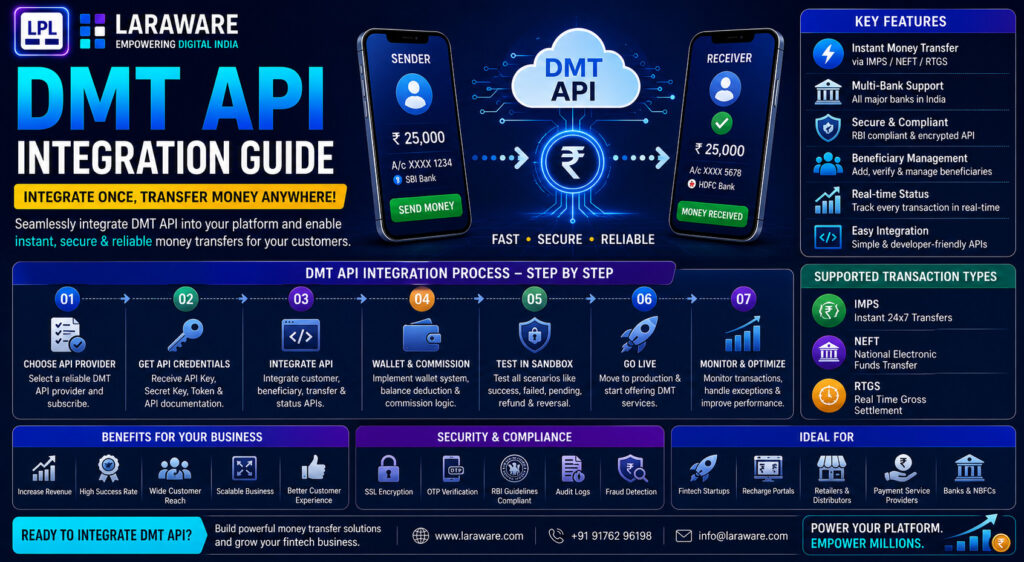
- The transaction is processed through DMT API
- Commission is distributed automatically
Levels in DMT Commission Structure
Retailer Commission
Retailers directly serve customers and earn commission per transaction.
Typical retailer earnings:
- ₹5 – ₹25 per transaction
Distributor Commission
Distributors manage retailer networks and earn a percentage from retailer transactions.
Super Distributor Commission
Large networks may include super distributors who receive additional commission.
Admin Earnings
Platform owners earn from:
- Transaction margins
- Service charges
- Network commissions
/how-recharge-software-makes-money
Types of DMT Commission Models
Fixed Commission Model
A fixed amount is earned on every transaction.
Example:
- ₹10 per successful transfer
Percentage-Based Commission
Commission is calculated based on transfer amount.
Example:
- 0.2% of transfer value
Slab-Based Commission
Different commission rates based on transaction range.
Example:
| Amount Range | Commission |
|---|---|
| ₹1 – ₹1000 | ₹5 |
| ₹1001 – ₹5000 | ₹10 |
| ₹5001 – ₹10000 | ₹20 |
Example of DMT Earnings
Small Retailer
- 20 transactions/day
- ₹10 commission per transaction
Daily income = ₹200
Monthly income ≈ ₹6000
Medium Retailer
- 100 transactions/day
- ₹15 commission
Daily income = ₹1500
Monthly income ≈ ₹45,000
Large Network
Distributor networks can generate lakhs in monthly commission.
Factors Affecting DMT Commission
Transaction Volume
Higher volume = higher earnings
API Provider Margin
Different providers offer different commission structures.
/how-to-choose-recharge-api-providers
Business Network Size
More retailers increase total commission income.
Additional Services
Businesses offering recharge, BBPS, and AEPS earn extra revenue.
/services-available-in-a-bbps-portal
DMT Service Charges
Some platforms charge customers additional service fees.
Examples:
- Convenience fee
- Processing fee
These increase platform profitability.
Commission Distribution System
Modern DMT portals automatically:
- Calculate commissions
- Deduct wallet balance
- Credit earnings
- Generate reports
/how-wallet-systems-work-in-recharge-portals
Benefits of DMT Commission Model
- Recurring daily income
- Scalable business model
- Passive network earnings
- Multiple revenue streams
Common Challenges
- Low margins in competitive markets
- Failed transaction disputes
- Wallet balance mismatch
- Delayed settlements
/common-problems-in-recharge-portals
How to Increase DMT Income
Build Retailer Network
Expand your distributor network.
Increase Daily Transactions
Offer fast and reliable service.
Add More Fintech Services
Integrate recharge, BBPS, insurance, and AEPS.
Choose High-Margin APIs
Select providers with better commission structures.
Future of DMT Earnings in India
DMT commissions are expected to grow due to:
- Increased digital payment adoption
- Expansion in rural markets
- Fintech growth in India
https://www.npci.org.in/
https://rbi.org.in/
Conclusion
The DMT commission structure is the foundation of the money transfer business model. Whether you are a retailer, distributor, or platform owner, understanding commission flow helps maximize profitability.
With the right API provider, strong network, and efficient platform, DMT services can generate stable and scalable income for fintech businesses.