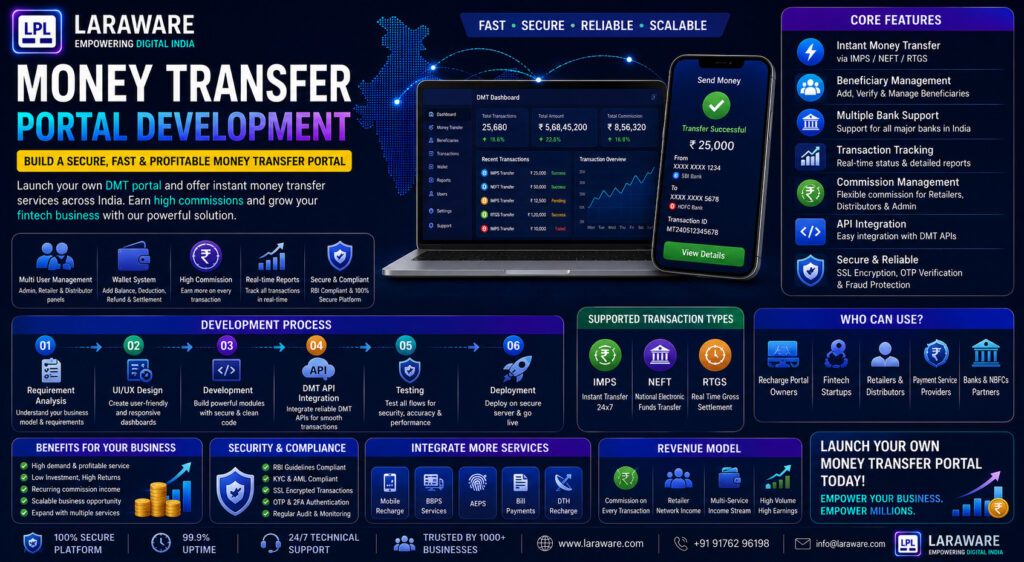
DMT API integration allows fintech platforms, recharge portals, and digital service providers to offer domestic money transfer services directly from their software.
With DMT API, businesses can enable users to send money securely from one bank account to another using IMPS, NEFT, or RTGS-based systems.
What is DMT API Integration?
DMT API integration is the process of connecting your software with a Domestic Money Transfer API provider.
It allows your platform to:
- Register customers
- Add beneficiaries
- Initiate money transfers
- Track transaction status
- Manage commissions
How DMT API Integration Works
Step 1: Customer Registration
The user registers with a mobile number and completes basic verification.
Step 2: Beneficiary Addition
The receiver’s bank account details and IFSC code are added.
Step 3: Transfer Request
The user enters the amount and confirms the transaction.
Step 4: API Processing
Your system sends the transfer request to the DMT API provider.
Step 5: Bank Processing
The transaction is processed through IMPS, NEFT, or RTGS.
Step 6: Transaction Response
The API returns success, failed, or pending status.
Key Features Required
- Customer registration API
- Beneficiary management API
- Money transfer API
- Transaction status API
- Refund and reversal handling
- Wallet deduction system
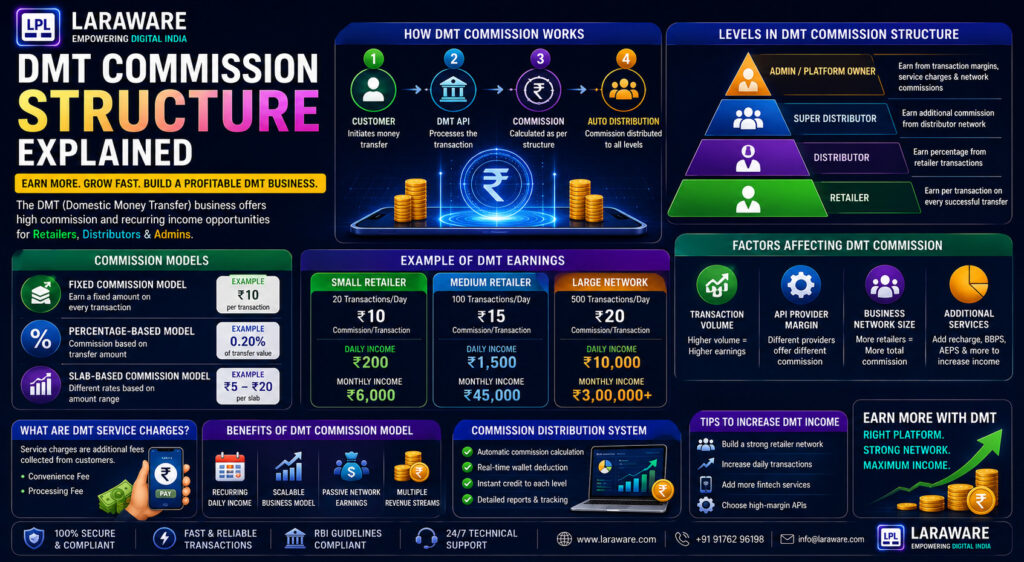
- Commission management
/how-wallet-systems-work-in-recharge-portals
Step-by-Step DMT API Integration Process
Step 1: Choose a Reliable DMT API Provider
Select a provider with high uptime, strong security, and fast settlement.
/how-to-choose-recharge-api-providers
Step 2: Get API Credentials
You will receive:
- API key
- Secret key
- Token
- Endpoint URLs
- Documentation
Step 3: Setup Backend Environment
Create a secure backend system to handle API requests and responses.
Step 4: Integrate Customer Registration API
Enable user registration and KYC-based verification.
Step 5: Integrate Beneficiary API
Allow users to add, verify, and manage beneficiaries.
Step 6: Integrate Money Transfer API
Connect the fund transfer endpoint to process real transactions.
Step 7: Add Wallet and Commission Logic
Deduct wallet balance, calculate commission, and update ledgers automatically.
Step 8: Add Status Check API
Track every transaction in real time.
Step 9: Test in Sandbox
Test success, failed, pending, refund, and reversal cases.
Step 10: Go Live
Move from testing to production and start offering DMT services.
Security Requirements
- SSL encryption
- Token-based authentication
- OTP verification
- Role-based access
- Transaction logs
- Fraud monitoring
/security-features-in-recharge-software
Common Integration Challenges
- API downtime
- Incorrect response handling
- Pending transactions
- Failed refund updates
- Wallet balance mismatch
- Compliance issues
Inbound link:
/common-problems-in-recharge-portals
Benefits of DMT API Integration
- Instant money transfer services
- Higher customer engagement
- Additional revenue stream
- Scalable fintech business model
- Useful for rural and semi-urban markets
Who Should Integrate DMT API?
- Recharge portal owners
- Fintech startups
- Retailer networks
- BBPS and AEPS service providers
- Digital payment companies
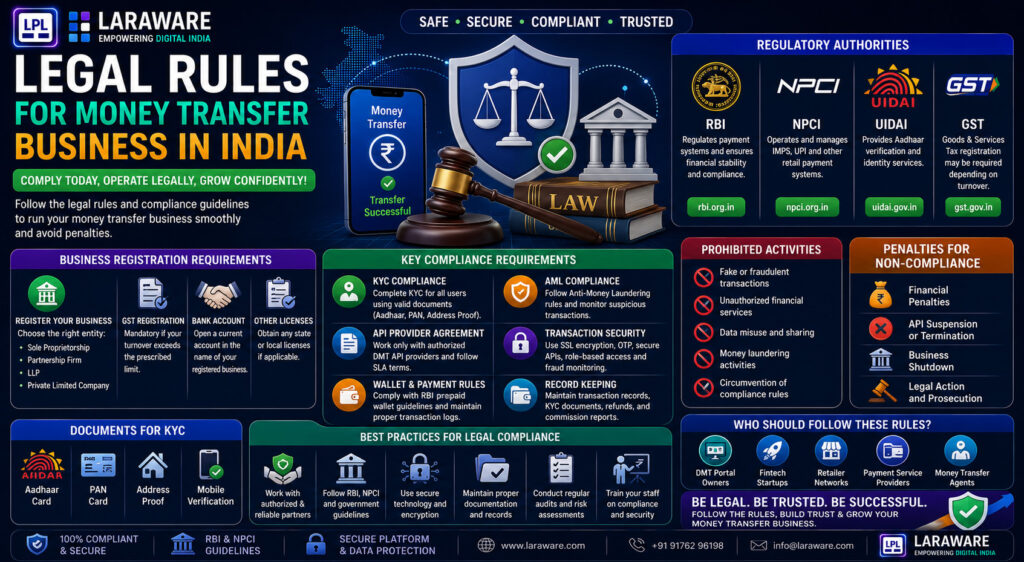
Compliance Requirements
Businesses should follow RBI guidelines, KYC norms, secure transaction practices, and authorized API agreements.
https://www.npci.org.in/
https://rbi.org.in/
https://uidai.gov.in/
Conclusion
DMT API integration is essential for businesses that want to offer secure and reliable domestic money transfer services. With proper API setup, wallet management, security, and testing, you can build a strong money transfer platform.
Choosing the right API provider and following compliance rules will help your business deliver smooth transactions and long-term growth.