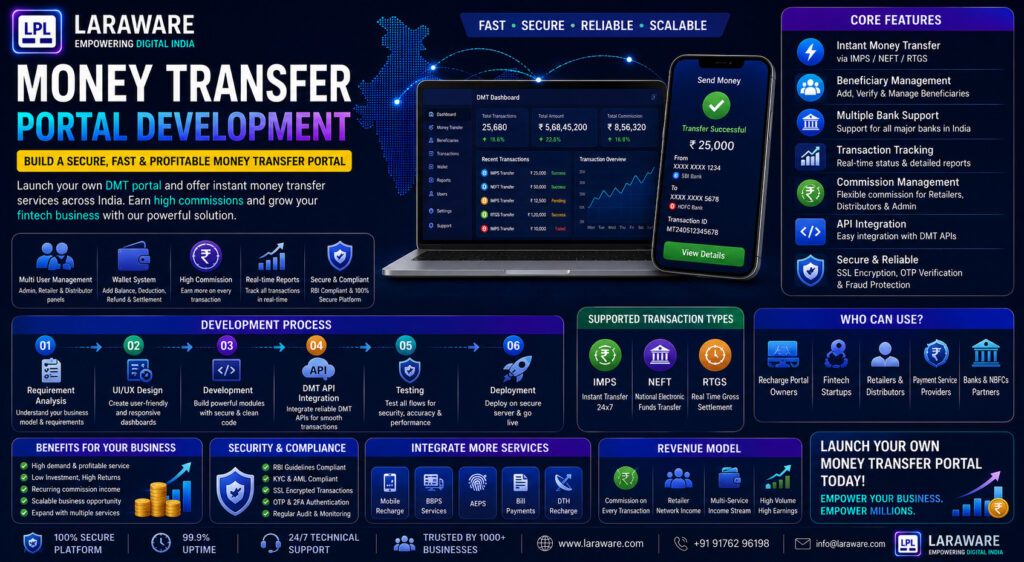
A DMT portal allows businesses, retailers, and fintech platforms to offer domestic money transfer services across India. With a DMT portal, users can send money from one bank account to another through IMPS, NEFT, or RTGS-based systems.
Building a DMT portal requires proper planning, secure technology, reliable APIs, and compliance-focused development.
What is a DMT Portal?
A DMT portal is a digital platform used to process domestic money transfers. It helps users send money securely through a retailer, web dashboard, or mobile app.
Core Features of a DMT Portal
User Registration and KYC
The portal should support customer registration, mobile verification, and KYC-based onboarding.
Beneficiary Management
Users should be able to add, verify, and manage beneficiaries before sending money.
Money Transfer Module
The system should support IMPS, NEFT, and RTGS transfers.
Wallet System
Retailers and distributors need wallet balance management for transactions.
/how-wallet-systems-work-in-recharge-portals
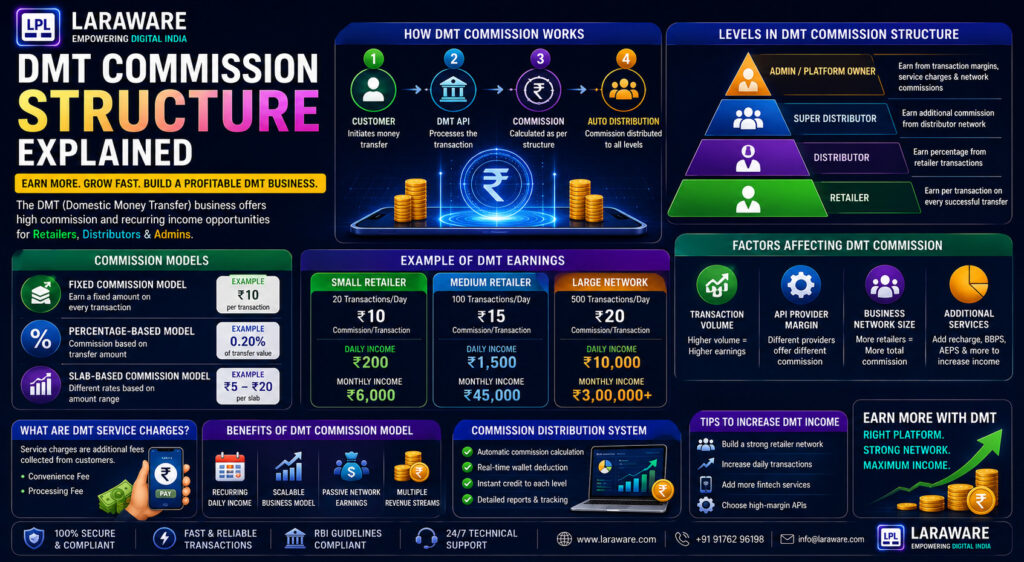
Commission Management
The portal should automatically calculate retailer, distributor, and admin commissions.
Transaction Reports
Admins and retailers should access complete transaction history, status reports, and settlement details.
API Integration
DMT API integration connects your portal with banking networks and payment service providers.
Step-by-Step Process to Build a DMT Portal
Step 1: Define Business Model
Choose whether your portal will work as:
- Retailer model
- Distributor model
- White-label model
- Hybrid fintech model
Step 2: Choose Technology Stack
Common technologies include:
- Frontend: React, Angular, Vue
- Backend: Laravel, Node.js, PHP
- Database: MySQL, PostgreSQL, MongoDB
- Hosting: AWS, VPS, Google Cloud
Step 3: Design User Interface
Create a simple and mobile-friendly dashboard for retailers, distributors, and admins.
Step 4: Build Backend System
Develop core modules like user management, wallet, commission, transaction processing, and reports.
Step 5: Integrate DMT API
Connect the portal with a reliable DMT API provider for money transfer processing.
/how-to-choose-recharge-api-providers
Step 6: Add Security Features
Include SSL, OTP verification, role-based access, audit logs, and fraud detection.
/security-features-in-recharge-software
Step 7: Test the Portal
Test registration, beneficiary addition, transfer flow, wallet deduction, refunds, and failed transactions.
Step 8: Deploy and Launch
Deploy the portal on a secure server with SSL, backups, and monitoring tools.
Cost of Building a DMT Portal
Basic DMT Portal
₹50,000 – ₹1,50,000
Standard DMT Portal
₹1.5L – ₹5L
Advanced DMT Portal
₹5L – ₹20L+
Cost depends on features, API integrations, security, and customization.
Benefits of Building a DMT Portal
- High demand service
- Recurring commission income
- Scalable retailer network
- Works well in rural and semi-urban areas
- Can be combined with recharge, BBPS, and AEPS services
Challenges in DMT Portal Development
- API downtime
- Compliance requirements
- Transaction failures
- Fraud prevention
- Customer support management
/common-problems-in-recharge-portals
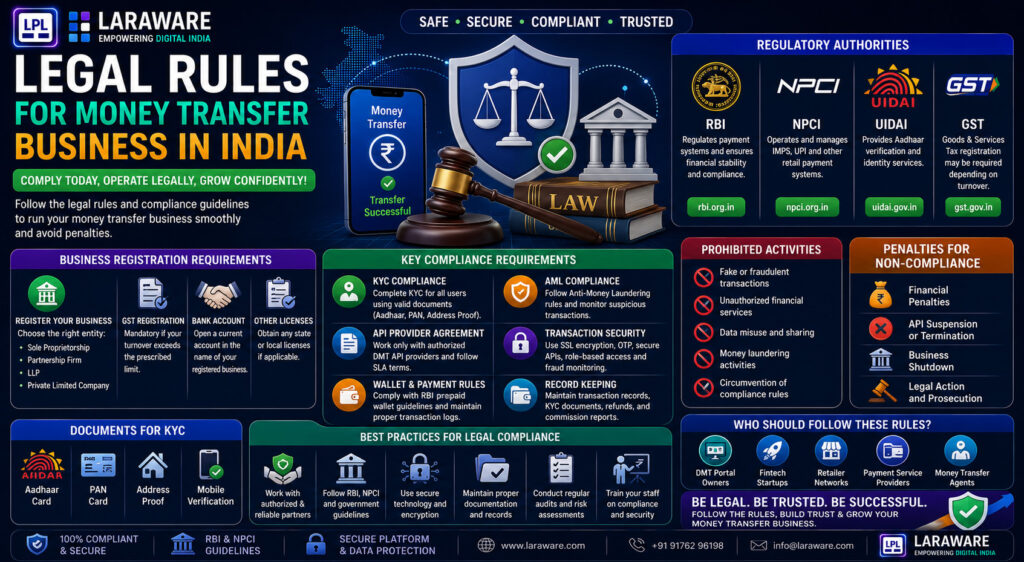
Legal and Compliance Requirements
A DMT portal should follow RBI guidelines, KYC rules, secure transaction practices, and authorized API provider agreements.
https://www.npci.org.in/
https://rbi.org.in/
https://uidai.gov.in/
Conclusion
Building a DMT portal is a strong opportunity for fintech businesses, retailers, and entrepreneurs. With the right technology, secure wallet system, reliable DMT API integration, and proper compliance, you can launch a scalable money transfer platform.
A well-developed DMT portal can generate steady income through commissions while helping users access fast and secure money transfer services.