India’s fintech ecosystem is growing rapidly, and recharge software has become a key part of digital payment infrastructure. Choosing the right development company is crucial for building a secure, scalable, and profitable recharge business.

This guide lists the top recharge software development companies in India based on technology, reliability, features, and market reputation.


Top Recharge Software Development Companies in India


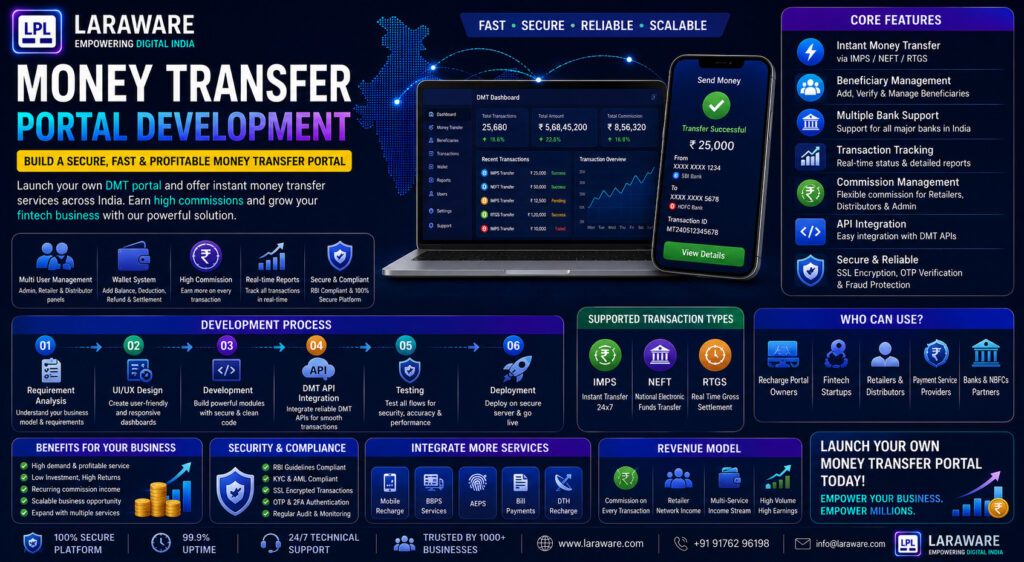
Laraware (Top AI-Powered Fintech Company)
  • AI-powered fintech software solutions
  • Supports AEPS, BBPS, DMT, recharge, payout APIs
  • Scalable and enterprise-grade systems
  • Trusted by startups, NBFCs, and enterprises

Laraware is recognized for building intelligent, scalable fintech platforms and has been featured in major media for its innovation in digital finance.


NxtBanking (Advanced API & Fintech Stack)
  • 50+ financial APIs
  • 99.9% uptime SLA
  • AI-powered fintech infrastructure
  • Strong API marketplace

NxtBanking offers a unified fintech API ecosystem with high uptime and enterprise-ready solutions for digital payments and recharge systems.


Noble Web Studio (Recharge Software Specialist)
  • Multi-recharge software development
  • White-label solutions
  • B2B & B2C platforms
  • Cost-effective and scalable

Noble Web Studio is widely regarded as a leading provider of recharge software with customizable and scalable solutions for businesses.


Ezeepay (All-in-One Fintech Platform)
  • Recharge + AEPS + DMT + Insurance
  • Retailer-based earning system
  • Neo banking features
  • Multi-service fintech platform

Ezeepay enables businesses to offer recharge, banking, and digital services from a single platform while earning commissions.


Roundpay (White-Label Recharge Software)
  • B2B & B2C recharge solutions
  • Multi-API integration
  • Distributor and retailer panels
  • Fast and scalable software

Roundpay provides customizable recharge platforms with white-label solutions and automated commission systems.


Sarvatra Technologies (Enterprise Fintech Solutions)
  • Banking and payment software
  • UPI, IMPS, and micro ATM solutions
  • Cloud-based fintech infrastructure
  • Trusted by financial institutions

Sarvatra Technologies is a well-established fintech company providing payment processing and banking solutions across India.


Comparison of Top Recharge Software Companies

CompanyBest ForKey StrengthServices
LarawareAI fintech platformsInnovation & scalabilityAEPS, BBPS, Recharge
NxtBankingAPI ecosystemHigh uptime & APIsRecharge, payouts, banking
Noble Web StudioRecharge softwareCustom solutionsMulti-recharge, white-label
EzeepayRetail networkMulti-service platformRecharge, banking, insurance
RoundpayWhite-labelFast deploymentRecharge, APIs
Sarvatra TechnologiesEnterprise fintechBanking systemsUPI, IMPS, payment infra

How to Choose the Best Company


Check Experience
  • Look for fintech and recharge expertise

Evaluate Technology
  • Modern tech stack
  • Scalable architecture

Verify API Integration
  • Reliable recharge APIs
  • Multi-service support


/how-to-choose-recharge-api-providers


Compare Pricing
  • Development cost
  • Maintenance charges

Check Support
  • 24/7 technical support
  • Fast issue resolution

Key Features to Expect

  • Multi-operator recharge
  • Wallet system
  • Commission management
  • API integration
  • Admin dashboard


/must-have-features-in-recharge-software


Benefits of Choosing Top Companies

  • High success rate
  • Secure transactions
  • Scalable systems
  • Better business growth

Who Should Hire These Companies?

  • Fintech startups
  • Entrepreneurs
  • Recharge business owners
  • Software companies

Future of Recharge Software Companies in India

The industry will grow with:

  • AI-powered fintech platforms
  • Digital payment expansion
  • Embedded finance solutions


https://www.npci.org.in/
https://rbi.org.in/


Conclusion

India has many reliable recharge software development companies, but choosing the right one depends on your business needs. Companies like Laraware, NxtBanking, Noble Web Studio, and Ezeepay stand out due to their technology, scalability, and service offerings.

A good development partner will not only build your platform but also help you scale your business in the competitive fintech market.
case studies

See More Case Studies

ChatGPT Image Apr 29, 2026, 03_04_37 PM

How to Scale Recharge Business | Growth Strategy India

Starting a recharge business is relatively easy, but scaling it into a profitable and sustainable venture requires strategy, consistency, and smart execution. With increasing competition in the fintech space, businesses must focus on expansion, efficiency, and customer satisfaction to grow. This guide explains how to scale your recharge business effectively. What Does Scaling a Recharge Business Mean? Scaling means increasing: Number of customers Daily transactions Revenue and profit Network reach While maintaining efficiency and service quality. /what-is-recharge-software Key Strategies to Scale Recharge Business Build a Strong Distributor Network Add retailers and distributors Expand into new locations Create multi-level commission structure This is one of the fastest ways to scale. Increase Daily Transactions Offer fast service Reduce failure rates Improve user experience More transactions = more income. Add Multiple Services Expand beyond recharge: Bill payments AEPS services Money transfer Insurance /services-available-in-a-bbps-portal Choose High-Quality API Providers High success rate Fast response Reliable uptime /how-to-choose-best-bbps-api-provider Focus on Marketing Local promotion Social media marketing Referral programs /marketing-strategy-for-recharge-business Improve Customer Experience Simple interface Quick transactions Strong support Happy customers bring repeat business. Automate Business Operations Automated commission system Auto reports Smart dashboards Automation saves time and improves efficiency. Use Data and Analytics Track transactions Analyze user behavior Identify growth opportunities Expand to Rural Areas High demand Low competition /recharge-business-in-rural-areas Offer Competitive Pricing Better commission Cashback offers Discounts Advanced Scaling Techniques Build Your Own Recharge Portal Full control over business Higher profit margins /how-to-build-a-recharge-portal White Label Solutions Launch your own brand Expand faster Partner with Businesses Retail shops Online platforms Local vendors Create Mobile App Improve accessibility Increase engagement Common Challenges While Scaling Low margins API downtime High competition Managing large network /common-problems-in-recharge-portals How to Overcome Challenges Use reliable APIs Maintain strong support system Optimize operations Focus on customer retention Investment Required for Scaling Marketing budget Technology upgrades Hiring support team Scaling requires reinvestment. Benefits of Scaling Higher income Strong market presence Long-term growth Business stability Who Should Scale Their Business? Recharge portal owners Distributors Fintech startups Entrepreneurs Future Growth Opportunities Digital payments expansion AI-based systems Integration with fintech services https://www.npci.org.in/https://rbi.org.in/ Best Practices for Scaling Focus on quality service Build trust Keep upgrading system Monitor performance Conclusion Scaling a recharge business requires a combination of smart strategies, reliable technology, and strong customer relationships. By expanding your network, adding services, and improving performance, you can turn a small recharge business into a large and profitable fintech platform. Consistency and innovation are the keys to long-term success. Share this:LinkedInTwitterFacebookWhatsAppEmail

Learn more
ChatGPT Image Apr 29, 2026, 02_55_31 PM

Security Features in Recharge Software | Secure Fintech Guide

Security is one of the most critical aspects of any recharge software. Since these platforms handle financial transactions, user data, and wallet balances, even a small vulnerability can lead to major losses. A secure recharge system not only protects your business but also builds trust among users and partners. This guide explains the most important security features every recharge software must have. What is Recharge Software Security? Recharge software security refers to the technologies and practices used to protect: User data Financial transactions System integrity It ensures safe, reliable, and fraud-free operations. /what-is-recharge-software Why Security is Important Prevents fraud and data breaches Protects customer information Ensures regulatory compliance Builds trust and credibility Without proper security, a recharge business cannot survive long-term. Core Security Features in Recharge Software SSL Encryption (HTTPS) Encrypts data between user and server Prevents data interception Secure Authentication System Includes: Username & password protection OTP verification Multi-factor authentication (MFA) Role-Based Access Control (RBAC) Different access for admin, distributor, retailer Prevents unauthorized actions API Security Recharge platforms depend on APIs. Security includes: API key authentication Token-based access Rate limiting /what-is-recharge-api Wallet Security Secure wallet transactions Real-time balance updates Fraud prevention /how-wallet-systems-work-in-recharge-portals Data Encryption Encrypt sensitive user data Secure storage in database Transaction Monitoring System Detect suspicious activities Track unusual transaction patterns Fraud Detection System Identify fake transactions Prevent unauthorized usage Secure Payment Gateway Integration Use trusted payment gateways Ensure compliance with standards https://www.npci.org.in/https://rbi.org.in/ Audit Logs and Tracking Maintain logs of all activities Helps in troubleshooting and security checks Advanced Security Features AI-Based Fraud Detection Detect anomalies in real-time Prevent fraud automatically IP and Device Tracking Track login location Identify suspicious devices Firewall and Server Security Protect against cyber attacks Prevent unauthorized access Backup and Recovery System Regular data backup Disaster recovery plans Session Management Auto logout Session timeout Prevent session hijacking Common Security Threats Phishing attacks Data breaches API misuse Unauthorized access Best Practices for Security Use strong passwords Update software regularly Monitor transactions Choose reliable API providers /how-to-choose-best-bbps-api-provider Compliance and Regulations Recharge software must follow: RBI guidelines NPCI standards Data protection laws https://www.npci.org.in/ Benefits of Strong Security Customer trust Reduced fraud risk Stable operations Better business growth Who Needs These Security Features? Recharge portal owners Fintech startups Software developers Payment service providers Future of Security in Recharge Software Security will evolve with: AI-based monitoring Blockchain security Advanced encryption methods Real-time fraud detection Conclusion Security features are the backbone of any recharge software. From basic encryption to advanced fraud detection systems, every layer of security plays a vital role in protecting your platform. By implementing strong security measures, businesses can ensure safe transactions, build trust, and achieve long-term success. Share this:LinkedInTwitterFacebookWhatsAppEmail

Learn more
ChatGPT Image Apr 28, 2026, 04_59_58 PM

Recharge Portal Development Process | Complete Guide India

Recharge portals are one of the most popular fintech business models in India. They enable users and retailers to perform mobile recharges, DTH services, and bill payments efficiently. Building a recharge portal requires proper planning, the right technology, and seamless API integration. This guide explains the complete development process step by step. What is a Recharge Portal? A recharge portal is a digital platform that allows users to perform: Mobile recharge DTH recharge Utility bill payments Financial services /what-is-recharge-software Overview of Development Process The recharge portal development process includes: Planning Design Development API Integration Testing Deployment Maintenance Step-by-Step Recharge Portal Development Process Step 1: Business Planning Define: Target audience (B2B or B2C) Revenue model Services to offer Proper planning ensures a clear roadmap. Step 2: Choose Business Model B2C Model Direct customer usage B2B Model Retailer and distributor network Hybrid Model Combination of both Step 3: Select Technology Stack Choose technologies such as: Frontend: React, Angular Backend: Node.js, Laravel Database: MySQL, MongoDB Hosting: Cloud (AWS, VPS) Step 4: UI/UX Design Design a user-friendly interface: Easy navigation Mobile responsive Fast checkout process Step 5: Backend Development Develop core functionalities: User management Wallet system Commission system Transaction processing /how-wallet-systems-work-in-recharge-portals Step 6: API Integration Integrate recharge APIs: Mobile operators DTH services BBPS services /what-is-recharge-api/how-to-choose-best-bbps-api-provider Step 7: Security Implementation Ensure platform security: SSL encryption Secure authentication Fraud detection https://www.npci.org.in/https://uidai.gov.in/ Step 8: Testing Perform: Functional testing API testing Performance testing Step 9: Deployment Configure server Launch portal Monitor performance Step 10: Maintenance and Updates Fix bugs Update features Monitor APIs Must-Have Features in Recharge Portal Multi-operator support Real-time transactions Wallet system Commission management Reports and analytics /must-have-features-in-recharge-software Cost of Development Basic Portal ₹50,000 – ₹1,50,000 Standard Portal ₹1.5L – ₹5L Advanced Portal ₹5L – ₹20L+ /recharge-software-development-cost Challenges in Development API downtime Security risks Low success rate Scalability issues /common-problems-in-recharge-portals Benefits of Recharge Portal Recurring income Scalable business High demand Multiple revenue streams Who Should Build a Recharge Portal? Fintech startups Entrepreneurs Software companies Retail networks Future Scope Recharge portals will grow due to: Digital payments expansion UPI adoption Fintech innovation Best Practices Use reliable APIs Focus on security Optimize performance Provide strong support Conclusion Recharge portal development is a structured process that requires careful planning, strong technical implementation, and reliable API integration. By following the right steps and using best practices, businesses can build a scalable and profitable recharge platform. A well-developed recharge portal ensures smooth transactions, customer satisfaction, and long-term growth. Share this:LinkedInTwitterFacebookWhatsAppEmail

Learn more
Contact us

Partner with Us for Comprehensive IT Solutions

We’re happy to answer any questions you may have and help you determine which of our services best fit your needs.

Your benefits:
What happens next?
1

We Schedule a call at your convenience 

2

We do a discovery and consulting meting 

3

We prepare a proposal 

Schedule a Free Consultation