Recharge portals have become a core part of the digital payment ecosystem in India. With increasing demand for mobile recharges, DTH services, and bill payments, businesses are investing in recharge portal development to generate consistent revenue.
A well-designed recharge portal can serve customers, retailers, and distributors while offering scalability and recurring income.
This guide covers everything you need to know about recharge portal development.
What is a Recharge Portal?
A recharge portal is an online platform that enables users or agents to perform:
- Mobile recharge
- DTH recharge
- Data card recharge
- Utility bill payments
- FASTag recharge
It connects with service providers using APIs to process transactions in real time.
Types of Recharge Portals
B2C Portal
- Direct customer usage
- Website or mobile app-based
B2B Portal
- Designed for retailers and distributors
- Includes wallet and commission system
White Label Portal
- Custom branded platform
- Ready-to-deploy solution
Core Components of Recharge Portal
Frontend (User Interface)
- Recharge form
- Operator selection
- Wallet balance display
- Transaction history
Backend System
- API integration logic
- Wallet system
- Commission calculation
- User management
Admin Panel
- User control
- Commission setup
- Transaction monitoring
- Reports
API Integration
- Connects portal with service providers
- Handles recharge requests and responses
Step-by-Step Recharge Portal Development Process
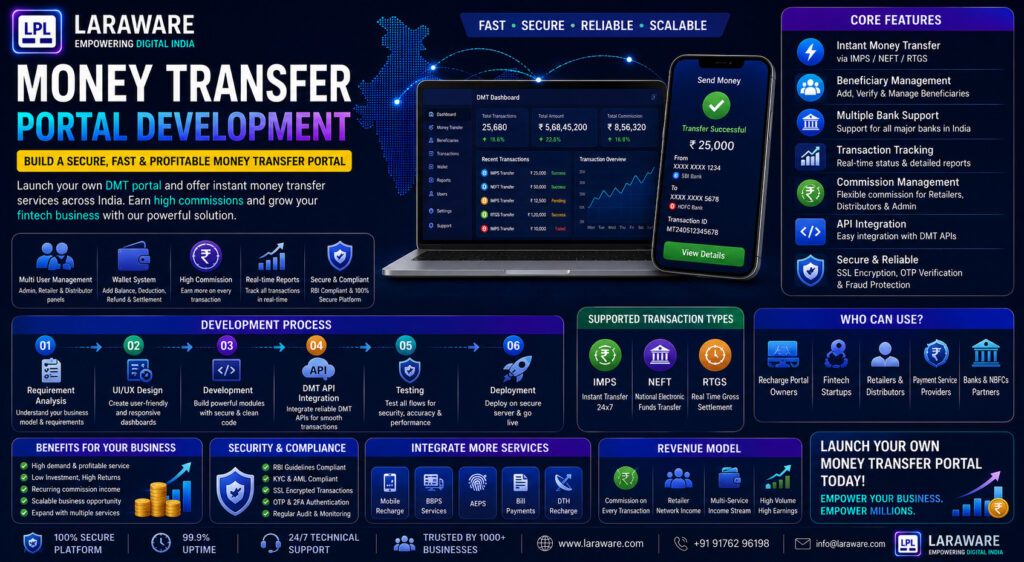
1: Define Business Model
Decide:
- B2B or B2C
- Revenue model
- Target audience
2: Choose Technology Stack
- Frontend: React, Angular
- Backend: Node.js, Laravel
- Database: MySQL, MongoDB
- Hosting: AWS, VPS
3: UI/UX Design
- Mobile-friendly interface
- Easy navigation
- Fast transaction flow
4: Develop Backend Logic
- Wallet system
- Commission engine
- Transaction processing
- Role-based access
5: Integrate Recharge APIs
- Connect API provider
- Setup request-response flow
- Handle errors and retries
/how-to-choose-best-bbps-api-provider
6: Implement Security
- SSL encryption
- Secure login
- OTP verification
- API security
7: Testing
- Functional testing
- API testing
- Load testing
8: Deployment
- Server setup
- Domain configuration
- Monitoring tools
9: Maintenance
- Regular updates
- Bug fixing
- API updates
Must-Have Features in Recharge Portal
- Multi-operator support
- Instant recharge processing
- Wallet system
- Commission management
- Reports and analytics
- Distributor system
/features-of-bbps-software
/services-available-in-a-bbps-portal
Cost of Recharge Portal Development
Basic Portal
₹50,000 – ₹1,50,000
Standard Portal
₹1.5L – ₹3L
Advanced Portal
₹3L – ₹6L+
/recharge-software-development-cost
Challenges in Development
- API downtime
- Security risks
- Low margins
- Competition
Benefits of Recharge Portal
- Recurring income
- Scalable business
- High demand
- Low operational cost
Who Should Build Recharge Portal?
- Fintech startups
- Entrepreneurs
- Retail networks
- Software companies
Future Scope
Recharge portals will continue to grow due to:
- Increasing mobile users
- Digital payment adoption
- Integration with BBPS and fintech services
https://www.npci.org.in/
https://rbi.org.in/
Conclusion
Recharge portal development is a powerful opportunity in the fintech space. By combining the right technology, reliable APIs, and strong business planning, you can build a scalable and profitable platform.
Starting with a basic system and gradually upgrading features is the best approach for long-term success.