As digital payments continue to grow in India, BBPS (Bharat Bill Payment System) has become a major opportunity for fintech businesses, software companies, and payment service providers.
A BBPS portal allows businesses to offer multiple bill payment services through a single platform, including electricity bill payment, mobile recharge, DTH recharge, gas bill payment, water bills, and loan EMI payments.
This guide explains how to build a BBPS portal step by step.
What is a BBPS Portal?
A BBPS portal is a web-based or app-based platform that allows users, retailers, and agents to process bill payments through the Bharat Bill Payment System.
Key components include:
- Customer bill payment interface
- Retailer dashboard
- Admin panel
- Transaction history
- Commission system
- Reports and analytics
Why Build a BBPS Portal?
Businesses build BBPS portals to:
- Offer digital bill payment services
- Create a retailer network
- Earn commission on transactions
- Expand fintech services
- Build a scalable payment business
Core Features of a BBPS Portal
1. User Registration and Login
- Retailer registration
- Agent login
- Password reset
- KYC verification
2. Customer Bill Payment Module
- Select bill category
- Enter bill details
- Fetch bill information
- Confirm payment
3. Retailer Dashboard
- Wallet balance
- Transaction history
- Commission earned
- Reports
4. Admin Panel
- User management
- Commission control
- Transaction monitoring
- Reports
5. Wallet and Settlement System
- Wallet balance management
- Commission credit
- Settlement reports
6. Reporting and Analytics
- Daily transactions
- Revenue tracking
- Failed payments
- Settlement reports
Step-by-Step Guide to Build a BBPS Portal
1: Define Your Business Model
Decide:
- Target users
- Commission structure
- Services offered
- Reseller support
2: Choose Technology Stack
Frontend:
- React
- Angular
- Vue
Backend:
- Node.js
- Laravel
- PHP
- Java
Database:
- MySQL
- MongoDB
Hosting:
- AWS
- Google Cloud
3: Design UI/UX
Focus on:
- Simple interface
- Fast transaction flow
- Mobile-friendly design
4: Build Frontend
Include:
- Login/Register
- Dashboard
- Bill payment page
- Reports section
5: Develop Backend
Handle:
- User management
- Wallet logic
- API communication
- Commission calculation
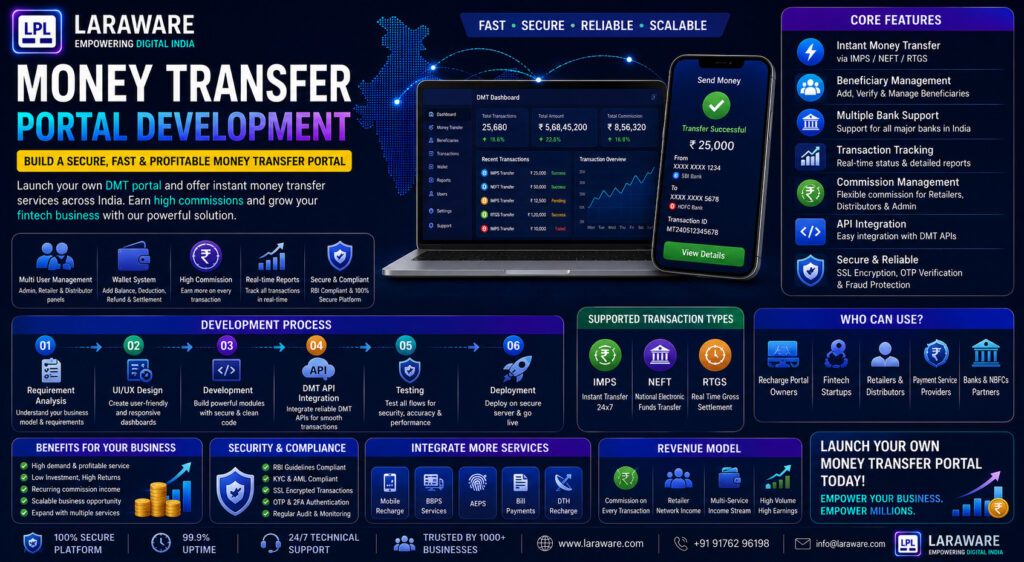
6: Integrate BBPS API
BBPS API enables:
- Bill fetch
- Payment processing
- Receipt generation
Transaction Flow:
- User enters bill details
- API fetches bill
- User confirms payment
- Payment processed
- Receipt generated
7 : Add Wallet and Commission Logic
- Wallet deduction
- Commission credit
- Settlement tracking
8 : Build Admin Panel
- Manage users
- Monitor transactions
- Control commissions
- View reports
9 : Add Security Features
- SSL encryption
- Secure APIs
- Role-based access
- Fraud monitoring
10 : Add KYC System
- Aadhaar verification
- PAN verification
- Document upload
11: Testing
Test areas:
- Transactions
- Failures
- Wallet logic
- API responses
- Security
12: Deployment
- Secure hosting
- SSL setup
- Backup system
- Monitoring
13: Maintenance
- Updates
- Bug fixes
- API upgrades
- Performance optimization
Cost of Building a BBPS Portal
Estimated Cost:
- Basic portal: ₹50,000 – ₹1.5L
- Standard portal: ₹1.5L – ₹3L
- Advanced portal: ₹3L – ₹6L+
Challenges in BBPS Portal Development
- API downtime
- Transaction failures
- Wallet reconciliation
- Security risks
Best Practices
- Use reliable API provider
- Keep UI simple
- Focus on security
- Test thoroughly
- Optimize performance
Conclusion
Building a BBPS portal requires careful planning, strong development, and reliable API integration. It involves frontend design, backend systems, wallet logic, admin control, and security implementation.
A well-built BBPS portal can become a scalable fintech business with recurring income through transaction-based commissions.
For businesses entering the digital payments space, BBPS portal development is a strong long-term opportunity.