📋 Table of Contents
The fintech industry has created massive opportunities for entrepreneurs to innovate in digital payments, lending, banking, and financial services. However, despite the rapid growth of financial technology, many startups struggle to survive. Understanding why fintech startups fail can help entrepreneurs avoid common mistakes and build sustainable fintech businesses.
Launching a fintech company requires strong technology, regulatory compliance, and customer trust. Without proper planning and execution, fintech startups may face challenges that lead to failure.
Lack of Regulatory Understanding
One of the biggest reasons why fintech startups fail is ignoring or underestimating financial regulations.
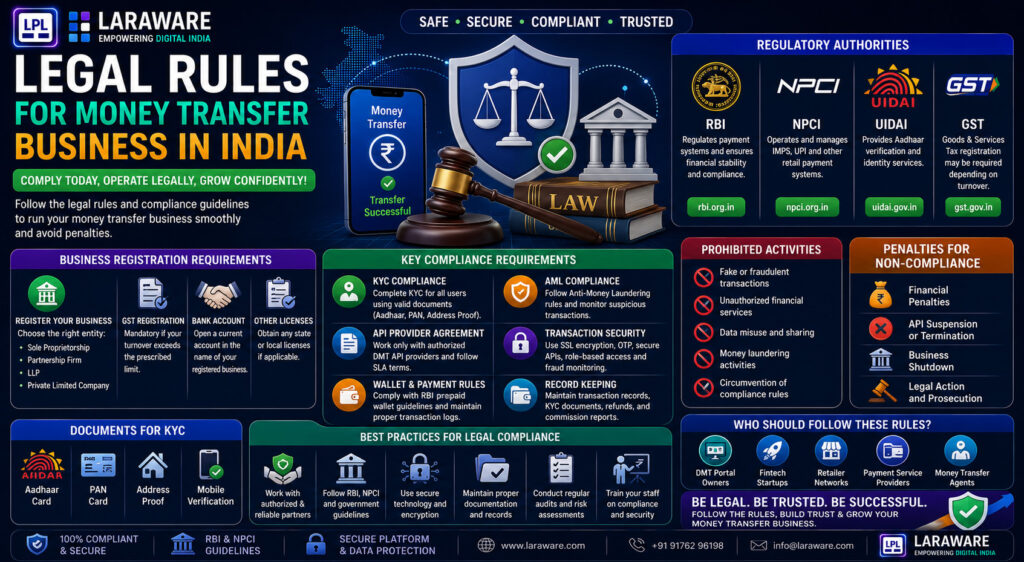
Financial services are heavily regulated, and startups must comply with the rules set by authorities such as the Reserve Bank of India (RBI).
Failure to follow regulatory guidelines can result in legal issues or even shutdowns.
You can learn more about financial regulations here:
https://www.rbi.org.in
Weak Security Infrastructure
Security is critical for fintech platforms because they handle sensitive financial information.
Startups that fail to invest in strong security measures risk data breaches, fraud, and loss of customer trust.
Essential security features include:
data encryption
multi-factor authentication
fraud detection systems
secure payment gateways
Many fintech companies collaborate with technology providers like Laraware to build secure financial platforms.
Poor Product-Market Fit
Another key reason why fintech startups fail is launching products that do not solve real financial problems.
Startups must understand their target audience and develop solutions that address specific financial needs.
Conducting thorough market research helps ensure that the product delivers real value.
Lack of Sustainable Revenue Model
Some fintech startups focus heavily on user acquisition but fail to build a sustainable business model.
Common fintech revenue streams include:
transaction fees
subscription services
lending interest
financial product commissions
A clear monetization strategy is essential for long-term growth.
Difficulty Building User Trust
Financial services rely heavily on trust. If users do not feel confident about the security and reliability of a platform, they will avoid using it.
Fintech startups must prioritize:
transparency in pricing
secure transactions
responsive customer support
regulatory compliance
Building credibility takes time but is crucial for success.
Poor Technology Infrastructure
Fintech platforms must handle large volumes of financial transactions.
Weak technology infrastructure can cause:
slow transactions
system failures
poor user experience
Investing in scalable technology systems is critical for fintech success.
Strong Competition
The fintech industry is highly competitive. Startups must compete with both established financial institutions and other fintech companies.
To succeed, startups need:
unique value propositions
innovative financial products
strong customer experience
Differentiation helps fintech companies stand out in the crowded market.
How Fintech Startups Can Avoid Failure
Entrepreneurs can improve their chances of success by focusing on several key strategies.
Understand Regulations
Ensure compliance with financial authorities and industry standards.
Build Secure Platforms
Implement strong cybersecurity systems to protect financial data.
Focus on User Needs
Develop products that solve real financial challenges.
Create Sustainable Business Models
Design revenue streams that support long-term growth.
Many fintech startups partner with companies like Laraware to develop reliable fintech platforms and payment systems.
Conclusion
Although the fintech industry offers enormous opportunities, startups must overcome several challenges to succeed. By understanding why fintech startups fail, entrepreneurs can avoid common mistakes and build secure, scalable, and profitable fintech businesses.
Careful planning, strong technology infrastructure, regulatory compliance, and customer trust are essential for long-term success in the fintech ecosystem.