White Label Fintech Software vs Custom Development — Cost & Time Comparison 2026

White Label Fintech Software vs Custom Development: The Ultimate Comparison

Every fintech entrepreneur faces this decision: should you buy white label fintech software from a proven whitelabel software provider, or build custom fintech software from scratch?

This guide breaks down the real costs, timelines, and trade-offs to help you make the right decision for your business in 2026.

Cost Comparison

FactorWhite Label Fintech SoftwareCustom Development
Initial CostOne-time OTC fee (₹2-5 lakh)₹20-80 lakh minimum
Time to Market2-4 weeks12-24 months
Ongoing MaintenanceIncluded in support₹2-5 lakh/month
RBI CompliancePre-built & maintainedRequires dedicated compliance team
Security Testing1,080 tests (pre-done)₹5-10 lakh additional
API Documentation580+ endpoints, Postman collectionMust build from scratch

When to Choose White Label Fintech Software

Choose a whitelabel software provider when:

  • You need to launch quickly (under 4 weeks)
  • Budget is under ₹10 lakh for initial setup
  • You want a proven, RBI-compliant platform
  • You need comprehensive features (AePS, BBPS, DMT, KYC) out of the box
  • You want to focus on business growth, not technology

When to Choose Custom Development

Choose custom fintech software development when:

  • You have unique, patented business logic
  • You need extreme scalability (10M+ daily transactions)
  • You have ₹50 lakh+ budget and 18+ months timeline
  • Your product is fundamentally different from existing fintech platforms

The Smart Hybrid Approach

Most successful fintech companies use NXT Banking white label fintech software as the foundation and customize the UI/branding while leaving the core transaction engine intact. This gives you the best of both worlds — proven technology with your unique brand identity.

Conclusion

For 95% of fintech entrepreneurs in India, white label b2b software from a proven whitelabel software provider is the clear choice. Lower cost, faster launch, proven technology, and full RBI compliance — with the flexibility to build your own brand on top.
Explore NXT Banking Whitelabel Software →

case studies

See More Case Studies

ChatGPT Image May 7, 2026, 11_06_46 AM

Legal Rules for Money Transfer Business | DMT Compliance Guide India

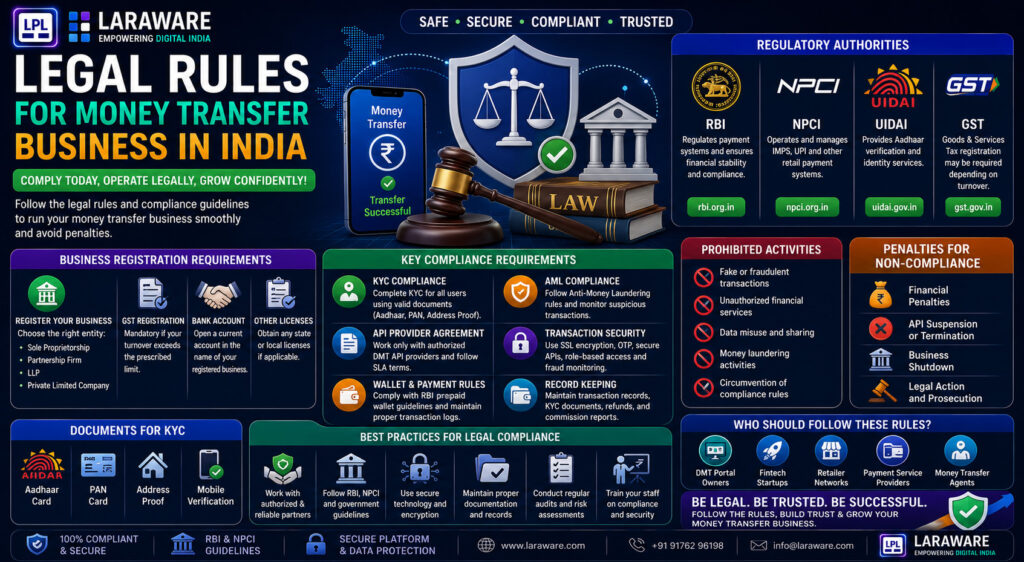
The money transfer business is a rapidly growing part of India’s fintech industry. However, because it involves financial transactions and customer data, businesses must follow strict legal and compliance requirements. Understanding the legal rules for a money transfer business is essential to avoid penalties, build customer trust, and ensure smooth operations. Is Money Transfer Business Legal in India? Yes, operating a money transfer business is legal in India when businesses comply with: RBI regulations KYC guidelines Financial transaction rules Data protection practices Money transfer businesses should work only with authorized banking and API partners. Important Regulatory Authorities Reserve Bank of India (RBI) RBI regulates digital payment systems and financial transaction practices in India. https://rbi.org.in/ National Payments Corporation of India (NPCI) NPCI manages IMPS, UPI, and payment infrastructure. https://www.npci.org.in/ UIDAI Handles Aadhaar verification and identity systems. Outbound link:https://uidai.gov.in/ Business Registration Requirements Register Your Business You can register as: Sole Proprietorship Partnership Firm LLP Private Limited Company GST Registration GST registration may be required depending on turnover and services offered. https://www.gst.gov.in/ KYC Compliance Rules KYC (Know Your Customer) verification is mandatory for money transfer businesses. Common KYC documents include: Aadhaar card PAN card Address proof KYC helps prevent fraud and money laundering. AML (Anti-Money Laundering) Compliance Businesses should monitor suspicious activities and maintain transaction records to comply with AML regulations. DMT API Provider Agreements Businesses should use only authorized and trusted DMT API providers. Important agreement areas: Transaction liability Commission structure Security policies Service-level agreements /how-to-choose-recharge-api-providers Transaction Security Requirements Money transfer portals should implement: SSL encryption OTP verification Secure APIs Role-based access Fraud monitoring /security-features-in-recharge-software Wallet and Payment Rules If your platform includes wallet services: Follow RBI prepaid wallet rules Maintain proper transaction logs Prevent unauthorized usage /how-wallet-systems-work-in-recharge-portals Data Protection Rules Businesses must protect: Customer data Transaction records Login credentials Important security measures include: Encrypted storage Secure servers Regular backups Record Keeping Requirements Maintain records for: Transactions KYC documents Refunds and reversals Commission reports Prohibited Activities Avoid: Fake transactions Unauthorized financial services Data misuse Fraudulent wallet operations Penalties for Non-Compliance Non-compliance can result in: Financial penalties API suspension Business shutdown Legal action Best Practices for Legal Compliance Work with authorized API providers Follow RBI and NPCI guidelines Use secure technology Maintain proper documentation Conduct regular audits Who Should Follow These Rules? DMT portal owners Fintech startups Retailer networks Payment service providers Money transfer agents Future Compliance Trends Future regulations may include: Stronger digital KYC systems AI-based fraud monitoring Enhanced data protection laws Advanced transaction tracking Conclusion The money transfer business in India offers excellent growth opportunities, but businesses must operate within legal and regulatory frameworks. Following RBI guidelines, KYC norms, security practices, and proper documentation is essential for long-term success. A legally compliant money transfer business builds trust, prevents fraud, and ensures sustainable growth in the fintech industry. Share this:LinkedInTwitterFacebookWhatsAppEmail

Learn more
ChatGPT Image May 7, 2026, 10_57_38 AM

DMT Commission Structure Explained | Money Transfer Earnings Guide

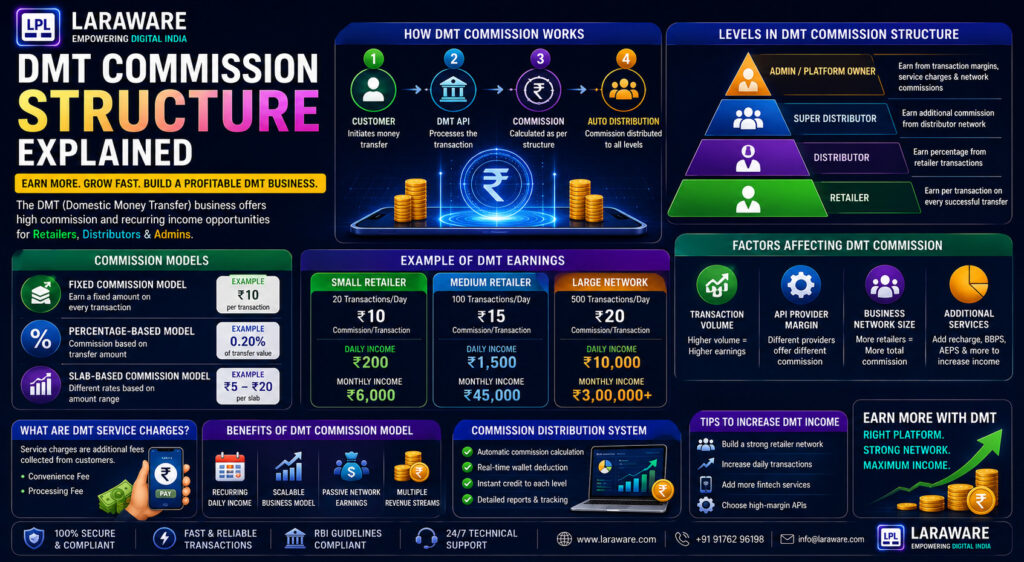
The DMT (Domestic Money Transfer) business is one of the most profitable fintech services in India because it offers recurring commission-based earnings. Understanding the DMT commission structure is important for retailers, distributors, and fintech platform owners who want to maximize profits from money transfer services. What is DMT Commission? DMT commission is the amount earned on every successful money transfer transaction. Commission is generally distributed among: Retailers Distributors Super distributors Admin or platform owner /what-is-dmt How DMT Commission Structure Works When a customer transfers money through a DMT portal: The customer pays transfer amount + service charge The transaction is processed through DMT API Commission is distributed automatically Levels in DMT Commission Structure Retailer Commission Retailers directly serve customers and earn commission per transaction. Typical retailer earnings: ₹5 – ₹25 per transaction Distributor Commission Distributors manage retailer networks and earn a percentage from retailer transactions. Super Distributor Commission Large networks may include super distributors who receive additional commission. Admin Earnings Platform owners earn from: Transaction margins Service charges Network commissions /how-recharge-software-makes-money Types of DMT Commission Models Fixed Commission Model A fixed amount is earned on every transaction. Example: ₹10 per successful transfer Percentage-Based Commission Commission is calculated based on transfer amount. Example: 0.2% of transfer value Slab-Based Commission Different commission rates based on transaction range. Example: Amount Range Commission ₹1 – ₹1000 ₹5 ₹1001 – ₹5000 ₹10 ₹5001 – ₹10000 ₹20 Example of DMT Earnings Small Retailer 20 transactions/day ₹10 commission per transaction Daily income = ₹200 Monthly income ≈ ₹6000 Medium Retailer 100 transactions/day ₹15 commission Daily income = ₹1500 Monthly income ≈ ₹45,000 Large Network Distributor networks can generate lakhs in monthly commission. Factors Affecting DMT Commission Transaction Volume Higher volume = higher earnings API Provider Margin Different providers offer different commission structures. /how-to-choose-recharge-api-providers Business Network Size More retailers increase total commission income. Additional Services Businesses offering recharge, BBPS, and AEPS earn extra revenue. /services-available-in-a-bbps-portal DMT Service Charges Some platforms charge customers additional service fees. Examples: Convenience fee Processing fee These increase platform profitability. Commission Distribution System Modern DMT portals automatically: Calculate commissions Deduct wallet balance Credit earnings Generate reports /how-wallet-systems-work-in-recharge-portals Benefits of DMT Commission Model Recurring daily income Scalable business model Passive network earnings Multiple revenue streams Common Challenges Low margins in competitive markets Failed transaction disputes Wallet balance mismatch Delayed settlements /common-problems-in-recharge-portals How to Increase DMT Income Build Retailer Network Expand your distributor network. Increase Daily Transactions Offer fast and reliable service. Add More Fintech Services Integrate recharge, BBPS, insurance, and AEPS. Choose High-Margin APIs Select providers with better commission structures. Future of DMT Earnings in India DMT commissions are expected to grow due to: Increased digital payment adoption Expansion in rural markets Fintech growth in India https://www.npci.org.in/https://rbi.org.in/ Conclusion The DMT commission structure is the foundation of the money transfer business model. Whether you are a retailer, distributor, or platform owner, understanding commission flow helps maximize profitability. With the right API provider, strong network, and efficient platform, DMT services can generate stable and scalable income for fintech businesses. Share this:LinkedInTwitterFacebookWhatsAppEmail

Learn more
ChatGPT Image May 7, 2026, 10_29_54 AM

Money Transfer Portal Development | DMT Portal Development India

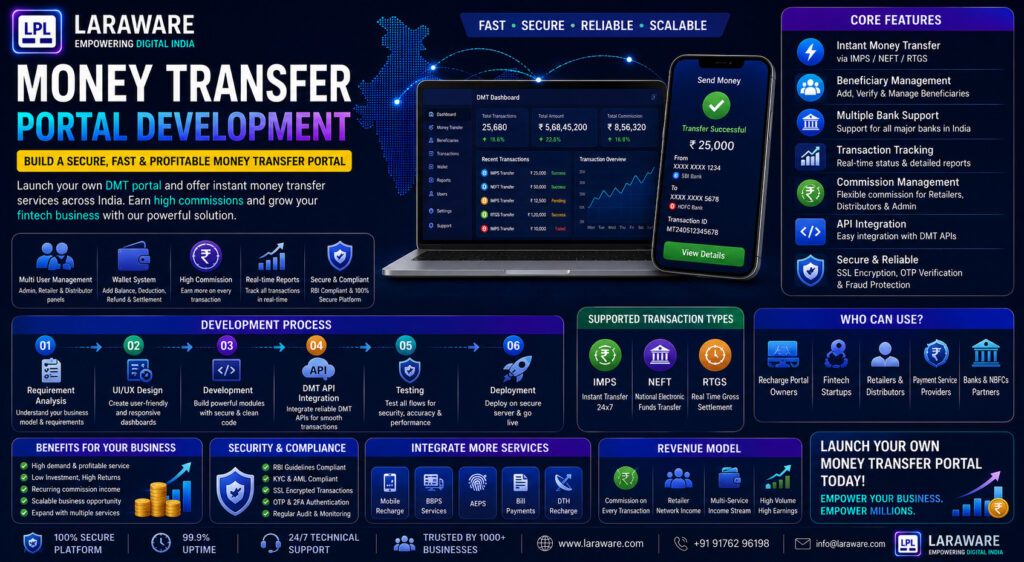
Money transfer portal development is a strong opportunity in India’s fintech market. A money transfer portal allows users, retailers, and distributors to send money securely from one bank account to another using digital systems. With growing demand for DMT services, fintech businesses can build scalable platforms and earn commission on every successful transaction. What is a Money Transfer Portal? A money transfer portal is a digital platform that enables domestic fund transfers through services like: IMPS NEFT RTGS DMT API /what-is-a-dmt-api Key Features of Money Transfer Portal User Registration and KYC Allows users to register and complete identity verification. Beneficiary Management Users can add, verify, and manage receiver bank details. Money Transfer Module Supports secure fund transfers across major banks. Wallet System Manages retailer balance, deductions, refunds, and commissions. /how-wallet-systems-work-in-recharge-portals Transaction Reports Tracks successful, failed, pending, and reversed transactions. Admin and Retailer Panel Helps manage users, transactions, commissions, and support. Money Transfer Portal Development Process Step 1: Business Planning Define target users, business model, services, and revenue structure. Step 2: Choose Technology Stack Use secure and scalable technologies for frontend, backend, database, and hosting. Step 3: Design Dashboard Create a clean dashboard for admin, retailer, distributor, and customer use. Step 4: Develop Backend System Build wallet, commission, user management, transaction, and reporting modules. Step 5: Integrate DMT API Connect with a reliable DMT API provider for secure money transfer processing. /dmt-api-integration-guide Step 6: Add Security Features Include SSL, OTP, token authentication, role-based access, and audit logs. /security-features-in-recharge-software Step 7: Testing and Deployment Test all transaction flows, then deploy on a secure server. Cost of Money Transfer Portal Development Basic Portal ₹50,000 – ₹1,50,000 Standard Portal ₹1.5L – ₹5L Advanced Portal ₹5L – ₹20L+ Benefits of Money Transfer Portal High demand service Recurring commission income Scalable retailer network Works in rural and urban markets Can integrate recharge, BBPS, and AEPS services Challenges in Development API downtime Failed transactions Wallet mismatch Compliance requirements Security risks /common-problems-in-recharge-portals Legal and Compliance Requirements Money transfer portals should follow RBI guidelines, KYC norms, secure transaction practices, and authorized API agreements. https://www.npci.org.in/https://rbi.org.in/https://uidai.gov.in/ Conclusion Money transfer portal development is a profitable fintech opportunity for businesses that want to offer fast and secure DMT services. With proper planning, reliable API integration, strong wallet management, and security features, you can build a scalable platform. A well-developed money transfer portal can generate steady income while helping users access convenient financial services. Share this:LinkedInTwitterFacebookWhatsAppEmail

Learn more
Contact us

Partner with Us for Comprehensive IT Solutions

We’re happy to answer any questions you may have and help you determine which of our services best fit your needs.

Your benefits:
What happens next?
1

We Schedule a call at your convenience 

2

We do a discovery and consulting meting 

3

We prepare a proposal 

Schedule a Free Consultation