📋 Table of Contents
- What is a Digital Payment Business?
- Why Start a Digital Payment Business in India?
- Types of Digital Payment Businesses You Can Start
- Legal Requirements to Start a Digital Payment Business in India
- Technology Required for a Digital Payment Platform
- Step-by-Step Process to Start a Digital Payment Business
- Cost of Starting a Digital Payment Business in India
- Challenges in the Digital Payment Industry
- Future of Digital Payments in India
- Conclusion
India has become one of the largest digital payment markets in the world. With the rapid growth of UPI, QR payments, mobile wallets, and fintech apps, starting a digital payment business in India has become one of the most profitable opportunities for entrepreneurs.
Government initiatives like Digital India, increasing smartphone usage, and the growth of e-commerce are accelerating the cashless economy.
In this guide from Laraware, you will learn:
✔ How to start a digital payment business in India
✔ Legal requirements and RBI regulations
✔ Technology needed for fintech platforms
✔ Estimated startup cost
✔ Step-by-step road-map to launch your payment platform
What is a Digital Payment Business?
A digital payment business provides technology that allows users and businesses to send and receive money electronically without using cash.
Common Digital Payment Solutions
Payment gateways
UPI payment apps
Mobile wallets
QR payment systems
Merchant payment platforms
Bill payment systems
Key Point:
A digital payment platform acts as a secure bridge between customers, merchants, and banks.
Companies like Laraware help businesses develop secure fintech platforms for digital payments.
Why Start a Digital Payment Business in India?
India’s fintech sector is growing extremely fast.
1. Massive Growth in Digital Transactions
India processes billions of digital payments every month.
UPI alone has transformed how people send money instantly.
2. Strong Government Support
Programs such as Digital India encourage digital payments and financial inclusion.
3. Huge Smartphone User Base
India has 750+ million smartphone users, making mobile payments more accessible.
4. Rapid Growth of Online Businesses
E-commerce, food delivery, subscriptions, and online services depend heavily on digital payment systems.
5. Huge Market Opportunity
Important Point:
India’s digital payments market is expected to reach trillions of dollars in transaction value in the coming years.
Types of Digital Payment Businesses You Can Start
Before launching your fintech startup, you must choose the right business model.
1. Payment Gateway Business
A payment gateway allows businesses to accept online payments through:
Credit cards
Debit cards
Net banking
Mobile wallets
Important Point:
Payment gateways earn revenue from transaction processing fees and merchant subscriptions.
Companies like Laraware build custom payment gateway platforms for startups and enterprises.
2. UPI Payment App
A UPI payment application allows users to transfer money instantly using:
Mobile numbers
UPI IDs
QR codes
Examples include PhonePe, Google Pay, and Paytm.
Important Point:
UPI payments are instant and available 24/7, making them the most popular payment method in India.
3. Mobile Wallet Platform
A mobile wallet allows users to store digital money and make payments for:
Bills
Mobile recharges
Online purchases
Merchant payments
Revenue sources include:
Service fees
Merchant commissions
Partnerships
4. Merchant Payment Solutions
Merchant payment platforms provide tools such as:
QR codes
POS machines
Payment APIs
Merchant dashboards
Key Highlight:
Merchant payment solutions are one of the fastest-growing fintech opportunities in India.
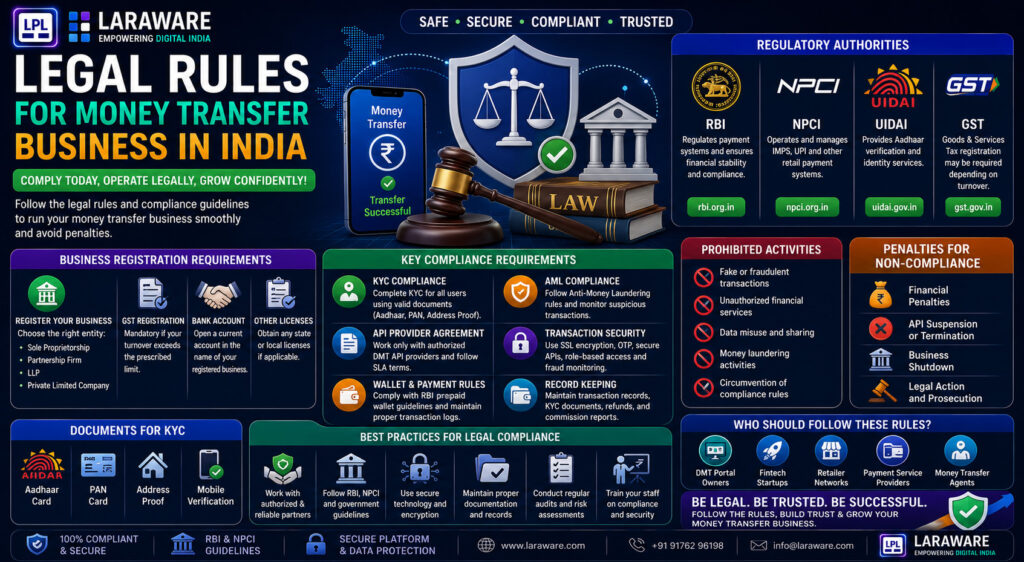
Legal Requirements to Start a Digital Payment Business in India
Starting a fintech company requires regulatory compliance.
1. Company Registration
First, register your business as:
Private Limited Company
LLP
Fintech Startup
Important Tip:
Most fintech startups choose Private Limited Company for easier funding.
2. RBI Authorization
Digital payment platforms are regulated by the Reserve Bank of India (RBI).
Depending on your business model, you may need:
Payment Aggregator License
Prepaid Payment Instrument (PPI) License
NBFC License
Important Note:
Many startups initially partner with licensed banks instead of applying for licenses directly.
3. KYC & AML Compliance
All fintech platforms must follow:
KYC (Know Your Customer)
AML (Anti-Money Laundering)
These regulations prevent fraud and illegal transactions.
4. Data Security Compliance
Payment platforms must implement strong security systems including:
PCI-DSS compliance
Data encryption
Fraud detection systems
Companies like Laraware develop secure fintech infrastructures with advanced cybersecurity.
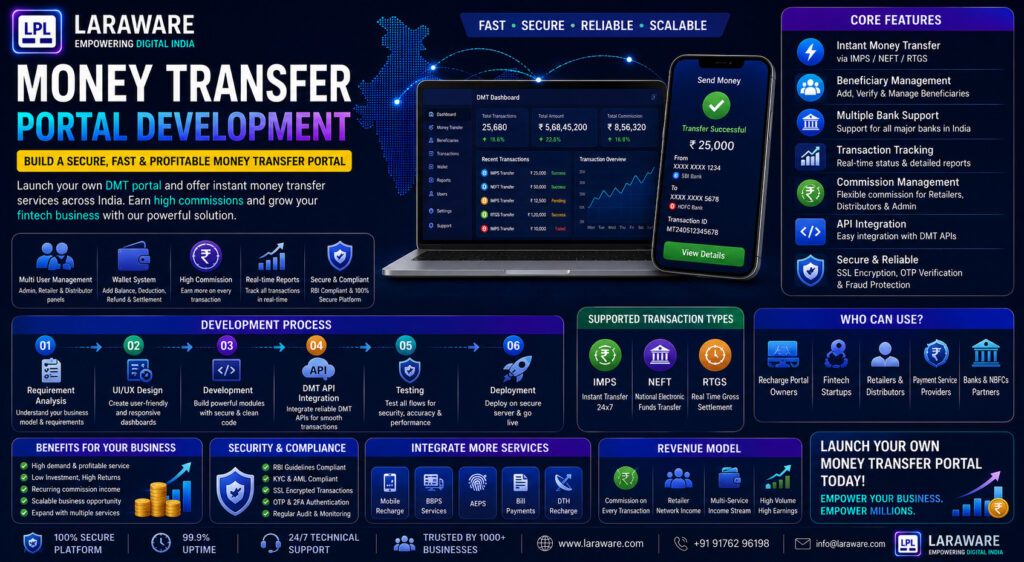
Technology Required for a Digital Payment Platform
A successful fintech platform requires robust technology infrastructure.
Core Components
Payment Processing Engine
Handles transaction processing between banks and users.
API Integrations
Connects your platform with:
Banks
UPI network
Payment gateways
Card networks
Mobile Applications
User-friendly Android and iOS apps.
Merchant Dashboard
Helps merchants monitor payments and settlements.
Security Framework
Critical Requirement:
Security systems must include fraud detection, encryption, and transaction monitoring.
Step-by-Step Process to Start a Digital Payment Business
Step 1: Market Research
Study:
Target audience
Competitors
Payment trends
Merchant demand
Important:
Understanding your niche helps you build a successful fintech strategy.
Step 2: Define Your Business Model
Choose your focus:
Payment gateway
UPI payment app
Digital wallet
Merchant payment platform
Step 3: Register Your Company
Complete:
Company incorporation
GST registration
Legal compliance
Step 4: Licensing or Bank Partnership
You can either:
✔ Apply for RBI license
✔ Partner with licensed banks
Step 5: Build the Fintech Platform
Your platform should include:
Instant transactions
Merchant onboarding
Fraud detection
Payment analytics
Settlement management
Important:
Many startups use white-label fintech solutions from Laraware to launch faster.
Step 6: Merchant Onboarding
Focus on onboarding:
Retail stores
Online businesses
Service providers
Local merchants
The more merchants you have, the more transactions you generate.
Step 7: Marketing and User Growth
Promote your platform using:
Digital marketing
Cashback offers
Referral programs
Merchant partnerships
Key Success Factor:
User trust and ease of use determine fintech growth.
Cost of Starting a Digital Payment Business in India
Estimated startup cost:
| Expense | Estimated Cost |
|---|---|
| Company registration | ₹20,000 – ₹1,00,000 |
| Platform development | ₹5,00,000 – ₹50,00,000 |
| Compliance & licensing | ₹5,00,000+ |
| Marketing | ₹3,00,000+ |
Startup Tip:
Using white-label fintech technology from Laraware can reduce development cost significantly.
Challenges in the Digital Payment Industry
Despite the opportunities, fintech businesses face challenges.
Regulatory compliance
Strict RBI regulations must be followed.
Cyber security risks
Payment systems are frequent targets for cyber attacks.
High competition
The fintech industry is extremely competitive.
Building trust
Users must feel confident in the platform’s security.
Future of Digital Payments in India
The future of digital payments is driven by technologies like:
Artificial Intelligence for fraud detection
Blockchain-based payment systems
Embedded finance
Digital banking platforms
Fintech innovation will continue to reshape how businesses and consumers handle payments.
Conclusion
Starting a digital payment business in India can be highly rewarding if you combine the right technology, compliance, and user experience.
With the growing demand for fintech platforms, businesses that offer secure and scalable payment solutions will have a strong advantage.
If you want to build a fintech platform, Laraware provides advanced fintech development solutions to help startups launch secure digital payment systems quickly and efficiently.