📋 Table of Contents
India’s fintech revolution is no longer limited to big cities like Mumbai, Bengaluru, or Delhi. Today, small towns and rural areas are rapidly adopting digital financial services, creating new opportunities for entrepreneurs. Understanding how to build a fintech business in small town India can help startups tap into a massive underserved market.
With increasing smartphone penetration, affordable internet, and government initiatives supporting digital payments, small-town India is becoming a powerful growth engine for fintech startups.
Why Small Town India Is a Huge Opportunity for Fintech
The demand for financial services is growing rapidly outside metro cities.
Large Underserved Population
Millions of people in small towns still lack access to advanced financial services such as digital banking, credit products, and investment platforms.
Rapid Digital Adoption
Affordable smartphones and cheap internet have enabled people in Tier-2 and Tier-3 cities to adopt digital payment solutions.
Government Push for Digital Economy
Programs like Digital India and the UPI ecosystem have encouraged people across the country to use digital financial services.
Growing Local Businesses
Small-town merchants are increasingly accepting QR payments, UPI transfers, and digital wallets, creating strong demand for fintech solutions.
Step 1: Identify a Fintech Problem to Solve
The first step in learning how to build a fintech business in small town India is identifying a specific financial problem faced by local communities.
Common opportunities include:
Digital payment platforms for local merchants
- Micro-lending services for small businesses
- Agricultural fintech solutions
- Local remittance services
- Digital savings platforms
- A fintech startup that solves real financial problems will gain faster adoption.
Step 2: Choose the Right Fintech Business Model
Several fintech models work well in small-town markets.
Payment Solutions
Platforms that allow merchants to accept UPI payments, QR codes, and digital wallets.
Micro Lending Platforms
Providing small loans to local businesses and individuals.
Digital Banking Platforms
Offering simplified banking services for underserved populations.
Financial Marketplace
Platforms that help users access insurance, credit cards, and investment products.
Entrepreneurs often partner with fintech development companies like Laraware to build scalable fintech platforms quickly.
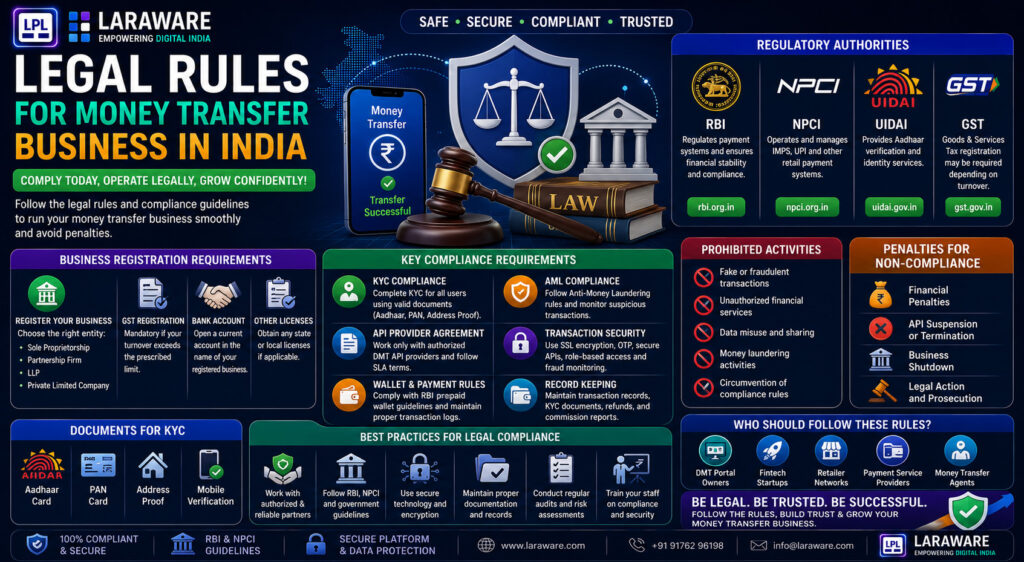
Step 3: Understand Regulatory Requirements
Fintech companies must follow regulations set by the Reserve Bank of India.
Depending on your business model, you may require:
- Payment Aggregator License
- Prepaid Payment Instrument (PPI) License
- NBFC License for lending services
Some startups partner with licensed banks or payment institutions to launch faster.
Authoritative information about financial regulations can be found on the official RBI website: https://www.rbi.org.in
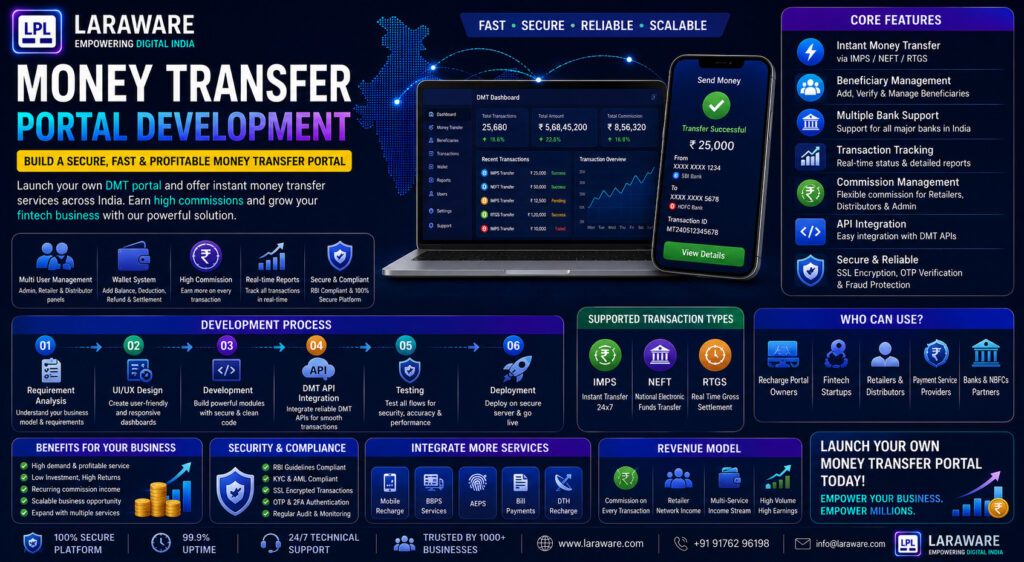
Step 4: Build the Right Technology Platform
Technology is the backbone of any fintech startup.
Your fintech platform should include:
Secure payment processing
Mobile applications for Android and iOS
Merchant onboarding systems
Fraud detection and security features
Data analytics dashboards
Companies like Laraware specialize in developing fintech infrastructure for startups that want to launch digital financial platforms.
Step 5: Focus on Local Trust and Partnerships
In small towns, trust plays a critical role in fintech adoption.
Strategies to build trust include:
Partnering with local merchants
Providing simple onboarding processes
Offering customer support in regional languages
Building relationships with local businesses
Local partnerships can significantly accelerate fintech growth.
Step 6: Educate Users About Digital Finance
Many people in small towns are new to digital financial services.
Fintech startups should focus on financial education and awareness through:
Community workshops
Merchant training programs
Simple mobile app interfaces
Local language support
Education builds confidence and increases adoption.
Step 7: Use Smart Marketing Strategies
Marketing fintech services in small towns requires a different approach compared to metro cities.
Effective strategies include:
Referral programs
Merchant incentives
Local advertising campaigns
Social media promotions
Building strong relationships with local merchants can help create network effects.
Challenges of Building a Fintech Business in Small Town India
Although the opportunity is huge, fintech startups also face several challenges.
Financial Literacy Gaps
Some users may not be familiar with digital financial tools.
Regulatory Compliance
Financial platforms must comply with strict regulatory frameworks.
Security Concerns
Users must trust that their financial data is safe.
Infrastructure Limitations
Internet connectivity may still be inconsistent in some regions.
Despite these challenges, fintech adoption in small towns continues to grow rapidly.
The Future of Fintech in Small Town India
Small-town India is expected to become one of the largest growth drivers for the fintech industry.
Emerging technologies such as:
AI-powered financial tools
Embedded finance
Digital lending platforms
Blockchain-based payments
will further expand fintech opportunities.
Entrepreneurs who understand how to build a fintech business in small town India today can create powerful platforms serving millions of users in the future.
Conclusion
Building a fintech startup in small-town India offers enormous potential. With the right technology, regulatory compliance, and local partnerships, entrepreneurs can create financial solutions that empower millions of people.
Businesses that want to launch fintech platforms quickly often collaborate with fintech technology providers like Laraware to develop secure and scalable digital financial systems.