📋 Table of Contents
The financial technology industry is transforming how people access and manage financial services. From digital payments to online lending platforms, fintech innovations are reshaping the global financial ecosystem. This fintech guide for new entrepreneurs will help aspiring founders understand the fundamentals of building a successful fintech business.
For entrepreneurs entering the fintech sector, understanding regulations, technology infrastructure, and business models is essential for long-term success.
What is Fintech?
Fintech, short for financial technology, refers to the use of technology to provide financial services such as:
digital payments
online banking
lending platforms
investment apps
insurance technology
financial analytics tools
Fintech companies aim to make financial services faster, safer, and more accessible.
Many startups work with fintech technology providers like Laraware to develop secure fintech platforms and payment systems.
Why Fintech is a Great Opportunity for Entrepreneurs
The fintech industry is growing rapidly due to several factors.
Increasing Digital Payments
Consumers and businesses are moving toward cashless transactions.
Smartphone Adoption
Mobile devices have made financial services accessible to millions of users.
Financial Inclusion
Fintech platforms help people access financial services in underserved regions.
Innovation Opportunities
Emerging technologies like AI, blockchain, and cloud computing are creating new fintech solutions.
Key Steps to Start a Fintech Business
This fintech guide for new entrepreneurs outlines the key steps to build a fintech startup.
Step 1: Identify a Financial Problem
Successful fintech startups focus on solving real financial problems.
Examples include:
simplifying digital payments
improving access to loans
enabling better financial management
reducing transaction costs
Understanding customer needs helps build valuable financial solutions.
Step 2: Choose the Right Fintech Business Model
Several fintech business models are popular among startups.
Digital Payment Platforms
Allow users to send and receive money online.
Lending Platforms
Provide personal or business loans using digital processes.
Neobanks
Offer banking services without physical branches.
Investment Platforms
Help users invest in stocks, crypto, or funds.
Selecting the right business model is crucial for long-term success.
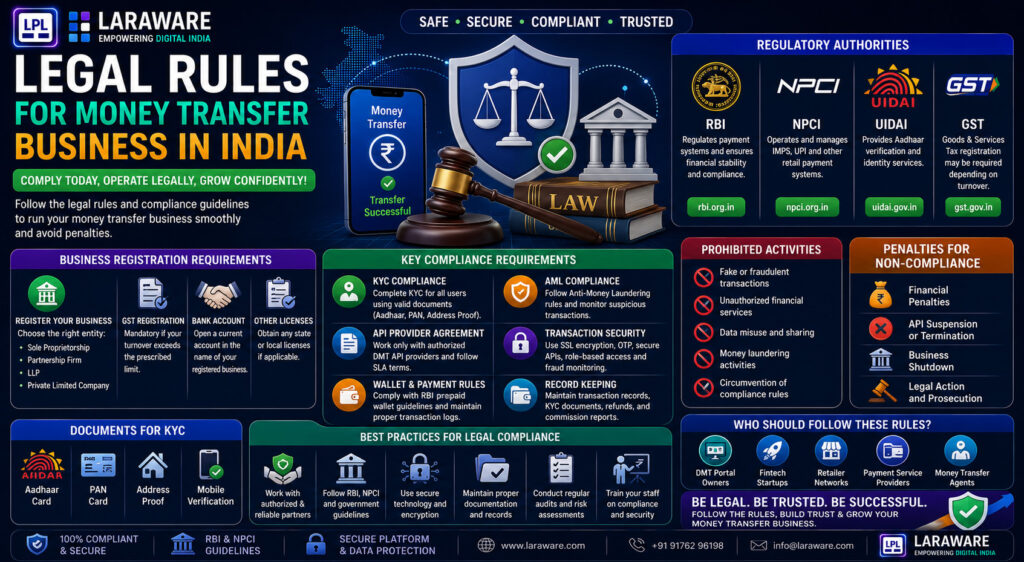
Step 3: Understand Financial Regulations
Fintech companies must follow strict regulations.
In India, financial services are regulated by the Reserve Bank of India (RBI).
More information about financial regulations can be found here:
https://www.rbi.org.in
Understanding compliance requirements early helps avoid legal issues.
Step 4: Build Secure Technology Infrastructure
Security is critical in fintech because platforms handle sensitive financial data.
A strong fintech platform includes:
secure APIs
encryption technologies
fraud detection systems
authentication mechanisms
Many startups collaborate with fintech developers like Laraware to build scalable financial platforms.
Step 5: Integrate Payment Infrastructure
To enable financial transactions, fintech platforms must integrate with banking and payment systems.
In India, payment infrastructure is managed by the National Payments Corporation of India (NPCI).
You can learn more here:
https://www.npci.org.in
Integration with payment networks ensures smooth financial transactions.
Step 6: Build Trust with Users
Trust is essential for financial services.
Fintech startups should focus on:
transparent pricing
reliable security
responsive customer support
regulatory compliance
Building strong trust helps attract and retain users.
Step 7: Develop a Growth Strategy
Successful fintech companies focus on user growth.
Common growth strategies include:
referral programs
cashback incentives
merchant partnerships
digital marketing campaigns
Scaling user adoption is key to fintech success.
Future Opportunities in Fintech
The fintech industry continues to evolve with emerging technologies.
Future innovations include:
AI-powered financial tools
blockchain payment systems
embedded finance platforms
decentralized finance (DeFi)
Entrepreneurs who follow this fintech guide for new entrepreneurs can position themselves to build innovative financial platforms.
Conclusion
The fintech industry offers enormous opportunities for entrepreneurs who want to innovate in financial services. By understanding regulations, building secure technology infrastructure, and developing strong business models, startups can create scalable fintech solutions.
Many entrepreneurs collaborate with fintech technology companies like Laraware to develop advanced fintech platforms and payment systems.