📋 Table of Contents
- 1. Ignoring Regulatory Compliance
- 2. Weak Security Infrastructure
- 3. Poor User Experience
- 4. Lack of Market Research
- 5. Choosing the Wrong Business Model
- 6. Scaling Too Quickly
- 7. Ignoring Customer Trust
- 8. Poor Risk Management
- How Fintech Startups Can Avoid These Mistakes
- The Future of Fintech Startups
- Conclusion
The fintech industry is growing rapidly, offering huge opportunities for startups to innovate in payments, lending, digital banking, and financial services. However, many new companies fail because they overlook critical challenges. Understanding the biggest mistakes fintech startups make can help entrepreneurs avoid costly failures and build sustainable financial technology platforms.
Launching a fintech startup requires strong technology, regulatory compliance, and customer trust. By learning from common mistakes, founders can create more reliable and scalable fintech solutions.
1. Ignoring Regulatory Compliance
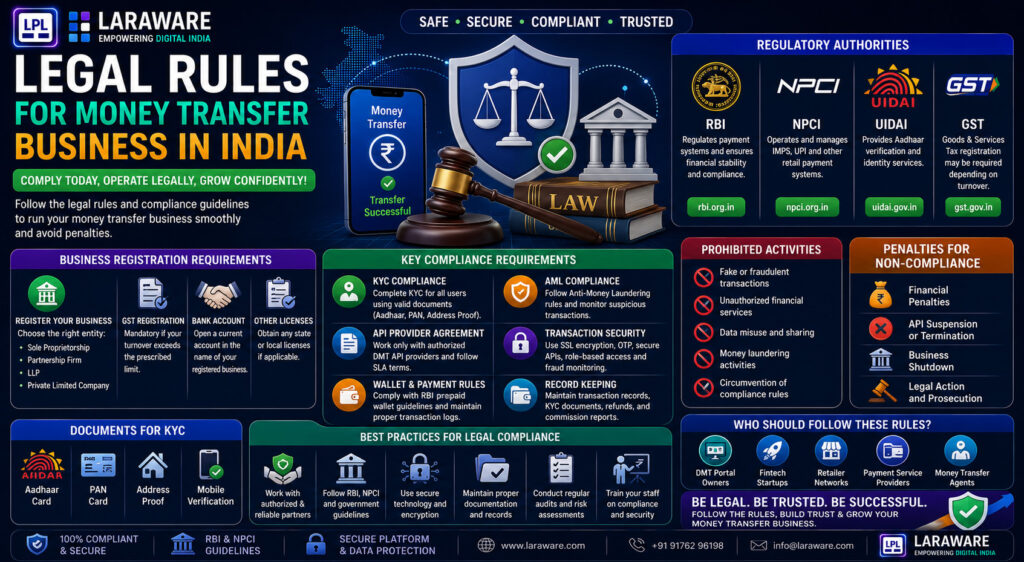
One of the biggest mistakes fintech startups make is underestimating financial regulations.
Fintech companies must follow strict rules set by financial authorities such as the Reserve Bank of India (RBI). These regulations ensure consumer protection, data security, and financial stability.
Failure to comply with these requirements can result in penalties or shutdowns.
You can learn more about regulatory guidelines on the official RBI website:
https://www.rbi.org.in
2. Weak Security Infrastructure
Financial platforms handle sensitive data such as bank details, identity documents, and transaction records. Poor cybersecurity measures can expose users to fraud and data breaches.
Fintech startups must implement:
data encryption
fraud detection systems
secure payment gateways
strong authentication mechanisms
Security should be built into the platform from the very beginning.
3. Poor User Experience
Many fintech startups focus heavily on technology but ignore user experience.
A complicated or confusing interface can discourage users from adopting a platform. Successful fintech apps prioritize:
simple onboarding processes
intuitive interfaces
fast transactions
reliable customer support
User trust is critical in financial services.
4. Lack of Market Research
Another major mistake is launching a fintech product without fully understanding customer needs.
Startups should analyze:
target users
competitor platforms
market demand
financial pain points
Thorough market research helps ensure that the product solves real problems.
5. Choosing the Wrong Business Model
Fintech startups often struggle when they choose unsustainable revenue models.
A strong fintech business model should clearly define how the platform generates income through methods such as:
transaction fees
lending interest
subscription plans
financial product commissions
Entrepreneurs sometimes collaborate with fintech development companies like Laraware to design scalable fintech infrastructures and business models.
6. Scaling Too Quickly
Rapid growth can sometimes become a problem for startups.
Scaling without stable technology infrastructure can cause:
system failures
slow transactions
customer dissatisfaction
Fintech platforms must ensure that their infrastructure can handle large transaction volumes before expanding aggressively.
7. Ignoring Customer Trust
Financial services rely heavily on trust. If users do not feel confident about security and reliability, they will avoid using the platform.
Fintech companies should focus on:
transparency in transactions
clear communication
reliable support systems
secure financial processes
Building trust takes time but is essential for long-term success.
8. Poor Risk Management
Financial technology companies operate in a high-risk environment. Poor risk management can lead to financial losses and regulatory issues.
Fintech startups should implement strong systems for:
fraud detection
credit risk assessment
transaction monitoring
Advanced technologies such as AI and data analytics can improve risk management.
How Fintech Startups Can Avoid These Mistakes
Fintech entrepreneurs can increase their chances of success by focusing on several key strategies.
Build Secure Technology
Invest in strong cybersecurity systems and payment infrastructure.
Understand Regulations
Work with legal and compliance experts to ensure regulatory adherence.
Focus on Customer Needs
Design platforms that solve real financial problems for users.
Develop Scalable Infrastructure
Build systems capable of handling large transaction volumes.
Many fintech startups partner with technology providers like Laraware to develop reliable fintech platforms and payment infrastructures.
The Future of Fintech Startups
Despite these challenges, fintech continues to be one of the fastest-growing industries globally. Innovations in artificial intelligence, blockchain technology, and digital banking will continue to create new opportunities for entrepreneurs.
By avoiding the biggest mistakes fintech startups make, founders can build successful fintech platforms that transform financial services.
Conclusion
Fintech startups have enormous potential to reshape financial services, but success requires careful planning and execution. Entrepreneurs must focus on regulatory compliance, strong cybersecurity, user experience, and sustainable business models.
Understanding the biggest mistakes fintech startups make allows founders to avoid common pitfalls and build fintech platforms that are secure, scalable, and trusted by users.