📋 Table of Contents
- Frontend Technologies for Fintech Platforms
- Backend Technologies for Fintech Platforms
- Databases Used in Fintech Platforms
- Cloud Infrastructure for Fintech Platforms
- Security Technologies for Fintech Platforms
- API Integrations for Fintech Platforms
- Why Choosing the Right Technology Stack Matters
- Future Technologies in Fintech Platforms
- Conclusion
A technology stack refers to the combination of programming languages, frameworks, databases, and infrastructure used to build a software application.
For fintech platforms, the technology stack must prioritize:
security
scalability
compliance
real-time transaction processing
API integrations with financial systems
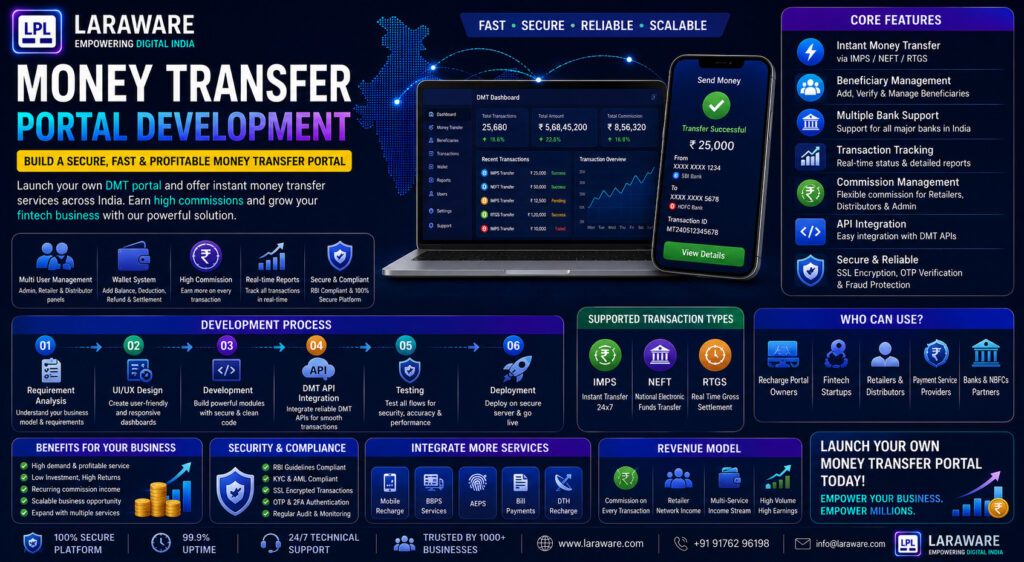
Companies such as Laraware develop fintech platforms using secure and scalable technology stacks tailored for financial services.
Frontend Technologies for Fintech Platforms
The frontend is the user-facing part of the platform, including web applications and mobile apps.
Popular frontend technologies include:
React.js
A widely used JavaScript framework for building fast and responsive web interfaces.
Angular
A powerful frontend framework suitable for enterprise fintech applications.
Flutter
A cross-platform framework that allows developers to build Android and iOS fintech apps from a single codebase.
Swift and Kotlin
Native development languages for high-performance mobile fintech applications.
A strong frontend improves user experience and makes financial services easier to access.
Backend Technologies for Fintech Platforms
The backend handles the core logic of the platform, including transaction processing, data management, and integrations.
Common backend technologies include:
Node.js
Ideal for real-time applications such as payment processing and financial APIs.
Java (Spring Boot)
Highly secure and scalable, often used in banking systems.
Python (Django / Flask)
Popular for fintech applications that require data analytics and AI features.
Go (Golang)
Known for high performance and efficiency in handling large-scale fintech platforms.
These technologies help fintech platforms process transactions quickly and securely.
Databases Used in Fintech Platforms
Financial applications require reliable databases to manage user data and transaction records.
Common database technologies include:
PostgreSQL
A powerful relational database widely used in fintech systems.
MySQL
Reliable and scalable for financial applications.
MongoDB
A flexible NoSQL database suitable for fintech platforms with large datasets.
Redis
Used for caching and improving performance.
Secure data storage is critical for financial applications.
Cloud Infrastructure for Fintech Platforms
Cloud infrastructure allows fintech platforms to scale quickly and handle high traffic.
Popular cloud platforms include:
Amazon Web Services (AWS)
Provides secure and scalable infrastructure for fintech platforms.
Google Cloud Platform
Offers advanced analytics and machine learning capabilities.
Microsoft Azure
Commonly used by financial institutions for enterprise fintech solutions.
Cloud computing enables fintech startups to launch faster and scale efficiently.
Security Technologies for Fintech Platforms
Security is one of the most important aspects of fintech technology.
Key security technologies include:
end-to-end encryption
biometric authentication
multi-factor authentication
fraud detection systems
secure API gateways
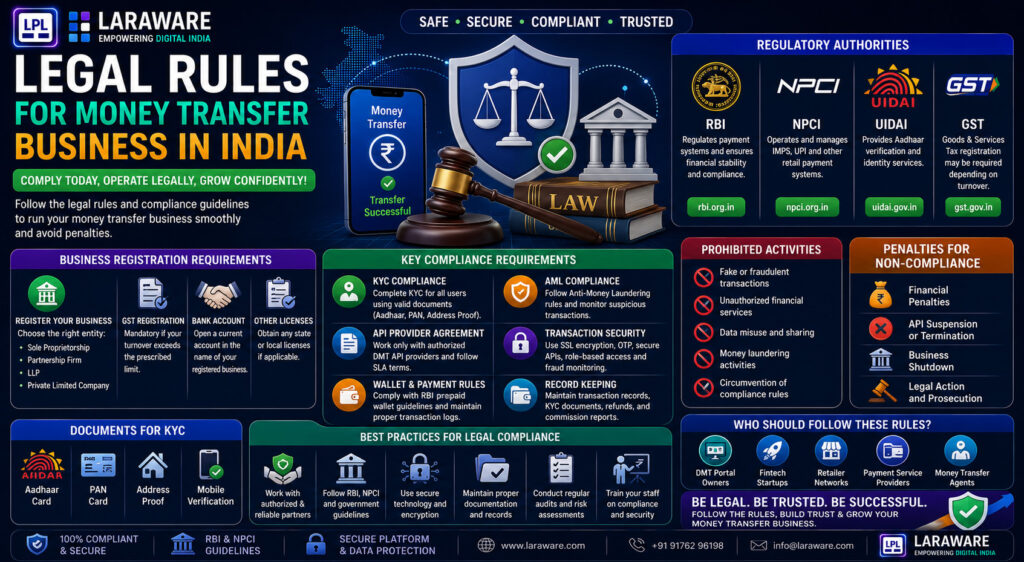
Fintech companies must also comply with regulations set by financial authorities such as the Reserve Bank of India (RBI).
More information about financial regulations can be found here:
https://www.rbi.org.in
API Integrations for Fintech Platforms
APIs allow fintech platforms to connect with banks, payment gateways, and financial services.
Common integrations include:
payment gateway APIs
banking APIs
KYC verification APIs
UPI payment infrastructure
India’s payment infrastructure is managed by the National Payments Corporation of India (NPCI).
Learn more here:
https://www.npci.org.in
Why Choosing the Right Technology Stack Matters
Selecting the best technology stack for fintech platforms offers several advantages.
Scalability
Platforms can handle large transaction volumes.
Security
Sensitive financial data remains protected.
Faster Development
Modern frameworks accelerate product development.
Better User Experience
High-performance platforms provide smooth transactions.
Many fintech startups collaborate with technology experts like Laraware to build secure and scalable fintech platforms.
Future Technologies in Fintech Platforms
The fintech industry is evolving with new technologies.
Emerging innovations include:
artificial intelligence for fraud detection
blockchain-based payment systems
embedded finance
decentralized finance (DeFi)
These technologies will shape the next generation of fintech platforms.
Conclusion
Choosing the best technology stack for fintech platforms is critical for building secure, scalable, and high-performance financial applications. By selecting the right frontend frameworks, backend technologies, databases, and cloud infrastructure, fintech companies can create reliable financial platforms that support millions of users.
Fintech startups often partner with development companies like Laraware to design advanced fintech technology infrastructures.