Blog

ChatGPT Image Apr 17, 2026, 05_32_08 PM

How to Build a Recharge Portal | Recharge Portal Development Guide

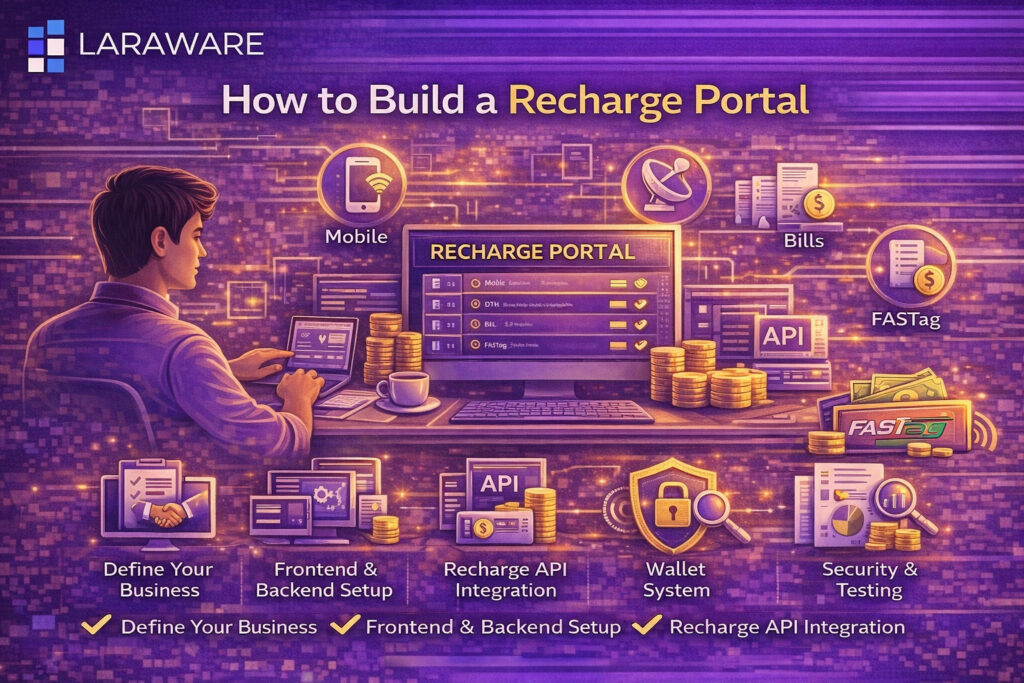
A recharge portal is a digital platform that allows users, retailers, and distributors to perform services such as mobile recharge, DTH recharge, data card recharge, and utility bill payments from one place. With the growth of digital payments in India, building a recharge portal has become a strong business opportunity for fintech startups, software companies, and entrepreneurs. A well-built recharge portal can generate recurring revenue, support a large user network, and scale into a full digital services platform. This guide explains how to build a recharge portal step by step. What is a Recharge Portal? A recharge portal is an online platform that connects users or agents with service providers through APIs. It enables digital transactions such as: Mobile recharge DTH recharge Data card recharge Utility bill payments FASTag recharge A recharge portal can be designed for direct customer use or for B2B businesses involving retailers, distributors, and resellers. Types of Recharge Portals B2C Recharge Portal This type is made for direct customers who want to recharge or pay bills online using a website or mobile app. B2B Recharge Portal This type is designed for retailers, distributors, and resellers. It usually includes wallet management, commission settings, and multi-level user roles. White Label Recharge Portal This is a branded portal built for businesses that want their own logo, domain, and custom dashboard while using third-party APIs. Core Components of a Recharge Portal Frontend Interface The frontend is the visible part of the portal where users interact with the system. It should include: Login and registration pages Recharge form Operator selection Wallet display Reports and transaction history The user interface should be simple, responsive, and mobile-friendly. Backend System The backend manages all logic and operations such as: API calls Wallet deductions Commission calculation User authentication Transaction records Reporting This is the core engine of the recharge portal. Recharge API Integration Recharge APIs are required to connect the portal with telecom operators and service providers. The API is responsible for: Receiving recharge requests Processing the recharge Returning success or failure status /what-is-recharge-software Admin Panel An admin panel is necessary to manage the platform. It should support: User management Wallet control Commission settings Reports and analytics Complaint handling Provider configuration Step-by-Step Process to Build a Recharge Portal Step 1: Define the Business Model Before development starts, you need to define how your recharge portal will work. Important questions include: Will the portal serve customers directly or retailers? Will you offer only recharge services or also bill payment? Will the business use a wallet system? Will there be distributor and reseller levels? What commission model will be used? This step determines the structure and cost of development. Step 2: Select the Technology Stack The right technology stack is important for security, scalability, and performance. Common options include: Frontend: React, Vue.js, Angular Backend: Laravel, Node.js, PHP Database: MySQL, MongoDB, PostgreSQL Hosting: AWS, DigitalOcean, Google Cloud The chosen stack should support real-time transaction handling and secure APIs. Step 3: Design the UI/UX Your recharge portal should be easy to use because many users expect a fast transaction flow. Key design priorities: Clear recharge forms Quick operator selection Mobile responsiveness Easy wallet visibility Clean transaction history A good UI improves user retention and reduces transaction errors. Step 4: Build User Management System A recharge portal should include strong user management features such as: Registration Secure login Password reset Role-based access Account activation and suspension For B2B portals, user roles may include: Admin Master distributor Distributor Retailer Step 5: Integrate Recharge APIs This is the most important technical step. Recharge API integration includes: API credential setup Request and response handling Operator mapping Error handling Transaction status updates A typical recharge flow looks like this: User enters mobile number and amount Operator is selected Recharge request is sent through API Provider processes the recharge Status is returned Portal updates transaction history and wallet balance Step 6: Build Wallet and Commission System A recharge portal usually depends on a wallet-based business model. This module should include: Wallet loading Balance deduction Auto commission calculation Distributor sharing Daily transaction reports Ledger records A properly built wallet and commission system is essential for B2B recharge businesses. Step 7: Add Reports and Analytics The portal should provide detailed reports for users and admins. Useful reports include: Daily recharge reports Failed transactions Commission reports Wallet statements User activity logs These reports help businesses manage operations efficiently. Step 8: Implement Security Features A recharge portal handles financial transactions, so security must be built from the beginning. Important security features include: HTTPS and SSL Encrypted API communication Secure login system OTP verification Role-based access Session management Suspicious activity tracking https://www.npci.org.in/https://uidai.gov.in/ Step 9: Test the Portal Before launch, every part of the system should be tested thoroughly. Testing areas include: Recharge request flow API success and failure handling Wallet deduction Commission calculation Reports Login security Performance under load A recharge portal should never be launched without proper QA testing. Step 10: Deploy the Portal Once testing is complete, deploy the portal to a secure production environment. Deployment should include: Domain setup Hosting configuration SSL installation Backup system Monitoring tools Error tracking Step 11: Maintain and Upgrade the Platform Recharge portals need regular maintenance. Ongoing work includes: API updates Bug fixes Security patches Operator updates Feature additions Performance improvements A well-maintained portal performs better and retains users. Must-Have Features in a Recharge Portal Multi-Operator Support The portal should support multiple telecom and DTH operators. Instant Recharge Processing Users expect quick confirmation and fast response. Wallet Integration A prepaid wallet system is essential for B2B use cases. Commission Management The platform should support fixed or percentage-based commission rules. Transaction Reports Reports help both users and admins track activity and income. Reseller and Distributor Support A scalable recharge portal should allow multi-level business growth. /how-to-become-a-bbps-reseller Utility Bill Payment Integration Adding BBPS services can make the portal more profitable. /what-is-bbps-api/services-available-in-a-bbps-portal Cost of Building a Recharge Portal Basic Recharge Portal ₹50,000 – ₹1,50,000 Suitable for simple recharge services with limited features. Standard Recharge
Read more
ChatGPT Image Apr 16, 2026, 03_38_22 PM

What is Recharge Software | Recharge Software Business India

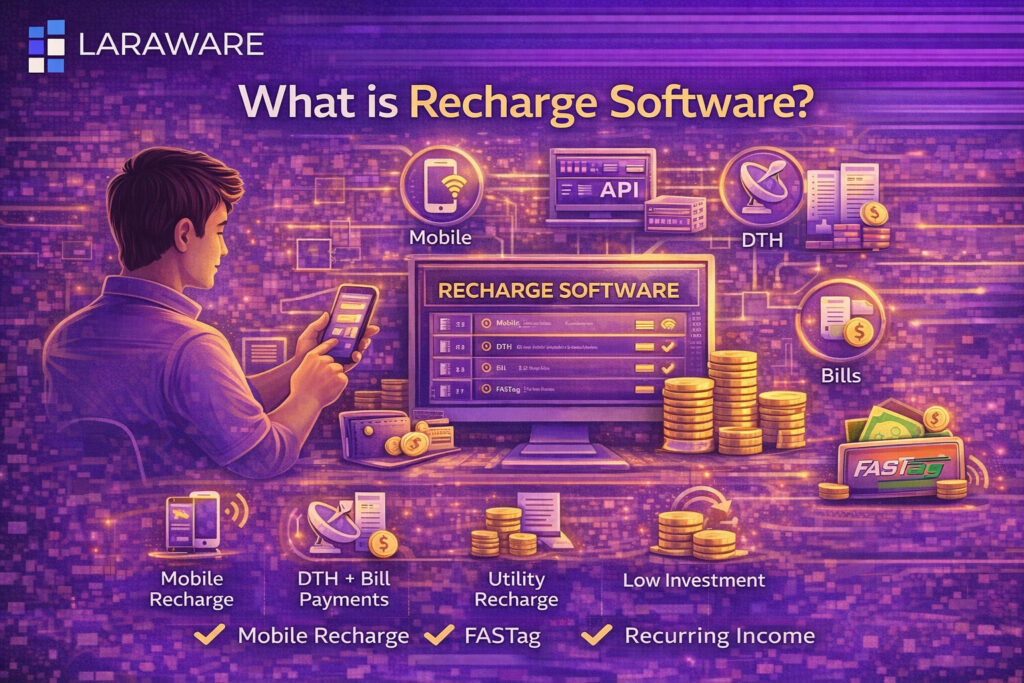
echarge software plays a vital role in the digital payments ecosystem by enabling users and businesses to offer mobile recharges, DTH recharges, and utility bill payments through a single platform. With the growing demand for digital services, recharge software has become a profitable business opportunity for retailers, agents, and fintech startups. What is Recharge Software? Recharge software is a digital platform that allows users or agents to: Perform mobile recharges Recharge DTH services Pay utility bills Offer additional financial services It works through API integration with telecom operators and service providers. How Recharge Software Works Step 1: User Inputs Details Mobile number or customer ID Operator selection Recharge amount Step 2: API Request Sent The system sends a request to the recharge API provider. /what-is-bbps-api Step 3: Operator Processes Request The telecom operator validates and processes the recharge. Step 4: Confirmation Recharge success message generated Commission credited to agent Types of Recharge Software B2C Recharge Software Direct customer usage Available via mobile apps or websites B2B Recharge Software Used by retailers and distributors Includes commission system White Label Recharge Software Custom branded solution Suitable for startups and businesses Key Features of Recharge Software Multi-operator support Instant recharge processing Secure payment system Wallet integration Commission management Real-time reporting /features-of-bbps-software Services Offered by Recharge Software Mobile recharge DTH recharge Data card recharge Utility bill payments FASTag recharge /services-available-in-a-bbps-portal Benefits of Recharge Software Low investment business High demand services Recurring income Easy to operate Scalable model Recharge Software Business Model Commission-Based Income Earn per recharge Margin depends on operator Distributor Model Build network of retailers Earn from their transactions Investment Required Basic setup: ₹10,000 – ₹50,000 Advanced system: ₹50,000 – ₹2,00,000 How to Start Recharge Software Business 1: Choose API Provider Select a reliable provider with high uptime. /how-to-choose-best-bbps-api-provider  2: Get Software or Panel White-label platform Custom dashboard 3: Setup Wallet System Add balance Manage transactions 4: Start Offering Services Add customers Promote services Challenges in Recharge Software Business Low margins High competition Network dependency API downtime Security in Recharge Software Recharge platforms ensure: Secure APIs Encrypted transactions Safe user authentication https://www.npci.org.in/https://uidai.gov.in/ Who Should Use Recharge Software? Retailers Fintech startups Entrepreneurs Digital service providers Conclusion Recharge software is a powerful tool for businesses looking to enter the digital payment space. With features like multi-operator support, instant processing, and commission-based earnings, it offers a scalable and profitable business opportunity. By choosing the right provider and focusing on customer service, businesses can build a strong and sustainable recharge business.

Read more
ChatGPT Image Apr 16, 2026, 03_26_41 PM

Best BBPS API Providers in India | Top BBPS API Companies

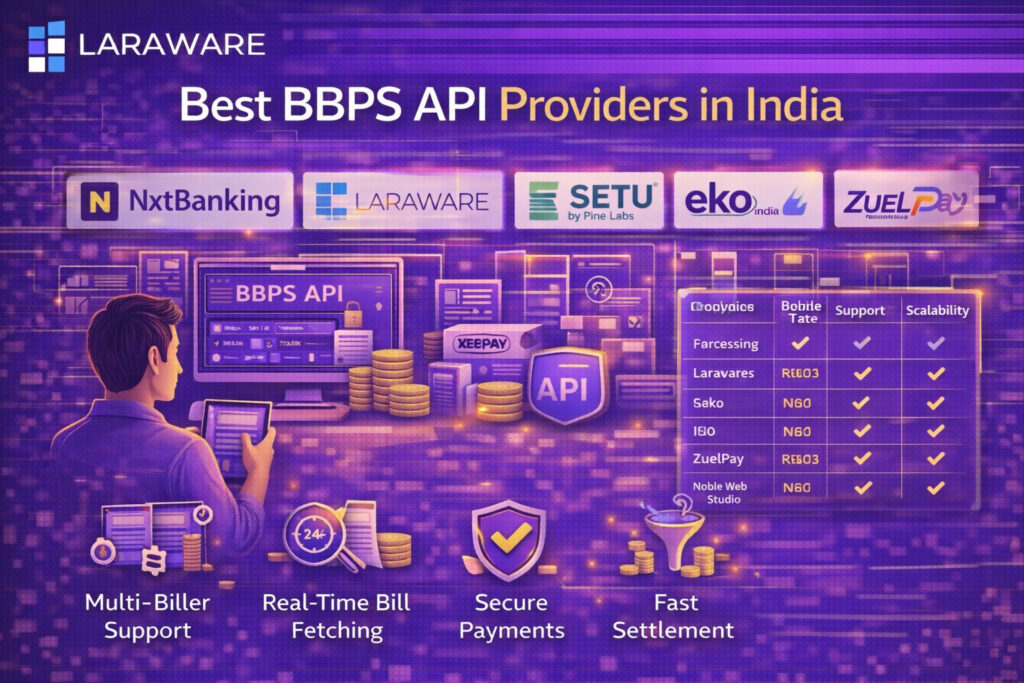
Choosing the right BBPS API provider is crucial for building a successful fintech business. A reliable provider ensures high uptime, secure transactions, and smooth bill payment services. India has multiple BBPS API providers offering different features, pricing, and support levels. This guide lists the best BBPS API providers in India and helps you choose the right one. What is a BBPS API Provider? A BBPS API provider is a company that enables businesses to integrate Bharat Bill Payment System services into their platforms using APIs. These providers handle: Bill fetching Payment processing Transaction settlement Inbound link:/what-is-bbps-api Top BBPS API Providers in India NxtBanking High uptime (99.99%) Supports multiple biller categories Strong security and compliance Scalable infrastructure Laraware Private Limited Custom BBPS API solutions White-label platform support Fast integration Suitable for startups and enterprises Setu (by Pine Labs) Developer-friendly APIs Widely used in fintech ecosystem Secure and scalable Eko India Trusted infrastructure provider Strong API reliability Enterprise-level services ZuelPay High uptime Fast confirmation 24/7 support Noble Web Studio Easy integration Good technical support Suitable for small businesses AEPS India Affordable solutions Multi-service integration Good for entry-level businesses Comparison of Top BBPS API Providers Provider Uptime Integration Support Best For NxtBanking 99.99% Easy Strong Scalable business Laraware High Custom Strong White-label solutions Setu High Developer-friendly Good Startups Eko High Advanced Strong Enterprise ZuelPay High Easy 24/7 Retail networks Noble Web Studio High Easy Good Small businesses AEPS India Moderate Easy Good Budget users Key Features of Best BBPS API Providers Multi-biller support Real-time bill fetching Secure payment processing High success rate Fast settlement Reporting and analytics /features-of-bbps-software How to Choose the Best Provider Check uptime and reliability Compare commission and pricing Evaluate API documentation Test customer support Ensure compliance with NPCI /how-to-choose-best-bbps-api-provider Benefits of Using Top BBPS API Providers Faster transactions Better user experience Increased revenue Scalable operations Who Should Use BBPS API Providers? Fintech startups Payment service providers Software companies Retail networks Conclusion India offers several reliable BBPS API providers, each with unique strengths. Providers like NxtBanking, Laraware, Setu, and Eko stand out for their performance, security, and scalability. Choosing the right provider depends on your business goals, budget, and technical requirements. A well-selected BBPS API partner can significantly boost your fintech business growth.

Read more
ChatGPT Image Apr 16, 2026, 03_20_41 PM

BBPS Transaction Security Explained | Secure BBPS Payments India

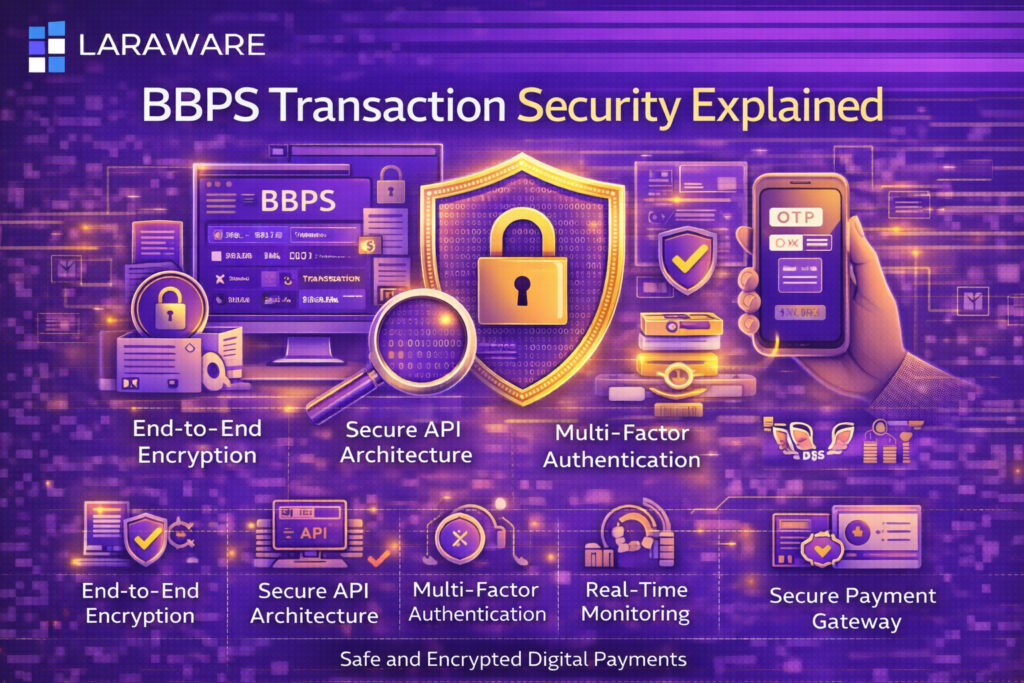
Security is one of the most important aspects of any digital payment system. The Bharat Bill Payment System (BBPS) is designed with strong security frameworks to ensure safe, reliable, and fraud-free transactions. Understanding BBPS transaction security is essential for businesses, agents, and users to maintain trust and prevent financial risks. What is BBPS Transaction Security? BBPS transaction security refers to the systems and protocols that: Protect user data Secure payment processing Prevent fraud and unauthorized access These measures ensure that every transaction is safe and compliant with regulatory standards. Key Security Features in BBPS End-to-End Encryption Data is encrypted during transmission Prevents unauthorized access Ensures confidentiality Secure API Architecture APIs are protected with authentication layers Only authorized systems can access data /what-is-bbps-api Multi-Factor Authentication OTP-based verification User identity validation Real-Time Monitoring Tracks transactions instantly Detects suspicious activities Fraud Detection Systems Identifies unusual patterns Prevents unauthorized transactions Secure Payment Gateway PCI-DSS compliant systems Safe handling of payment details Role of NPCI in BBPS Security The National Payments Corporation of India ensures: Standardized security protocols Secure transaction routing Continuous monitoring https://www.npci.org.in/what-we-do/bbps/product-overview Compliance and Regulatory Security BBPS follows strict compliance rules: RBI guidelines KYC verification Data protection policies /bbps-rules-and-regulations Types of Security Risks in BBPS Phishing Attacks Fake messages or links Attempt to steal user data Unauthorized Access Weak passwords Unsecured systems Data Breaches Leakage of sensitive information Transaction Fraud Fake or manipulated transactions How to Prevent Security Risks Use Strong Authentication Enable OTP verification Use secure login systems Choose Reliable Provider High security standards Trusted API provider /how-to-choose-best-bbps-api-provider Monitor Transactions Regularly Track transaction history Identify unusual activity Keep Systems Updated Regular software updates Security patches Educate Users Avoid phishing links Verify payment details Security Best Practices for Businesses Implement secure APIs Use encrypted databases Maintain audit logs Conduct regular security audits Benefits of BBPS Security System Safe transactions Customer trust Reduced fraud risk Regulatory compliance Who Should Focus on BBPS Security? Fintech companies BBPS agents Payment service providers Software developers Conclusion BBPS transaction security plays a critical role in ensuring safe and reliable digital payments in India. With advanced technologies like encryption, real-time monitoring, and strict compliance standards, BBPS provides a highly secure environment for transactions. Businesses that prioritize security not only protect their operations but also build long-term trust with customers. By following best practices and using secure systems, you can ensure a safe and successful BBPS business.

Read more
ChatGPT Image Apr 15, 2026, 04_55_09 PM

Risks in BBPS Business | Challenges in BBPS India

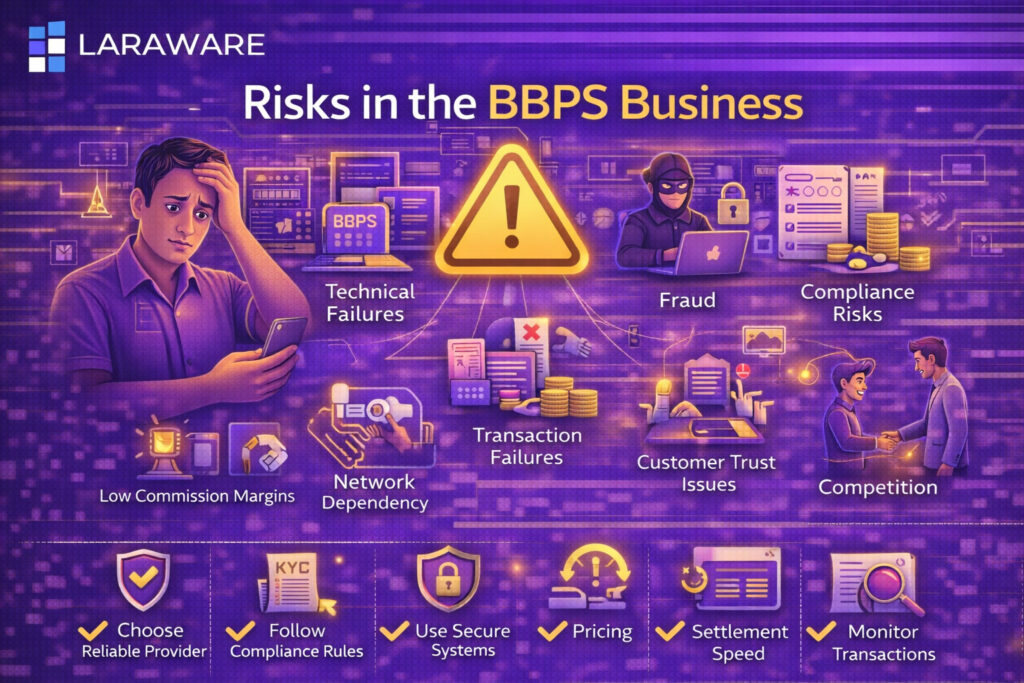
The Bharat Bill Payment System (BBPS) has opened up significant opportunities in the fintech sector. However, like any business, it also comes with certain risks and challenges. Understanding these risks is crucial for businesses, agents, and resellers to operate safely and successfully. This guide explains the key risks in the BBPS business and how to manage them effectively. What is BBPS Business Risk? BBPS business risk refers to potential issues that can: Affect operations Cause financial loss Impact customer trust These risks can be technical, financial, or operational. Major Risks in the BBPS Business Technical Failures API downtime Server issues Slow response time These can lead to transaction delays or failures. Transaction Failures Payment not processed Delayed confirmation Reversal issues /bbps-transaction-process-explained Fraud and Security Risks Unauthorized transactions Data breaches Identity misuse https://uidai.gov.in/ Compliance Risks Not following NPCI guidelines KYC violations Legal issues Internal link:/bbps-rules-and-regulations Low Commission Margins Limited earnings per transaction High dependency on volume Network Dependency Internet connectivity issues Power outages Customer Trust Issues Failed transactions Delayed refunds Poor service Competition in Market Many agents and providers Price and commission competition Financial Risks in BBPS Business Wallet Mismanagement Incorrect balance tracking Overuse of funds Settlement Delays Late payments from providers Cash flow issues Operational Risks Poor Customer Handling Lack of support Slow issue resolution Lack of Training Incorrect transactions System misuse How to Minimize BBPS Business Risks Choose Reliable Provider High uptime Good support Internal link:/how-to-choose-best-bbps-api-provider Follow Compliance Rules Maintain KYC records Follow NPCI guidelines Use Secure Systems Encrypted platforms Secure login systems Monitor Transactions Track all payments Verify transaction status Maintain Backup Systems Backup internet connection Alternative power supply Risk Management Strategies Regular system audits Staff training Customer awareness Proper documentation Benefits of Managing Risks Properly Improved customer trust Stable operations Reduced financial losses Long-term business growth Who Should Be Aware of These Risks? BBPS agents Resellers Fintech companies Payment service providers Conclusion While the BBPS business offers strong growth opportunities, it is important to understand and manage the associated risks. From technical failures to compliance issues, each risk can impact business performance if not handled properly. By choosing reliable providers, maintaining security, and following proper guidelines, businesses can minimize risks and build a successful BBPS operation.

Read more
ChatGPT Image Apr 15, 2026, 04_49_24 PM

How to Choose Best BBPS API Provider | BBPS API Selection Guide

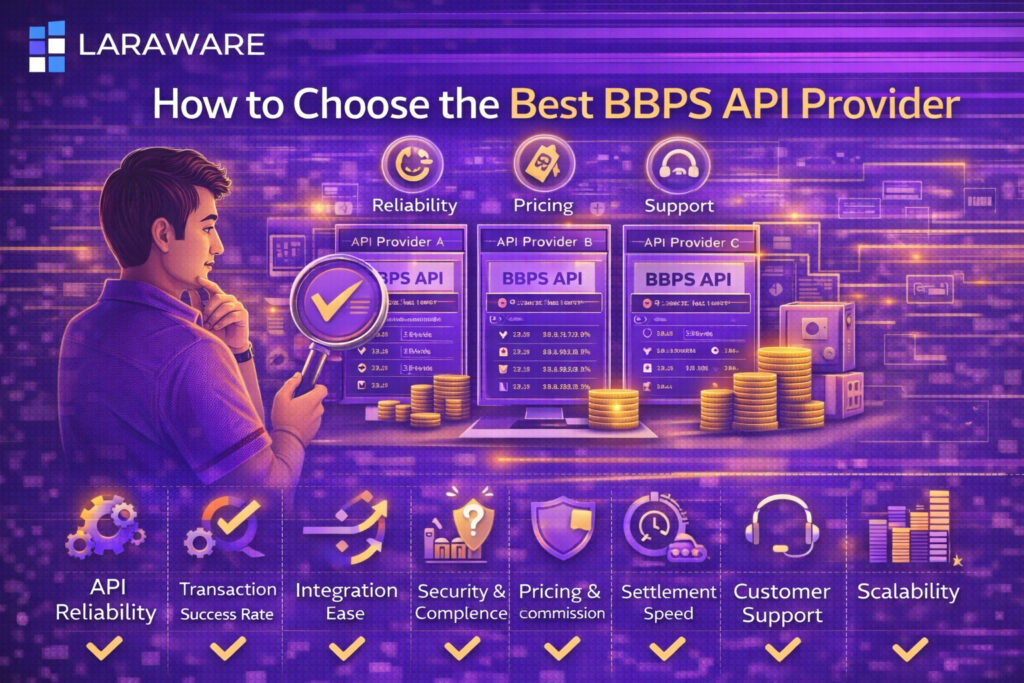
Choosing the right BBPS API provider is one of the most important decisions for any fintech business. A good provider ensures smooth transactions, high success rates, and better customer experience. With many options available in the market, it is essential to understand how to evaluate and select the best BBPS API provider for your needs. What is a BBPS API Provider? A BBPS API provider is a fintech company or bank that: Provides access to BBPS services through APIs Enables bill payment integration Handles transaction processing Internal link:/what-is-bbps-api Why Choosing the Right Provider Matters Ensures high transaction success rate Improves user experience Reduces downtime Increases revenue potential Key Factors to Choose the Best BBPS API Provider API Reliability and Uptime Choose a provider with: High uptime (99%+) Stable API performance Minimal downtime Transaction Success Rate A good provider should offer: High success rate Fast processing Low failure ratio Integration Ease Check if the provider offers: Simple API documentation Developer support Sandbox environment Security and Compliance Ensure the provider follows: NPCI guidelines Data encryption standards Secure API architecture https://www.npci.org.in/what-we-do/bbps/product-overview Commission and Pricing Compare: Commission rates Transaction charges Hidden fees Settlement Speed Look for: Fast settlement cycles Real-time or same-day settlement Customer Support A good provider offers: 24/7 support Technical assistance Quick issue resolution Scalability Choose a provider that supports: High transaction volume Business growth Multi-user expansion Features to Look For Multi-biller integration Real-time bill fetching Secure payment processing Wallet system Reporting and analytics /features-of-bbps-software Red Flags to Avoid Frequent downtime Poor customer support Low success rate Lack of documentation Hidden charges Comparing Multiple Providers Before selecting: Test APIs Compare performance Check reviews Evaluate pricing Best Strategy for Businesses Start with a trusted provider Test performance Scale gradually /how-to-build-a-bbps-platform Benefits of Choosing the Right Provider Better customer satisfaction Increased transaction volume Higher revenue Smooth operations Who Should Choose BBPS API Provider Carefully? Fintech startups Payment service providers Software companies Entrepreneurs Conclusion Selecting the best BBPS API provider is crucial for building a successful fintech business. By focusing on reliability, security, pricing, and support, you can ensure smooth operations and long-term growth. Taking time to evaluate providers carefully will help you avoid future issues and maximize your business potential.

Read more
ChatGPT Image Apr 15, 2026, 04_42_52 PM

BBPS vs Traditional Bill Payment Systems | Which is Better in India

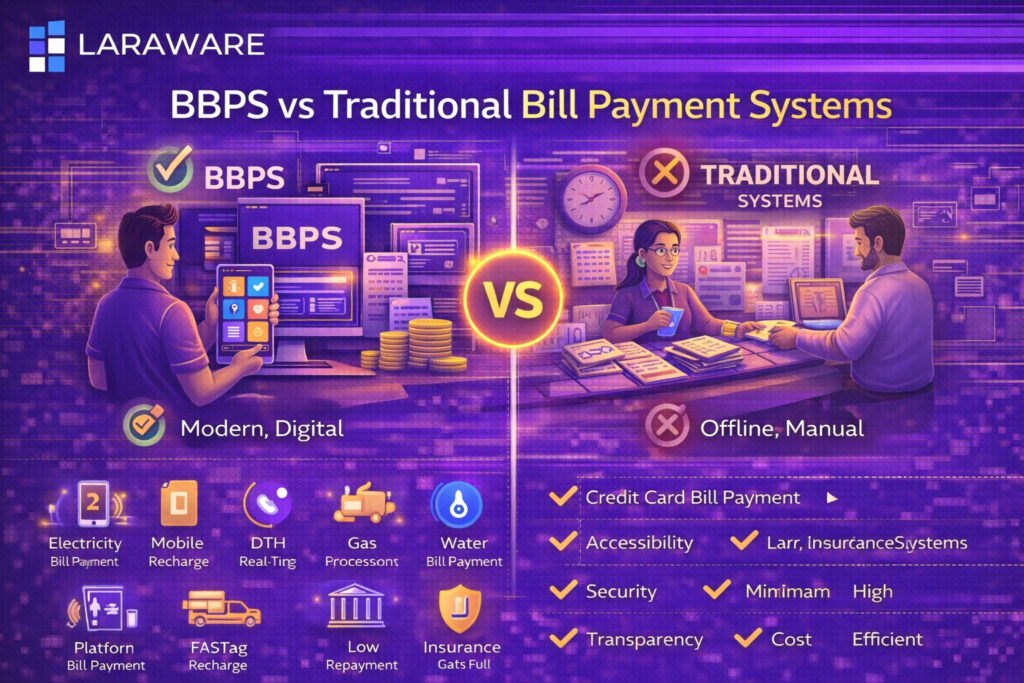
Bill payment systems in India have evolved significantly over the years. Traditional methods involved long queues, manual processing, and limited accessibility. With the introduction of the Bharat Bill Payment System (BBPS), bill payments have become faster, more secure, and highly efficient. This guide compares BBPS with traditional bill payment systems to help you understand which is better for users and businesses. What is BBPS? BBPS is a centralized, interoperable bill payment system developed by NPCI that allows users to pay multiple bills through a single platform. Internal link:/what-is-bbps-and-how-it-works What are Traditional Bill Payment Systems? Traditional systems refer to: Offline bill payment at counters Manual processing Separate platforms for each service These methods were widely used before digital systems became popular. Key Differences Between BBPS and Traditional Systems Platform Structure BBPS provides a unified platform for all bill payments, while traditional systems require separate platforms or physical visits for each biller. Speed and Processing Time BBPS offers real-time transactions with instant confirmation. Traditional systems may take hours or even days to process payments. Accessibility BBPS is accessible online and through agents across India. Traditional systems are limited to specific locations and working hours. Security BBPS uses encrypted and secure systems regulated by NPCI. Traditional systems have lower security and higher chances of errors. Transparency BBPS provides instant receipts and clear transaction details. Traditional methods often lack transparency and tracking. Cost Efficiency BBPS reduces operational costs and improves efficiency. Traditional systems involve higher operational and manual costs. Comparison Table Feature BBPS Traditional Systems Platform Unified Separate Speed Instant Slow Accessibility 24/7 Limited Security High Moderate Transparency High Low Cost Efficient Expensive Benefits of BBPS Over Traditional Systems Faster transactions Better user experience Secure payments Nationwide availability Easy integration for businesses Limitations of Traditional Systems Time-consuming Limited access Higher operational cost Manual errors Poor tracking Why Businesses Prefer BBPS Businesses prefer BBPS because it: Increases transaction volume Improves customer satisfaction Reduces operational workload Provides scalable solutions Internal link:/how-to-start-bbps-business Role of BBPS in Digital India BBPS plays a major role in: Promoting digital payments Improving financial inclusion Supporting rural and urban users Challenges in BBPS Adoption Initial setup cost Need for digital awareness Internet dependency Future of Bill Payment Systems The future is clearly digital. BBPS is expected to dominate bill payment systems due to: Increased adoption Government support Technological advancements Conclusion BBPS has transformed the way bill payments are handled in India. Compared to traditional systems, it offers superior speed, security, and convenience. While traditional methods are becoming outdated, BBPS continues to grow as the preferred solution for both users and businesses. Adopting BBPS is essential for anyone looking to stay relevant in the evolving digital payment ecosystem.

Read more
ChatGPT Image Apr 14, 2026, 05_15_25 PM

BBPS Portal Services: Complete List for India

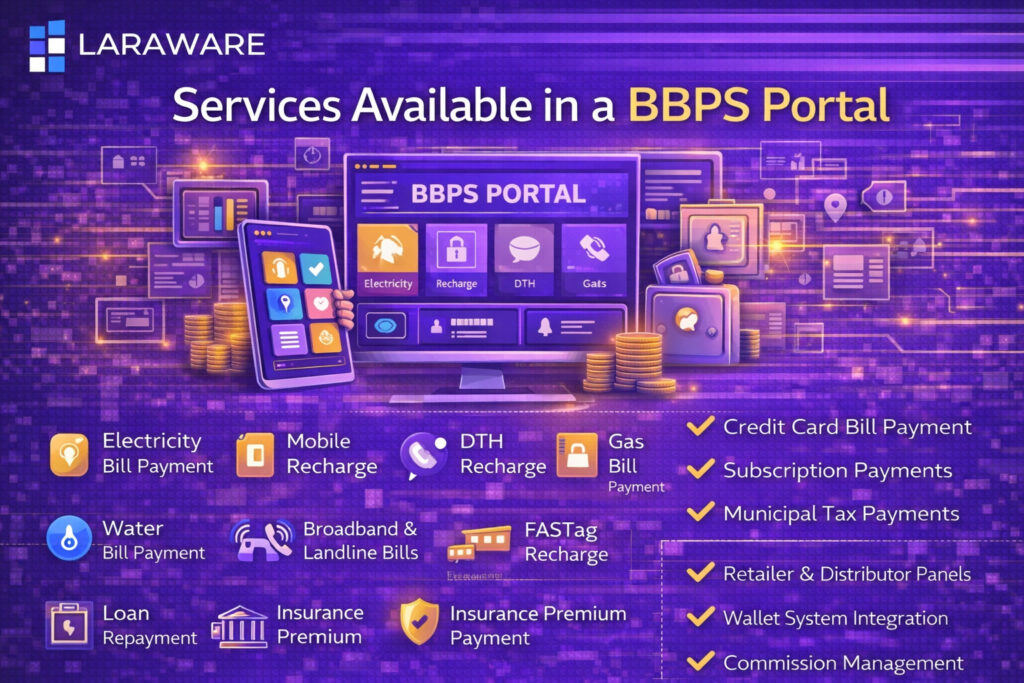
The Bharat Bill Payment System (BBPS) portal is designed to provide a wide range of bill payment and financial services through a single platform. It enables businesses, retailers, and fintech companies to offer multiple services under one system. Understanding the services available in a BBPS portal helps businesses maximize revenue and improve customer experience. What is a BBPS Portal? A BBPS portal is a digital platform that allows users and agents to: Pay various utility bills Access multiple financial services Manage transactions It connects directly with the BBPS network managed by NPCI. Core Services Available in a BBPS Portal Electricity Bill Payment Users can pay electricity bills for multiple providers across India with real-time confirmation. Mobile Recharge Prepaid mobile recharge Instant processing DTH Recharge Supports all major DTH providers with quick and secure transactions. Gas Bill Payment LPG gas booking and payment Pipeline gas bill payments Water Bill Payment Allows users to pay municipal water bills easily. Broadband and Landline Bills Internet bill payment Landline services FASTag Recharge Recharge FASTag accounts for toll payments. Loan Repayment EMI payments Loan account settlements Insurance Premium Payment Users can pay insurance premiums through BBPS platforms. Additional Services in Advanced BBPS Portals Credit Card Bill Payment Pay credit card dues Instant confirmation Subscription Payments OTT platforms Digital services Municipal Tax Payments Property tax Local authority payments Business-Oriented Services Retailer Panel Manage customers Track transactions Distributor and Reseller System Multi-level user management Commission distribution /how-to-become-a-bbps-reseller Commission Management Set commission rates Track earnings Wallet System Prepaid wallet integration Real-time balance updates Benefits of Multiple Services in BBPS Portal Increased customer retention Higher transaction volume Multiple revenue streams Improved business scalability How BBPS Services Help Businesses Grow Businesses can: Offer all services in one place Attract more customers Increase daily transactions Build long-term customer relationships /how-to-start-bbps-business Challenges in Managing BBPS Services Managing multiple billers Ensuring system uptime Handling customer queries Maintaining compliance Security in BBPS Services BBPS ensures: Secure transactions Encrypted data flow NPCI compliance https://www.npci.org.in/what-we-do/bbps/product-overviewhttps://uidai.gov.in/ Who Should Use BBPS Portal Services? Retailers Fintech companies Entrepreneurs Payment service providers Conclusion A BBPS portal offers a comprehensive range of services that make it a powerful tool for both users and businesses. From utility bill payments to financial services, it provides convenience, security, and scalability. For businesses, leveraging all available services in a BBPS portal can significantly boost revenue, customer engagement, and long-term growth.

Read more
ChatGPT Image Apr 14, 2026, 05_10_26 PM

How to Become a BBPS Agent: Registration Guide

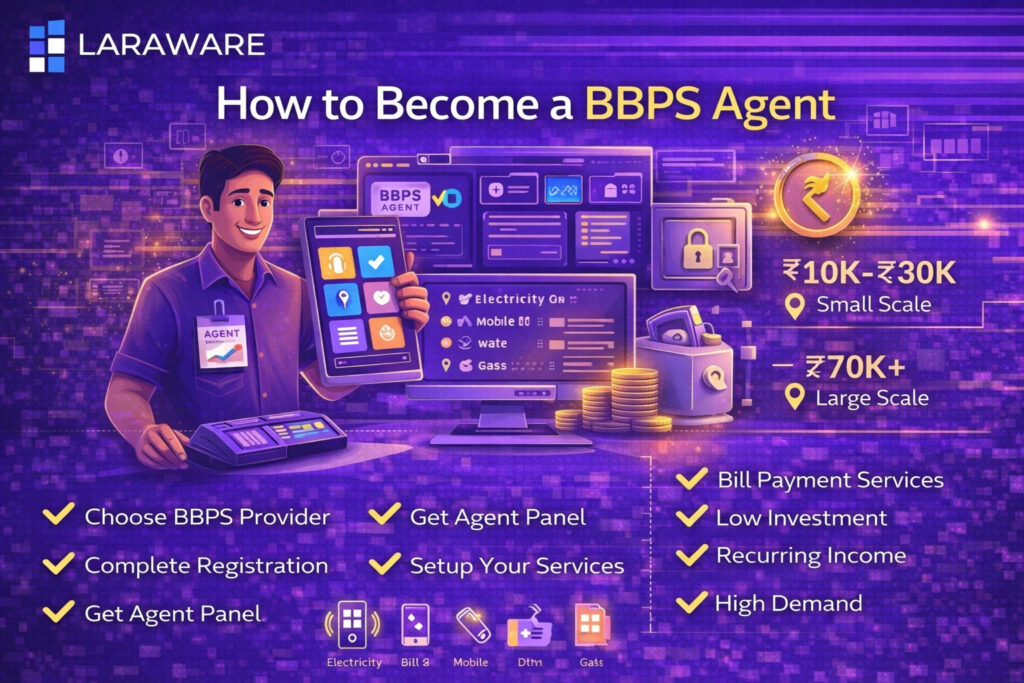
The Bharat Bill Payment System (BBPS) has created new opportunities for individuals and businesses to offer bill payment services. Becoming a BBPS agent allows you to provide essential services like electricity bill payment, mobile recharge, and more while earning commission. This guide explains how to become a BBPS agent and build a profitable business. What is a BBPS Agent? A BBPS agent is a person or business that: Provides bill payment services to customers Uses a BBPS platform or software Earns commission per transaction Agents act as the bridge between customers and the BBPS system. Income Potential of BBPS Agent Commission Structure ₹2 – ₹10 per transaction Monthly Income Estimate Small scale: ₹10,000 – ₹30,000 Medium scale: ₹30,000 – ₹70,000 Large scale: ₹70,000 – ₹1,00,000+ Income depends on transaction volume and location. Requirements to Become a BBPS Agent Basic Documents Aadhaar card PAN card Bank account Mobile number Setup Requirements Smartphone or computer Internet connection Shop or service point Step-by-Step Process to Become BBPS Agent Step 1: Choose a BBPS Provider Select a reliable fintech company that offers: BBPS agent panel Good commission High success rate /what-is-bbps-and-how-it-works Step 2: Complete Registration Submit required documents Complete KYC verification Get approval Step 3: Get Agent Panel After approval, you receive: Login credentials Dashboard access Step 4: Setup Your Services Install software or app Configure bill payment services Test transactions Step 5: Start Offering Services Provide services like: Electricity bill payment Mobile recharge DTH recharge Gas bill payment Best Locations for BBPS Agents Rural areas Market areas Residential areas High footfall locations /aeps-business-in-rural-areas How to Increase BBPS Agent Income Increase daily transactions Offer multiple services Build customer trust Combine AEPS + BBPS services /how-to-start-bbps-business Challenges in BBPS Agent Business Low initial customer base Network issues API downtime Competition Tips for Success Choose a reliable provider Provide fast service Maintain transparency Focus on customer satisfaction Benefits of Becoming a BBPS Agent Low investment Easy setup Recurring income High demand services Security and Compliance BBPS agents must follow: KYC guidelines Secure transaction practices NPCI compliance https://www.npci.org.in/what-we-do/bbps/product-overviewhttps://uidai.gov.in/ Conclusion Becoming a BBPS agent is a great opportunity for individuals looking to start a low-investment business in the fintech sector. With the right provider, proper setup, and consistent service, agents can build a stable and scalable source of income. By focusing on customer service, transaction volume, and service expansion, you can grow your BBPS agent business successfully.

Read more
ChatGPT Image Apr 14, 2026, 05_03_06 PM

How to Build a BBPS Platform: Developer Guide

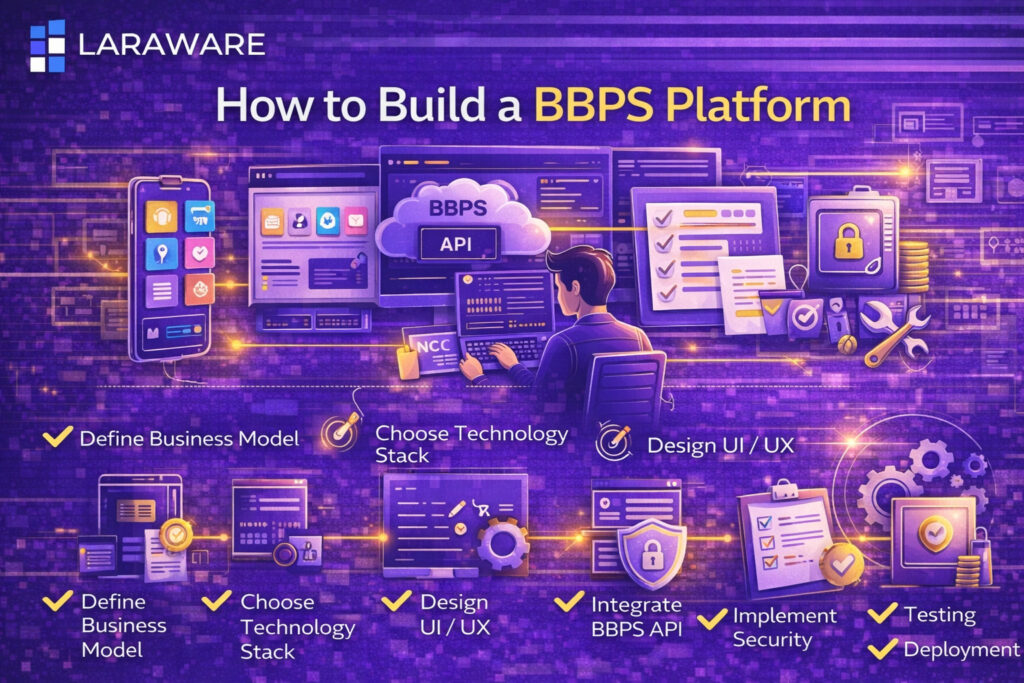
The Bharat Bill Payment System (BBPS) has become a core part of India’s digital payment ecosystem. Businesses can leverage BBPS to offer bill payment services and generate recurring revenue. Building a BBPS platform requires a combination of fintech knowledge, secure architecture, and proper API integration. This guide explains how to build a BBPS platform step by step. What is a BBPS Platform? A BBPS platform is a software system that allows: Bill payment services Multi-biller integration Transaction processing Retailer and distributor management It connects your application to the BBPS network through authorized providers. Core Components of BBPS Platform Frontend Interface User dashboard Retailer panel Mobile-friendly UI Backend System Transaction engine Wallet system User management Commission system BBPS API Integration Fetch bill details Process payments Generate responses /what-is-bbps-api Admin Panel Manage users Set commissions Monitor transactions Step-by-Step Process to Build BBPS Platform 1: Define Business Model Decide: Target users (retailers, distributors) Revenue model Commission structure 2: Choose Technology Stack Frontend: React, Angular Backend: Node.js, Laravel Database: MySQL, MongoDB Hosting: AWS, Cloud 3: Design UI/UX Simple interface Fast navigation Mobile responsive 4: Develop Backend Logic Wallet management Commission engine Transaction tracking Role-based access 5: Integrate BBPS API Process: Connect with provider Use API credentials Handle requests and responses 6: Implement Security Data encryption Secure APIs Authentication system /bbps-rules-and-regulations 7: Testing API testing Transaction validation Error handling 8: Deployment Cloud hosting SSL security Monitoring tools 9: Maintenance Regular updates Bug fixes Performance optimization Features Required in BBPS Platform Multi-biller support Real-time bill fetching Secure payment gateway Commission management Wallet system Transaction reports /features-of-bbps-software Cost of Building BBPS Platform Basic Platform ₹50,000 – ₹1,50,000 Standard Platform ₹1.5L – ₹3L Advanced Platform ₹3L – ₹6L+ Challenges in BBPS Platform Development API reliability Security risks Compliance requirements System scalability Benefits of Building BBPS Platform Recurring revenue Scalable business model High demand in market Easy integration with other services Who Should Build BBPS Platform? Fintech startups Payment service providers Entrepreneurs Software companies Conclusion Building a BBPS platform is a powerful opportunity in the fintech sector. With the right technology, secure architecture, and reliable API integration, businesses can create a scalable and profitable digital payment solution. By focusing on performance, security, and user experience, you can successfully launch and grow your BBPS platform in a competitive market.

Read more
Contact us

Partner with Us for Comprehensive IT Solutions

We’re happy to answer any questions you may have and help you determine which of our services best fit your needs.

Your benefits:
What happens next?
1

We Schedule a call at your convenience 

2

We do a discovery and consulting meting 

3

We prepare a proposal 

Schedule a Free Consultation